
مقدمة
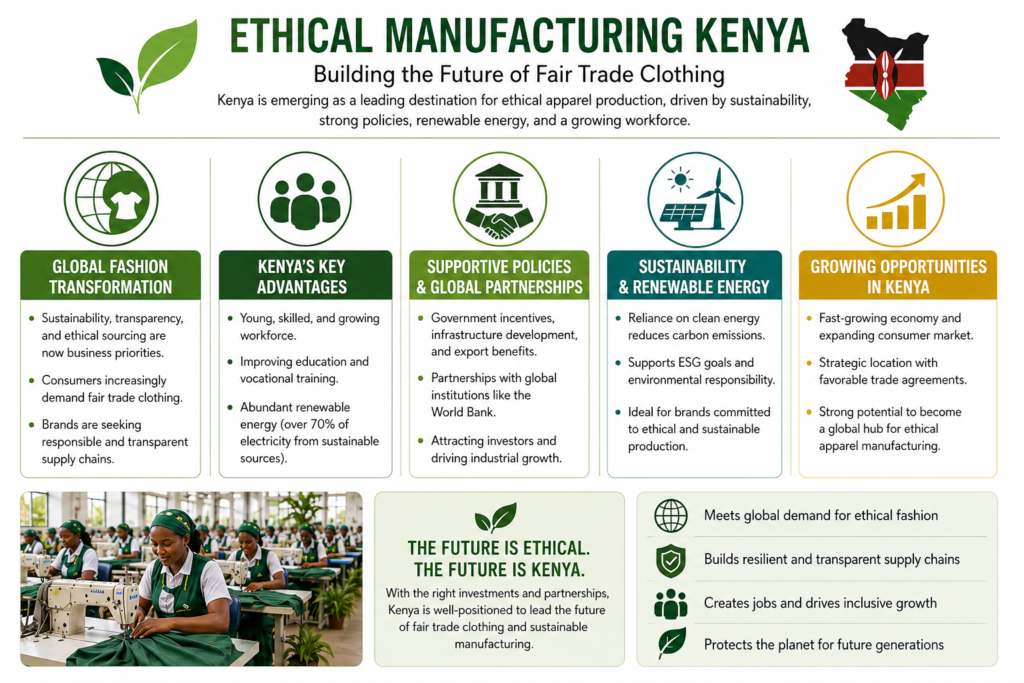
تشهد صناعة الموضة العالمية تحولاً كبيراً حيث أصبحت الاستدامة والشفافية والتوريد الأخلاقي من المصادر الأساسية لاستراتيجيات الأعمال. وفي هذا السياق، برز موضوع التصنيع الأخلاقي في كينيا كموضوع مقنع بين المستثمرين والعلامات التجارية وصانعي السياسات. وقد أدى الوعي المتزايد للمستهلكين إلى زيادة الطلب على الملابس ذات التجارة العادلة، مما دفع الشركات إلى إعادة النظر في مراكز التصنيع التقليدية واستكشاف البدائل التي تتماشى مع المبادئ البيئية والاجتماعية والحوكمة (ESG). وباعتبار كينيا واحدة من أسرع الاقتصادات نمواً في شرق أفريقيا، فإنها تضع نفسها كوجهة قابلة للتطبيق لإنتاج الملابس الأخلاقية. ومع وجود مزيج من الاتفاقيات التجارية المواتية، وموارد الطاقة المتجددة، والقوى العاملة المتنامية، تقدم البلاد فرصاً فريدة للعلامات التجارية التي تسعى إلى تعزيز مؤهلاتها الأخلاقية. يستكشف هذا المقال ما إذا كان بإمكان كينيا أن تصبح حقاً المركز العالمي التالي لصناعة الملابس الأخلاقية، مدعوماً بالبيانات ودراسات الحالة والتحليلات الصناعية. للاطلاع على رؤى أوسع للصناعة، تفضل بزيارة https://www.mckinsey.com/industries/retail/our-insights/state-of-fashion
الطلب العالمي على التصنيع الأخلاقي وملابس التجارة العادلة
يرتبط الاهتمام المتزايد بالتصنيع الأخلاقي في كينيا ارتباطًا وثيقًا بالتحولات العالمية في سلوك المستهلكين والأطر التنظيمية. تشير الدراسات إلى أن أكثر من 601 تيرابايت من المستهلكين على استعداد لدفع علاوة على الملابس التي تُباع في إطار التجارة العادلة، مما يعكس تفضيلًا متزايدًا للسلع المنتجة بطريقة أخلاقية. كما تطبق الحكومات والمنظمات الدولية لوائح أكثر صرامة لضمان شفافية سلسلة التوريد. فعلى سبيل المثال، استحدث الاتحاد الأوروبي سياسات تتطلب من الشركات الإفصاح عن ممارسات التوريد التي يمكن استكشافها على الموقع الإلكتروني https://ec.europa.eu/environment. تشجع هذه التطورات العلامات التجارية على تنويع قواعد التصنيع الخاصة بها وتقليل الاعتماد على المناطق المرتبطة باستغلال العمالة أو الإضرار بالبيئة. تتماشى سمعة كينيا الناشئة كوجهة تصنيع مسؤولة مع هذه الاتجاهات. بالإضافة إلى ذلك، تعمل مبادرات مثل منطقة التجارة الحرة القارية الأفريقية على تعزيز التكامل التجاري الإقليمي، مما يعزز مكانة كينيا في سلسلة التوريد العالمية. ومع استمرار نمو الطلب على ملابس التجارة العادلة، من المرجح أن تكتسب البلدان التي يمكنها تقديم الامتثال الأخلاقي وقدرات الإنتاج التنافسية ميزة استراتيجية.
نظرة عامة على صناعة الملابس في كينيا
شهدت صناعة الملابس في كينيا نمواً مطرداً خلال العقد الماضي، مدفوعاً بالسياسات الموجهة للتصدير والشراكات الدولية. ويتم جزء كبير من الإنتاج في مناطق تجهيز الصادرات (EPZs)، والتي توفر حوافز ضريبية ودعم البنية التحتية للمصنعين. أحد المحركات الرئيسية للتصنيع الأخلاقي في كينيا هو قانون النمو والفرص في أفريقيا (AGOA)، الذي يمنح الوصول المعفى من الرسوم الجمركية إلى سوق الولايات المتحدة. يمكن الاطلاع على مزيد من المعلومات حول قانون النمو والفرص في أفريقيا على الموقع الإلكتروني https://agoa.info. وقد اجتذبت اتفاقية التجارة التفضيلية هذه العديد من العلامات التجارية العالمية لتأسيس عملياتها في كينيا. كما أعطت الحكومة أيضاً الأولوية للتصنيع المستدام من خلال الاستثمار في الطاقة المتجددة وتطبيق معايير العمل.
| العامل | كينيا | بنغلاديش | فيتنام |
| تكلفة العمالة | متوسطة-منخفضة | منخفضة | متوسط |
| حماية العمال | متوسط-عالي | منخفضة | متوسط |
| المزايا التجارية | عالية | متوسط | عالية |
| التركيز على الاستدامة | النمو | منخفضة | متوسط |
وتضع هذه العوامل مجتمعةً كينيا كبديل واعد لإنتاج الملابس التي تعتمد على التجارة العادلة، خاصةً بالنسبة للعلامات التجارية التي تسعى إلى تعزيز ممارسات التوريد الأخلاقية.
المزايا الأساسية للتصنيع الأخلاقي في كينيا
القوى العاملة والتركيبة السكانية
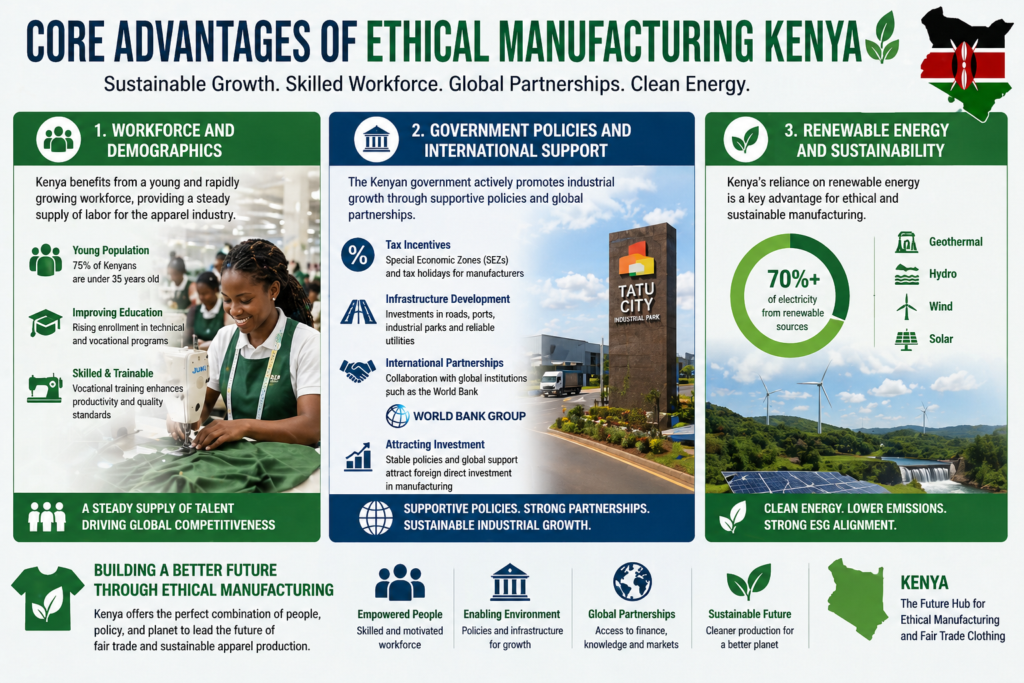
تستفيد كينيا من قوة عاملة شابة وسريعة النمو، مما يوفر إمدادات ثابتة من العمالة لصناعة الملابس. تعمل التحسينات التعليمية وبرامج التدريب المهني على تعزيز إنتاجية العمال ومعايير الجودة، مما يجعل البلد أكثر قدرة على المنافسة في الأسواق العالمية.
السياسات الحكومية والدعم الدولي
تعمل الحكومة الكينية بنشاط على تعزيز النمو الصناعي من خلال الحوافز الضريبية وتطوير البنية التحتية والشراكات مع المؤسسات العالمية مثل البنك الدولي. يمكن الاطلاع على مزيد من التفاصيل على https://www.worldbank.org. تدعم هذه المبادرات التوسع في التصنيع الأخلاقي في كينيا وجذب الاستثمارات الأجنبية.
الطاقة المتجددة والاستدامة
من أهم مزايا كينيا اعتمادها على الطاقة المتجددة، حيث يتم توليد أكثر من 701 تيرابايت 3 تيرابايت من الكهرباء من مصادر مستدامة. وهذا يسمح للمصنعين بتقليل انبعاثات الكربون والتوافق مع متطلبات الحوكمة البيئية والاجتماعية، مما يجعل كينيا وجهة جذابة للعلامات التجارية للملابس ذات التجارة العادلة والملتزمة بالمسؤولية البيئية.
التحديات والمخاطر
قيود البنية التحتية
على الرغم من التحسينات، لا تزال البنية التحتية في كينيا تواجه تحديات، لا سيما في مجال الخدمات اللوجستية والنقل. إذ يمكن أن يؤدي ازدحام الموانئ ومحدودية الربط بالسكك الحديدية إلى تأخير، مما يؤثر على كفاءة سلسلة التوريد.
الثغرات التكنولوجية
تعتمد العديد من المصانع في كينيا على آلات قديمة، مما قد يؤثر على سرعة الإنتاج واتساقه. تتطلب ترقية التكنولوجيا استثمارات كبيرة، مما قد يشكل عائقاً أمام صغار المصنعين.
المخاطر التنظيمية والسياسية
يمكن أن تؤدي التغييرات في السياسات وأوجه القصور البيروقراطية إلى خلق حالة من عدم اليقين لدى المستثمرين. تقدم منظمات مثل صندوق النقد الدولي رؤى حول هذه المخاطر في https://www.imf.org.
| نوع المخاطرة | الوصف | التأثير |
| الخدمات اللوجستية | ازدحام الموانئ | متوسط |
| التكنولوجيا | معدات عفا عليها الزمن | عالية |
| التنظيم | عدم استقرار السياسات | متوسط |
يجب على الشركات التي تفكر في التصنيع الأخلاقي في كينيا تقييم هذه المخاطر بعناية ووضع استراتيجيات للتخفيف من حدتها.
دراسات الحالة
التحول في سلسلة توريد العلامات التجارية الأوروبية
الخلفية: سعت علامة تجارية أوروبية للأزياء إلى تقليل بصمتها الكربونية وتحسين الشفافية.
المشكلة: الموردون الحاليون في آسيا يفتقرون إلى الامتثال الكافي للحوكمة البيئية والاجتماعية والمؤسسية.
الإجراء: دخلت الشركة في شراكة مع مصنع كيني.
النتيجة: حققت العلامة التجارية زيادة في المبيعات بلغت 20% وحسّنت من تصنيفات الاستدامة.
تحويل المصنع المحلي
الخلفية: واجه أحد المصانع الكينية انخفاضاً في الطلبات بسبب عدم حصوله على شهادة الاعتماد.
المشكلة: عدم القدرة على تلبية المعايير الأخلاقية الدولية.
الإجراءات: تبنى المصنع شهادات التجارة العادلة في الملابس وقام بتحديث عملياته.
النتيجة: تأمين عقود مع علامات تجارية عالمية وزيادة الإيرادات.
تعاون المؤسسات الاجتماعية
الخلفية: منظمة غير ربحية تهدف إلى تمكين المرأة من خلال التوظيف.
المشكلة: محدودية التمويل والوصول إلى الأسواق.
العمل: الشراكة مع العلامات التجارية الأخلاقية لإنشاء خطوط إنتاج.
النتيجة: خلق فرص عمل وتحسين سبل العيش في المجتمع المحلي.
تسلط هذه الأمثلة الضوء على الإمكانات العملية للتصنيع الأخلاقي في كينيا في سيناريوهات العالم الحقيقي.
سلسلة التوريد وتحليل التكاليف
عند تقييم إنتاج ملابس التجارة العادلة في كينيا، يجب على الشركات أن تأخذ في الاعتبار عوامل تكلفة متعددة.
| مكون التكلفة | النسبة المئوية |
| العمالة | 40% |
| المواد | 30% |
| الخدمات اللوجستية | 20% |
| النفقات العامة | 10% |
على الرغم من أن تكاليف العمالة في كينيا قد تكون أعلى من بعض البلدان الآسيوية، إلا أن القيمة المضافة للعلامة التجارية الأخلاقية والاستدامة يمكن أن تبرر الاستثمار. لمزيد من التحليل، يرجى زيارة https://www.oecd.org. ويوفر التصنيع الأخلاقي في كينيا فرصة لتحقيق التوازن بين التكلفة وسمعة العلامة التجارية، وهو أمر متزايد الأهمية في الأسواق التنافسية.
التوقعات المستقبلية
يبدو مستقبل التصنيع الأخلاقي في كينيا واعداً مع استمرار ارتفاع الطلب العالمي على المنتجات المستدامة. ومن المتوقع أن تؤدي التطورات التكنولوجية مثل سلسلة الكتل والتتبع الرقمي لسلسلة التوريد إلى تعزيز الشفافية والكفاءة. بالإضافة إلى ذلك، يقدم نمو السوق الاستهلاكية في أفريقيا فرصاً جديدة للإنتاج والاستهلاك المحلي. قد تكتسب الشركات التي تستثمر مبكراً في قطاع الملابس في كينيا ميزة تنافسية مع تطور الصناعة. ومع تحول المشهد العالمي للأزياء نحو الاستدامة، فإن كينيا في وضع جيد يؤهلها للعب دور رئيسي في تشكيل مستقبل التجارة العادلة للملابس.
الأسئلة الشائعة
س1 هل التصنيع الأخلاقي في كينيا أكثر فائدة من آسيا؟
A1 يوفر مزايا استدامة وفوائد أخلاقية قوية، على الرغم من أنه يجب تقييم التكلفة والكفاءة كل حالة على حدة.
س2 ما مدى سرعة نمو سوق ملابس التجارة العادلة؟
ج2 تتوسع السوق بسرعة، حيث يتجاوز متوسط معدل النمو السنوي 10%.
س3 ما هي المخاطر الرئيسية للاستثمار في كينيا؟
ج3 تشمل المخاطر الرئيسية التحديات اللوجستية وتغييرات السياسة والقيود التكنولوجية.
س4 ما هي العلامات التجارية التي تعمل في كينيا؟
A4 أنشأت العديد من العلامات التجارية الأوروبية والأمريكية بالفعل عمليات سلسلة توريد في البلاد.
س5 كيف يمكن للشركات دخول السوق الأفريقية؟
ج5 يجب أن تبدأ الشركات بأبحاث السوق وتقييم المخاطر والشراكات المحلية.
الخاتمة
في الختام، تتمتع كينيا بإمكانيات قوية للتصنيع الأخلاقي لتصبح مركزًا عالميًا لإنتاج الملابس المستدامة، لا سيما في قطاع الملابس ذات التجارة العادلة. وفي حين أن التحديات لا تزال قائمة، فإن مزايا البلاد في مجال الطاقة المتجددة والقوى العاملة والوصول إلى التجارة تجعلها خياراً جذاباً للعلامات التجارية ذات التفكير المستقبلي. سيكون التخطيط الاستراتيجي وإدارة المخاطر أمرًا ضروريًا للشركات التي تتطلع إلى الاستفادة من هذه الفرص.
اتصل بنا
إذا كنت تبحث عن حلول احترافية لتكامل سلسلة التوريد وتصنيع الملابس في مجال تكامل سلاسل التوريد وتصنيع الملابس، فلا تتردد في الاتصال بنا.
اسم الشركة: هانجن الدولية المحدودة.
العنوان: 5F, No. 657-8 Chung Cheng Road, Hsin Chuang District, New Taipei City, Taiwan
هاتف: 886-2-2903-2903 7662
البريد الإلكتروني: hanjen.intl.ltd@gmail.com