
Para os importadores de vestuário dos EUA que navegam num dos ambientes tarifários mais voláteis da história moderna, a Política AGOA 2026 surgiu como uma tábua de salvação crítica. Após anos de incerteza legislativa, o African Growth and Opportunity Act foi oficialmente reautorizado quando o Presidente Trump assinou o HR 7148 em 3 de fevereiro de 2026, estendendo o acesso isento de direitos para as exportações elegíveis da África Subsariana até 31 de dezembro de 2026, com efeito retroativo a 30 de setembro de 2025. Esta peça única de legislação reformulou fundamentalmente a economia de sourcing para milhares de marcas e importadores americanos, particularmente aqueles que trazem categorias de vestuário de malha e tecido que tradicionalmente enfrentam algumas das mais altas taxas de direitos da Nação Mais Favorecida (MFN) em toda a Tabela Tarifária Harmonizada dos Estados Unidos.
A oportunidade de poupança é substancial e quantificável. Os direitos NMF normais sobre artigos de vestuário variam entre cerca de 6% em determinadas peças de vestuário de algodão e 32% em vestuário de malha sintética, com a maioria das categorias de vestuário ativo, de banho e de exterior com taxas de direitos entre 16% e 28%. Ao adquirir vestuário elegível de países elegíveis para a AGOA, como o Quénia, Lesoto, Madagáscar e Etiópia (sujeito ao estatuto de elegibilidade atual), os importadores dos EUA podem eliminar totalmente estes direitos em entradas devidamente documentadas. Para uma marca de média dimensão que importe 1 milhão de unidades por ano a um valor médio de 8 USD por peça, a diferença entre pagar 22% de direitos e zero pode traduzir-se numa poupança superior a 1,7 milhões de USD por ano.
Este guia explica exatamente como funciona o programa AGOA 2026, de onde provêm as poupanças, que documentação é necessária, que riscos devem ser divulgados e como os importadores com visão de futuro podem estruturar as suas cadeias de abastecimento para obter o máximo benefício, mesmo quando o futuro a longo prazo do programa continua a ser objeto de um debate ativo no Congresso. A análise baseia-se nas orientações oficiais do Gabinete do Representante Comercial dos Estados Unidos, das Alfândegas e Proteção das Fronteiras dos Estados Unidos (CBP), do Serviço de Investigação do Congresso e na experiência direta de fabrico com compradores de vestuário dos Estados Unidos que expedem dos centros de produção da África Oriental para portos ao longo da Costa Leste e da Costa do Golfo dos Estados Unidos.
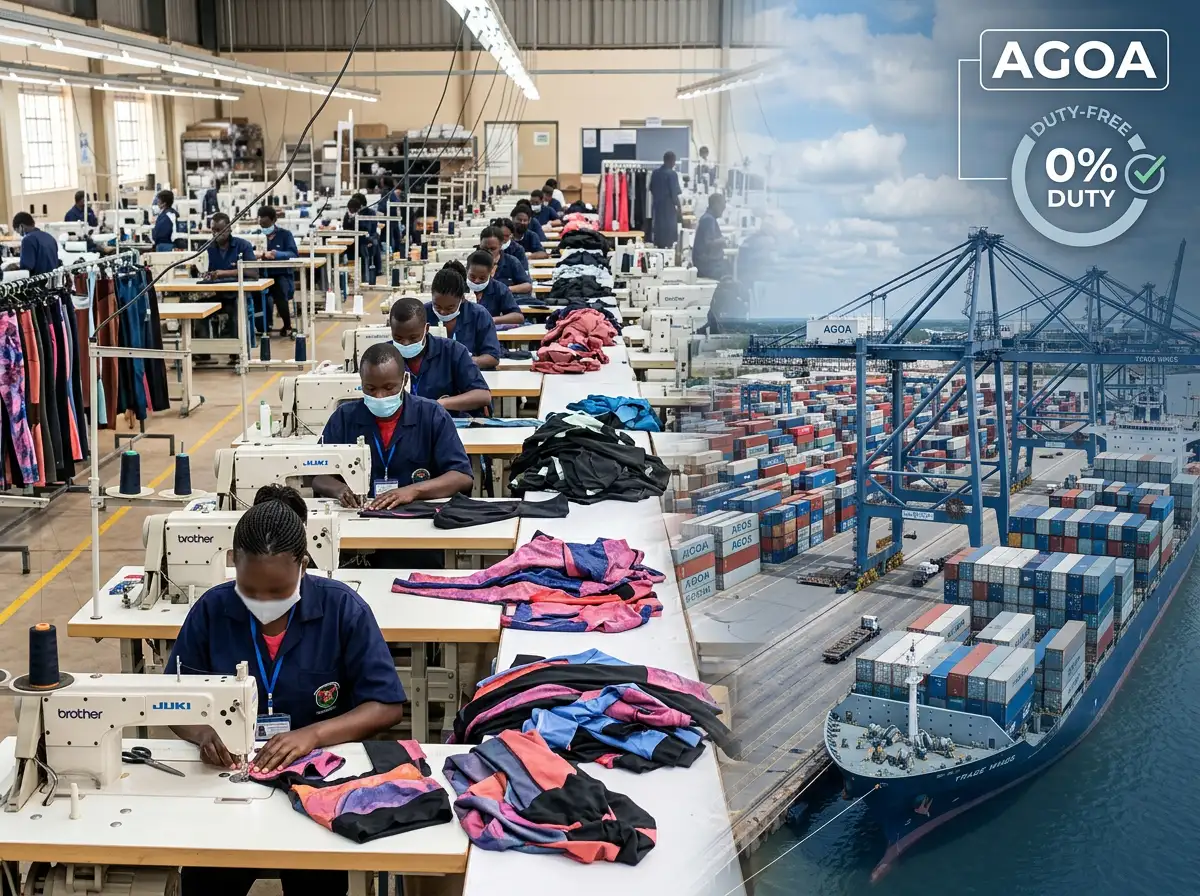
Compreender a Política AGOA 2026 e a sua Reautorização de fevereiro
A Lei do Crescimento e das Oportunidades para África foi originalmente promulgada em 2000 para proporcionar um acesso preferencial ao mercado para as economias da África Subsariana e tem sido um pilar central das relações comerciais dos EUA com o continente nos últimos 25 anos. A reautorização da AGOA para 2026 refere-se especificamente ao quadro jurídico que resultou de um hiato legislativo de quatro meses entre a expiração da autorização anterior, em 30 de setembro de 2025, e a assinatura, em 3 de fevereiro de 2026, da disposição de prorrogação contida na Secção 5019, Divisão I da Lei das Dotações Consolidadas, 2026 (P.L. 119-75). Não se trata de um projeto de lei AGOA autónomo, mas sim de uma prorrogação de um ano incluída numa legislação de apropriações mais ampla, reflectindo o compromisso político que permitiu a sobrevivência do programa enquanto prosseguem as discussões sobre a reforma a longo prazo. Os importadores devem reconhecer que o atual quadro jurídico só oferece segurança até 31 de dezembro de 2026 e que quaisquer decisões de aprovisionamento tomadas ao abrigo do programa devem ter em conta esta data de expiração definida.
A prorrogação de fevereiro de 2026 e o que mudou para os importadores
A extensão de fevereiro de 2026 restaurou três componentes críticas do quadro AGOA que tinham efetivamente ficado dormentes durante o período de setembro de 2025 a fevereiro de 2026. Em primeiro lugar, o tratamento geral com isenção de direitos para as exportações elegíveis da África Subsaariana em mais de 1.800 linhas tarifárias foi restabelecido, além das aproximadamente 5.000 categorias de produtos já cobertas pelo Sistema de Preferências Generalizadas (SGP). Em segundo lugar, foi alargado o programa regional de vestuário, que é a disposição específica mais importante para os importadores de vestuário, uma vez que concede tratamento preferencial aos artigos de vestuário montados nos países beneficiários. Em terceiro lugar, e talvez o mais importante para a flexibilidade de abastecimento, a disposição relativa aos tecidos de países terceiros foi prorrogada por um período adicional de 23 anos, permitindo que os países beneficiários menos desenvolvidos utilizem fios e tecidos de fontes não pertencentes à OUA, continuando a beneficiar da isenção de direitos aduaneiros no mercado dos EUA.
A disposição de efeito retroativo é particularmente importante para os importadores que continuaram a operar as suas cadeias de abastecimento durante o período de caducidade. As mercadorias provenientes de países elegíveis para a AGOA que entraram nos Estados Unidos entre 30 de setembro de 2025 e 2 de fevereiro de 2026 podem agora beneficiar de isenção de direitos, mas os importadores devem apresentar um pedido afirmativo ao CBP para liquidação ou reliquidação dessas entradas para recuperar os direitos já pagos. As orientações oficiais emitidas pelo CBP na mensagem CSMS 67647279 descrevem os requisitos processuais para a apresentação destes pedidos, e os importadores que trabalham com despachantes aduaneiros experientes têm geralmente conseguido recuperar o montante total dos direitos em entradas retroactivas devidamente documentadas. As marcas que pagaram a totalidade das taxas NMF durante o hiato devem auditar imediatamente os seus resumos de entrada e iniciar pedidos de reembolso antes de expirar o prazo administrativo. De acordo com Página oficial do programa AGOA do CBP, Para solicitar o tratamento preferencial, os importadores devem continuar a utilizar o símbolo “D” do Indicador de Programa Especial (SPI) na subcoluna Especial do HTSUS.
Países elegíveis para a AGOA ao abrigo da atual reautorização
A elegibilidade para o tratamento preferencial da AGOA é determinada anualmente pelo Presidente dos Estados Unidos com base nos progressos de um país no cumprimento dos critérios estatutários da lei, que incluem o estabelecimento de uma economia de mercado, o Estado de direito, o pluralismo político, o direito a um processo justo e a eliminação de barreiras ao comércio e investimento dos EUA. A partir da revisão anual de 2025, que abrange a elegibilidade de 2026, 32 países da África Subsariana foram reconhecidos como beneficiários da AGOA. Os centros de produção centrados no vestuário que detêm o estatuto válido do AGOA incluem o Quénia, Madagáscar, Lesoto, Gana, Tanzânia, Maurícias e Botsuana, cada um com capacidades de produção e especializações de produtos distintas. O Quénia, em particular, emergiu como o principal exportador de vestuário do AGOA para os Estados Unidos, representando uma parte significativa do volume de comércio regional por categoria.
Os importadores devem estar cientes de que vários países africanos são atualmente inelegíveis devido a constatações específicas relacionadas com o Estado de direito (Burquina Faso, Gabão, Guiné, Níger), a violência política (Burundi, Sudão do Sul), os direitos humanos (Camarões, República Centro-Africana, Eritreia, Etiópia, Uganda) ou a graduação dos rendimentos (Guiné Equatorial, Seicheles). A inelegibilidade continuada da Etiópia é particularmente impactante para o sector do vestuário porque o país tinha sido anteriormente um exportador AGOA em rápido crescimento antes do encerramento de 2022. Os importadores que planeiam estratégias de abastecimento em vários países devem acompanhar de perto o processo anual de revisão da elegibilidade, uma vez que as alterações ao estatuto de um único país podem perturbar as cadeias de abastecimento estabelecidas. Historicamente, o Gabinete do Representante Comercial dos EUA tem publicado a lista de elegibilidade no Registo Federal, e os importadores podem verificar o estatuto atual através do portal oficial de informações sobre a AGOA mantido pela Coligação Africana para o Comércio.
Prestações retroactivas de isenção de direitos a partir de 30 de setembro de 2025
A natureza retroactiva da reautorização de 2026 cria uma oportunidade de recuperação que muitos importadores não exploraram plenamente. Durante o período de caducidade, de outubro de 2025 até ao início de fevereiro de 2026, os importadores dos EUA que recebiam remessas de países elegíveis para a AGOA tinham de pagar taxas de direitos NMF totais no momento da entrada, porque o quadro preferencial não estava legalmente em vigor. Na sequência da assinatura de 3 de fevereiro, o CBP emitiu orientações processuais que permitem aos importadores solicitar a aplicação retroactiva do tratamento de isenção de direitos às entradas elegíveis apresentadas durante o intervalo. O prazo para apresentar estes pedidos é limitado e o processo administrativo exige uma preparação cuidadosa da documentação de apoio, incluindo o visto têxtil AGOA original, facturas comerciais, listas de embalagem, conhecimentos de embarque e verificação da prova de origem.
O potencial de recuperação financeira é significativo. Um importador que tenha recebido 200 000 unidades de vestuário ativo de malha sintética a um valor desembarcado de 12 USD por unidade durante a lacuna, pagando a taxa NMF normal de 32%, teria remetido aproximadamente 768 000 USD em direitos que podem agora ser recuperados através do processo de pedido retroativo. Para os importadores de grande volume, a recuperação acumulada em vários resumos de entrada pode atingir sete dígitos. Os importadores devem contactar imediatamente os seus despachantes aduaneiros autorizados para identificarem todas as entradas elegíveis, prepararem o protesto ou os pedidos de correção pós-sumário e assegurarem que a via processual adequada é selecionada com base nas caraterísticas específicas de cada entrada. As marcas que atrasaram a apresentação dos seus pedidos perderam, em alguns casos, oportunidades de recuperação devido a prazos administrativos, pelo que o tempo é tão importante como a qualidade da documentação. Os mecanismos processuais diferem consoante o resumo da entrada tenha ou não sido liquidado pelo CBP no momento em que o pedido de indemnização é apresentado. As entradas pré-liquidação podem normalmente ser alteradas através de um pedido de correção pós-sumário, enquanto as entradas pós-liquidação requerem um pedido de protesto mais formal ao abrigo do artigo 19 USC 1514, que tem um prazo de apresentação rigoroso de 180 dias a contar da data de liquidação. Os importadores devem planear o calendário de liquidação para cada entrada de período de lacuna e dar prioridade aos pedidos de protesto de acordo com o calendário de prazos. Os pedidos de recuperação bem sucedidos exigem também uma reconciliação cuidadosa do resumo da entrada original com a documentação de apoio do AGOA, incluindo o visto têxtil, o certificado do país de origem e provas substanciais de transformação, o que significa que a qualidade da documentação do lado da exportação se torna retrospetivamente importante, mesmo para remessas que chegaram meses antes.
Como funcionam na prática as economias pautais do AGOA para os importadores de vestuário
A mecânica das economias pautais do AGOA pode ser compreendida através de um cálculo simples em duas etapas. Em primeiro lugar, é determinada a taxa normal do direito NMF que se aplicaria a um determinado artigo de vestuário ao nível da classificação HTS. Em segundo lugar, quando o artigo é elegível ao abrigo das regras de tratamento preferencial do AGOA, essa taxa NMF é reduzida para zero, o que significa que o importador não paga qualquer direito sobre o valor aduaneiro da mercadoria. Esta situação contrasta fortemente com o empilhamento de vários níveis de tarifas que se tornou caraterístico das importações de muitos mercados de origem tradicionais, em que a taxa NMF de base é complementada por tarifas recíprocas da Secção 122 de 10% ou mais, tarifas específicas da China da Secção 301 que variam entre 7,5% e 100% e vários direitos anti-dumping ou de compensação. O quadro preferencial da AGOA, quando corretamente utilizado, elimina toda a obrigação de direitos de base para os artigos elegíveis, proporcionando uma vantagem estrutural em termos de custos que pode ser muito difícil de igualar para os locais de abastecimento não preferenciais, mesmo com diferenças absolutas de custos de fábrica.
Taxas dos direitos NMF sobre o vestuário por capítulo HTS
As importações de vestuário dos EUA estão classificadas principalmente nos capítulos 61 (vestuário de malha) e 62 (vestuário de tecido) da Harmonized Tariff Schedule (Pauta Aduaneira Harmonizada) e a estrutura das taxas dos direitos nestes capítulos é das mais complexas e mais elevadas de toda a pauta. O vestuário de algodão está geralmente sujeito a taxas NMF entre 11 e 17%, sendo que as t-shirts de algodão da posição 6109.10 da HTS têm uma taxa de 16,5%. O vestuário de fibras sintéticas está sujeito a direitos significativamente mais elevados, sendo as camisolas de malha sintética frequentemente classificadas na posição 6109.90 da HTS, com uma taxa de 32%. As camisolas pólo, as camisolas com capuz, as sweatshirts e os pulôveres são classificados nas posições HTS 6105 e 6110, com taxas que variam entre 16,5 e 32%, dependendo do teor de fibras e da construção. Os calções e as perneiras de desporto classificados na posição 6104.63 da HTS são normalmente sujeitos a direitos de 28,2% para as composições sintéticas, enquanto os fatos de banho classificados na posição 6112 da HTS variam entre 24,9% e 28,2%, dependendo da mistura de fibras.
As categorias de vestuário exterior apresentam algumas das mais elevadas exposições a direitos no sector do vestuário. Os casacos sintéticos classificados na posição 6101.30 da HTS estão sujeitos a direitos de 28,2 por cento e os casacos de esqui ou casacos técnicos podem atingir níveis ainda mais elevados. O vestuário de compressão de camada de base classificado nos códigos HTS 6109 ou 6212 está sujeito a taxas que variam substancialmente em função da sua construção exacta e da utilização prevista. Os importadores podem verificar a taxa NMF exacta aplicável aos seus produtos específicos consultando a base de dados oficial da Comissão de Comércio Internacional dos EUA sobre a Harmonized Tariff Schedule, que é atualizado regularmente para refletir as alterações legislativas e administrativas. Recomenda-se vivamente a colaboração com um despachante aduaneiro especializado em têxteis, uma vez que uma classificação incorrecta ao nível dos 10 dígitos do HTS pode resultar em pagamentos excessivos ou insuficientes, ambos com consequências em termos de conformidade. As marcas que adquirem vestuário de desempenho complexo devem manter certificações detalhadas do conteúdo de fibra e especificações de construção para apoiar as suas posições de classificação durante qualquer auditoria ou revisão subsequente do CBP.
Cálculo da poupança real de custos em todas as categorias de produtos
Para traduzir as taxas NMF em poupanças concretas, os importadores devem modelar o custo dos direitos numa base unitária e agregá-lo ao seu volume anual de importações. Considere-se uma marca que importe anualmente 500 000 unidades de pólos de malha sintética a um valor aduaneiro de 9 USD por unidade. Ao abrigo do tratamento NMF normal, a exposição aos direitos seria de aproximadamente 9 USD multiplicados por 32%, ou seja, 2,88 USD por unidade, totalizando 1,44 milhões de USD por ano só em pagamentos de direitos. Ao transferir a produção qualificada para uma fábrica elegível para a AGOA no Quénia e ao assegurar o tratamento preferencial adequado, as mesmas 500 000 unidades entram nos Estados Unidos com direitos nulos, eliminando o custo anual total de 1,44 milhões de dólares. Isto representa uma redução do custo dos direitos aduaneiros de quase 32% do valor aduaneiro, o que muitas vezes excede a melhoria da margem bruta que as marcas normalmente procuram através de qualquer outra iniciativa de otimização da cadeia de fornecimento.
O cálculo das poupanças estende-se a praticamente todas as categorias de vestuário que as fábricas elegíveis para o AGOA podem produzir. Uma marca de fatos de banho que importe 300 000 unidades ao valor aduaneiro de 14 USD pouparia aproximadamente 1,05 milhões de USD por ano à taxa de referência de 25 por cento. Uma marca de vestuário exterior que importe 150 000 casacos sintéticos ao valor aduaneiro de 28 USD pouparia aproximadamente 1,18 milhões de USD por ano à taxa de referência de 28,2 por cento. Estes números não incluem as poupanças adicionais resultantes de se evitarem as tarifas recíprocas da Secção 122 que se aplicam atualmente à maioria dos destinos de abastecimento não pertencentes à OAA, que acrescentam mais 10 pontos percentuais ou mais à taxa de direitos efectiva. Quando o conjunto completo de direitos aduaneiros sobre um local de abastecimento asiático comparável é calculado em relação à alternativa AGOA de taxa zero, a diferença pode exceder 40 pontos percentuais do valor aduaneiro. Para uma análise mais aprofundada das oportunidades de poupança específicas de cada categoria, os importadores podem consultar a nossa análise pormenorizada em 7 Vantagens poderosas do AGOA que todos os importadores que trabalham com um fabricante de vestuário devem conhecer, que inclui exemplos de trabalho para cada capítulo principal do HTS.
Comparação dos custos de abastecimento do AGOA com os de mercados alternativos
Uma decisão de aprovisionamento completa exige que se olhe para além das poupanças de direitos apenas para comparar o custo total da produção do AGOA em relação a mercados alternativos. Os centros de produção asiáticos, como o Vietname, o Bangladesh e o Camboja, têm oferecido, historicamente, preços de fábrica muito competitivos em categorias de vestuário de base e, mesmo depois de contabilizar as tarifas recíprocas da Secção 122, o custo absoluto por unidade pode, por vezes, parecer mais baixo à primeira vista. No entanto, quando se inclui a totalidade dos direitos aduaneiros, a matemática comparativa muda substancialmente. As peças de vestuário de malha sintética originárias do Bangladesh enfrentam uma exposição combinada de direitos que pode exceder 47% do valor aduaneiro quando as taxas NMF e os direitos recíprocos se acumulam. Os produtos originários do Vietname enfrentavam taxas combinadas igualmente elevadas antes dos recentes desenvolvimentos comerciais e, mesmo após a normalização das taxas, a camada de direitos continua a ser uma componente de custo significativa.
A combinação AGOA-Quénia oferece uma proposta de valor diferente. O vestuário originário do Quénia beneficia da eliminação total dos direitos NMF ao abrigo do tratamento preferencial AGOA, que pode ser combinado com a disposição relativa aos tecidos de países terceiros para aceder a tecidos e fios de fornecedores globais competitivos. Os preços de fábrica no Quénia aproximaram-se da paridade com as alternativas asiáticas nos últimos anos, à medida que os volumes de produção aumentaram e a eficiência operacional melhorou. Quando se agregam os preços de fábrica no Quénia, o frete marítimo de Mombaça para os portos da Costa Leste dos EUA (normalmente 25 a 28 dias de trânsito), a logística no interior dos EUA e o direito nulo do AGOA, o custo total de desembarque da maioria das categorias de vestuário sintético e misto situa-se agora ao nível ou abaixo do custo comparável das alternativas asiáticas com direitos totais. A implicação estratégica é que o aprovisionamento AGOA passou de um jogo de atenuação de tarifas para um jogo de custos competitivos, particularmente para marcas com grandes volumes unitários em malhas sintéticas e categorias de vestuário de desempenho. Os importadores podem saber mais sobre a forma como esta dinâmica está a remodelar o aprovisionamento global na nossa análise de A mudança da política comercial dos EUA e o seu impacto na AGOA.
A provisão de tecidos de países terceiros e a sua importância
A disposição relativa aos tecidos de países terceiros é, sem dúvida, a caraterística técnica mais importante do quadro do AGOA para o vestuário, e a sua preservação na reautorização de 2026 deve ser vista como uma grande vitória para o sector do vestuário. A disposição permite que os países beneficiários menos desenvolvidos da África Subsariana utilizem fios e tecidos importados de fontes não abrangidas pelo AGOA, ao mesmo tempo que se qualificam para a entrada com isenção de direitos no mercado dos EUA para os artigos de vestuário acabados. Em termos práticos, isto significa que uma fábrica sediada no Quénia pode adquirir tecidos técnicos de alto desempenho a fornecedores em Taiwan, na China ou no Vietname, cortar e coser esses tecidos em peças de vestuário acabadas nas instalações do Quénia e exportar o vestuário resultante para os Estados Unidos com a aplicação de zero direitos AGOA. Sem a disposição relativa aos tecidos de países terceiros, a regra de origem exigiria o aprovisionamento em fio a partir dos países do AGOA ou dos Estados Unidos, o que limitaria seriamente a biblioteca de tecidos disponível e prejudicaria a competitividade dos custos da produção africana para as categorias de vestuário técnico.
O valor estratégico do fornecimento de tecidos de países terceiros torna-se especialmente claro nas categorias de vestuário de alto desempenho, em que as especificações dos tecidos são altamente técnicas e em que a cadeia de abastecimento global de têxteis avançados está concentrada num pequeno número de fábricas localizadas principalmente na Ásia Oriental. As malhas de poliéster que absorvem a humidade, as misturas de nylon e spandex com quatro vias de elasticidade, o velo escovado para os casacos com capuz e os tecidos de poliéster reciclado de alto desempenho são todos melhor adquiridos a fábricas especializadas que investiram décadas no desenvolvimento das suas estruturas de fios e produtos químicos de acabamento próprios. As fábricas AGOA que podem integrar estes tecidos de países terceiros nos seus fluxos de trabalho de corte e costura obtêm acesso à mesma qualidade de tecido que as fábricas concorrentes na Ásia utilizariam, ao mesmo tempo que entregam o produto acabado com a vantagem em termos de direitos aduaneiros que só a AGOA pode proporcionar. A disposição foi prorrogada por 23 anos sucessivos ao abrigo da reautorização de fevereiro de 2026, o que proporciona um horizonte operacional significativamente mais longo do que o prazo geral do AGOA de dezembro de 2026, embora os importadores devam continuar a considerar o quadro programático subjacente como sujeito à incerteza do ciclo de renovação.
A conformidade com a disposição relativa ao tecido de um país terceiro exige uma documentação meticulosa. O tecido deve ser cortado, cosido e montado num país elegível da AGOA e o vestuário acabado deve demonstrar uma transformação substancial ao abrigo das regras de origem aplicáveis. Cada remessa requer um Certificado de Origem Têxtil (o Visto AGOA) emitido pela autoridade designada do país exportador, e o CBP pode solicitar documentação de apoio, incluindo facturas de compra de tecido, certificações de fábricas, registos de corte e registos da sala de costura. As fábricas com sistemas de conformidade maduros mantêm fluxos de documentação integrados que podem produzir registos prontos para auditoria a pedido, e as marcas que se abastecem em fábricas AGOA devem verificar especificamente se o fabricante selecionado pode demonstrar esta profundidade de documentação. De acordo com o texto do projeto de lei sobre a Lei de Extensão da AGOA, acompanhado pelo Congress.gov, No entanto, a disposição relativa aos tecidos de países terceiros continua a aplicar-se aos países beneficiários menos desenvolvidos, tal como definido no estatuto, e os importadores devem verificar com o seu despachante aduaneiro quais os países específicos que se qualificam ao abrigo da atual interpretação administrativa. As marcas que considerem o Quénia como base de abastecimento podem analisar as capacidades das nossas instalações no nosso Visitar a página da fábrica, que descreve as infra-estruturas de produção, as certificações e a logística de expedição que apoiam a conformidade total com a AGOA, desde a encomenda até à entrega.
O Quénia como centro de abastecimento estratégico no âmbito do AGOA
Entre os países de produção de vestuário elegíveis para o AGOA, o Quénia emergiu como o centro mais estrategicamente posicionado para os importadores dos EUA que procuram um fabrico fiável, expansível e preparado para a conformidade. O país combina um ambiente político estável, uma estrutura de Zona de Processamento de Exportação (EPZ) estabelecida, uma grande reserva de talentos de trabalhadores de vestuário com formação, logística integrada de portos e aeroportos e um ecossistema regulamentar que suporta toda a cadeia de documentação AGOA. Estas vantagens estruturais atraíram investimentos diretos substanciais de grupos internacionais de fabrico de vestuário, incluindo operadores de Taiwan, do Sri Lanka e da Índia, que estabeleceram instalações de grande escala especificamente para servir clientes de marcas americanas ao abrigo do tratamento preferencial AGOA. O efeito cumulativo é que o Quénia oferece agora capacidades de fabrico em praticamente todas as principais categorias de vestuário, desde as t-shirts básicas até ao vestuário de desempenho técnico, com volumes de encomendas que vão desde amostras de poucas mil peças até programas de produção de vários milhões de peças.
Vantagens geográficas e logísticas do Quénia
A posição geográfica do Quénia na costa do Oceano Índico proporciona acesso direto ao transporte marítimo de mercadorias para os Estados Unidos através do porto de Mombaça, que funciona como a maior instalação de manuseamento de contentores na África Oriental e oferece serviços regulares de transporte marítimo para os portos de entrada da América do Norte. Os tempos normais de trânsito marítimo de Mombaça para os portos da Costa Leste dos EUA, como Nova Iorque/Nova Jersey, variam entre 25 e 28 dias, com trânsitos um pouco mais longos para os destinos da Costa do Golfo. Este tempo é comparável ou mais rápido do que os tempos de trânsito marítimo de muitos centros de produção asiáticos e oferece a vantagem estratégica de transitar pelos corredores marítimos do Mediterrâneo e do Atlântico em vez do Pacífico. Para expedições urgentes, o Aeroporto Internacional Jomo Kenyatta de Nairobi oferece voos de carga diretos para vários destinos nos EUA, incluindo Nova Iorque, permitindo que os produtos de qualidade superior ou as encomendas de reabastecimento cheguem aos armazéns dos EUA no prazo de 5 a 7 dias após a expedição da fábrica.
A infraestrutura logística que liga as fábricas ao porto melhorou substancialmente na última década. O caminho de ferro de bitola normalizada liga Nairobi a Mombaça com um serviço diário de transporte de contentores, reduzindo os tempos de trânsito terrestre e proporcionando uma alternativa mais fiável à anteriormente congestionada rota dos camiões. Os transitários do Quénia desenvolveram competências especializadas nos fluxos de documentação AGOA, incluindo o tratamento de vistos têxteis, certificados de origem e registos de entrada CBP. Os principais transitários internacionais, incluindo a DHL, a Maersk Logistics e a Kuehne+Nagel, mantêm operações em Mombaça e Nairobi, proporcionando aos importadores dos EUA parceiros de serviços familiares que podem integrar a origem queniana nas redes logísticas globais existentes. A combinação de taxas de frete marítimo competitivas, tempos de trânsito previsíveis e tratamento de documentação maduro tornou o Quénia operacionalmente comparável a locais de abastecimento asiáticos estabelecidos numa perspetiva de gestão da cadeia de abastecimento.
Infra-estruturas de fabrico e mão de obra qualificada
A infraestrutura de fabrico de vestuário do Quénia foi construída em torno do quadro da Zona de Processamento de Exportação, que proporciona às fábricas procedimentos aduaneiros simplificados, incentivos fiscais e zonas industriais específicas equipadas com serviços públicos e segurança fiáveis. As principais instalações de ZPE estão concentradas em torno de Mombaça, Athi River e Ruiru, com novos desenvolvimentos a expandirem-se para outras regiões para acederem a mais mão de obra. A capacidade de produção das maiores operações centradas no AGOA varia entre 500 000 e mais de 5 milhões de peças por mês, com capacidades que vão desde o corte e costura, bordados, serigrafia, impressão por sublimação e tratamentos especializados, como o corte a laser e a colagem sem costuras. A mão de obra inclui normalmente 1.000 a 5.000 trabalhadores por cada grande instalação, com programas de formação estruturados que desenvolvem operadores de costura, controladores de qualidade e supervisores de produção em conformidade com as normas internacionais de fabrico de vestuário.
O perfil das capacidades técnicas do Quénia está bem adaptado às categorias de vestuário mais expostas aos direitos aduaneiros dos EUA ao abrigo do tratamento NMF normal. As fábricas quenianas produzem volumes significativos de t-shirts, pólos, sweatshirts, sweatshirts com capuz, calções desportivos, leggings, fatos de banho e vestuário de compressão de base para clientes de marcas norte-americanas. O manuseamento de tecidos de alto desempenho tornou-se uma especialização particular, com as fábricas a investirem em maquinaria de costura plana e de ponto de cobertura, cortadores automatizados com manuseamento de tecido elástico e capacidades de construção de costuras coladas que satisfazem as exigências das marcas de vestuário ativo e de desporto. Os sistemas de qualidade alinhados com as estruturas ISO 9001 e os manuais de qualidade específicos da marca são padrão nas instalações maiores, e as marcas americanas normalmente incorporam as suas próprias equipas de qualidade ou inspectores de terceiros para fornecer garantias adicionais. Os importadores que exploram a produção no Quénia devem solicitar documentação detalhada sobre as capacidades, registos de expedição recentes e referências de clientes durante o processo de seleção da fábrica.
Normas de conformidade e ecossistema de certificação
As fábricas AGOA do Quénia investiram substancialmente nas certificações internacionais que as marcas e os retalhistas dos EUA exigem como parte dos seus programas de conformidade dos fornecedores. A certificação WRAP (Worldwide Responsible Accredited Production) é amplamente utilizada nas principais instalações do Quénia, proporcionando uma verificação por terceiros do cumprimento das normas laborais, de saúde e segurança, ambientais e aduaneiras. As auditorias SMETA (Sedex Members Ethical Trade Audit) são realizadas regularmente para apoiar os requisitos de relatórios de conformidade social dos grandes clientes retalhistas. As avaliações Higg FEM (Facility Environmental Module) são cada vez mais comuns à medida que as marcas alargam o seu acompanhamento da sustentabilidade às suas cadeias de fornecimento. As certificações GRS (Global Recycled Standard) e GOTS (Global Organic Textile Standard) são detidas por fábricas que servem marcas com alegações de conteúdo reciclado ou de fibras orgânicas, apoiando os requisitos de documentação que permitem às marcas norte-americanas fazer alegações de marketing de sustentabilidade defensáveis aos consumidores.
O ecossistema de certificação fornece aos importadores dos EUA um nível de garantia de conformidade que apoia os objectivos regulamentares e de reputação da marca. A certificação WRAP, em particular, aborda as preocupações sobre o trabalho forçado e o bem-estar dos trabalhadores que se intensificaram após a implementação da Lei de Prevenção do Trabalho Forçado Uyghur e requisitos mais amplos de diligência devida da cadeia de fornecimento. A combinação do tratamento preferencial da AGOA com a conformidade social verificada cria um perfil de fornecimento que pode ser apresentado com confiança aos compradores retalhistas, responsáveis pela sustentabilidade e partes interessadas na defesa do consumidor. As marcas que consideram a produção no Quénia devem verificar se a fábrica selecionada possui versões actuais das certificações relevantes, solicitar cópias dos relatórios de auditoria mais recentes e incorporar a monitorização contínua da conformidade nos seus procedimentos de gestão de fornecedores. Para além das certificações de terceiros, as principais fábricas do Quénia operam programas de conformidade internos que incluem auto-avaliações regulares, formação sobre o código de conduta do fornecedor para todo o pessoal de produção, mecanismos de reclamação que permitem aos trabalhadores levantar preocupações de forma confidencial e processos de revisão da gestão que levam os problemas de conformidade à atenção dos executivos. A profundidade destes programas internos varia significativamente entre fábricas, e as marcas que efectuam avaliações de qualificação inicial devem avaliar não só as certificações formais detidas, mas também as práticas operacionais substanciais que apoiam o desempenho de conformidade contínuo. As marcas com expectativas sofisticadas de conformidade dos fornecedores desenvolvem frequentemente os seus próprios requisitos suplementares que vão para além das estruturas de certificação padrão, abordando preocupações específicas relevantes para as suas categorias de produtos ou base de clientes. As empresas que procuram um parceiro AGOA estabelecido com documentação de conformidade abrangente podem analisar a carteira de certificação detalhada no nosso Sobre nós página.
Documentação e passos de conformidade para solicitar os benefícios da AGOA
O pedido de tratamento preferencial AGOA requer documentação precisa em todas as fases do processo de importação, desde a ordem de compra inicial até ao registo final de entrada no CBP. O documento fundamental é o Certificado de Origem Têxtil AGOA, muitas vezes referido como o Visto AGOA, que é emitido pela autoridade designada no país exportador e atesta que os artigos de vestuário cumprem os requisitos das regras de origem ao abrigo do programa. O certificado deve ser obtido antes de as mercadorias serem carregadas para exportação e o original ou uma cópia devidamente certificada deve estar disponível para apoiar o registo de entrada nos Estados Unidos. Os importadores devem estabelecer procedimentos operacionais normalizados com a sua fábrica e transitário que garantam que o visto é emitido a tempo e acompanha os documentos de expedição ao longo de toda a cadeia de trânsito. A não apresentação de um visto AGOA válido no momento da entrada levará o CBP a recusar o tratamento preferencial e a aplicar direitos NMF completos, com potenciais consequências adicionais se a deficiência for descoberta após a liquidação.
O processo de registo de entrada exige que o importador ou o seu despachante aduaneiro autorizado apresente um resumo de entrada utilizando o sistema de Ambiente Comercial Automatizado (ACE), com o código adequado do Indicador de Programa Especial aplicado para solicitar o tratamento preferencial AGOA. O símbolo SPI “D” é utilizado na subcoluna Especial do HTSUS, assinalando ao CBP que o importador está a solicitar a isenção de direitos ao abrigo do programa AGOA. O resumo da entrada deve incluir a classificação HTS de 10 dígitos correta, o valor aduaneiro, o país de origem e referências à documentação de apoio, incluindo o visto AGOA, a fatura comercial, a lista de embalagem, o conhecimento de embarque e quaisquer declarações têxteis necessárias. O importador de registo tem a responsabilidade legal pela exatidão da entrada, o que significa que as marcas que trabalham com novas fábricas devem realizar revisões de conformidade do pacote de documentação antes do primeiro envio para identificar quaisquer lacunas ou inconsistências que possam desencadear o escrutínio do CBP.
Para além da documentação por remessa, os importadores devem manter registos exaustivos que comprovem a validade substantiva do pedido AGOA. Estes registos incluem facturas de compra de tecidos que documentam a origem dos fios e dos tecidos ao abrigo da disposição relativa aos tecidos de países terceiros, registos de corte e costura que demonstram a transformação substancial ocorrida na fábrica AGOA, registos de salários e de tempo de trabalho que apoiam o conteúdo laboral do processo de produção e registos de expedição que confirmam que as mercadorias foram transportadas diretamente do país AGOA para os Estados Unidos sem processamento intermédio num país não elegível. O CBP mantém a autoridade para efetuar auditorias de verificação das alegações AGOA, incluindo visitas às instalações da fábrica em alguns casos, e os importadores devem poder apresentar documentação de apoio mediante pedido. O período de retenção recomendado é de, pelo menos, cinco anos a partir da data de entrada, e muitos profissionais de conformidade recomendam uma retenção mais longa, dado o calendário imprevisível das revisões do CBP.
As marcas que operam em grande escala devem considerar a implementação de um programa formal de conformidade com a AGOA que inclua procedimentos documentados, partes responsáveis designadas, auditorias internas regulares e formação contínua tanto para o pessoal interno como para os parceiros externos da cadeia de abastecimento. O programa deve abordar as áreas de risco, incluindo a classificação incorrecta do HTS, a marcação do país de origem, o risco de transbordo, a substituição de tecidos e a renovação atempada das certificações das fábricas. As revisões periódicas do programa em relação às orientações mais recentes do USTR e do CBP ajudam a garantir que os procedimentos se mantêm alinhados com a prática administrativa atual. Os importadores podem complementar as suas capacidades internas recorrendo a consultores em matéria de conformidade comercial para análises jurídicas periódicas e participando em associações industriais que partilham as melhores práticas entre os utilizadores do AGOA. O investimento em infra-estruturas de conformidade paga-se a si próprio muitas vezes ao proteger as poupanças de direitos e ao evitar as penalizações, os juros e as consequências para a reputação que se seguem às constatações de não conformidade.
Divulgação de riscos: Limitações e incertezas da política AGOA 2026
Uma avaliação honesta do atual quadro da AGOA deve reconhecer que o programa funciona com várias limitações e incertezas materiais que os importadores devem ter em conta nas suas estratégias de abastecimento. A limitação mais premente é a data de caducidade de 31 de dezembro de 2026, incluída na atual reautorização. A não ser que o Congresso aprove uma nova prorrogação antes dessa data, o tratamento preferencial da AGOA expirará e os importadores voltarão a pagar os direitos NMF totais sobre as remessas de países anteriormente elegíveis. Estão atualmente a ser analisadas propostas legislativas para prorrogações a mais longo prazo, incluindo a Lei de Prorrogação da AGOA (H.R. 6500), que prorrogaria o programa até 2028, e a Lei de Prorrogação da AGOA e de Compromisso Bilateral (a proposta “AGOA 2.0” do Senado) apresentada pelo Senador John Kennedy. No entanto, a dinâmica política em torno destas propostas permanece instável e os importadores não devem partir do princípio de que qualquer quadro de extensão específico será adotado num determinado prazo. O Carnegie Endowment for International Peace publicou uma análise pormenorizada da dinâmica de renovação que os importadores devem consultar para compreender o contexto político mais alargado.
Um segundo risco material é a interação entre o tratamento preferencial AGOA e o quadro pautal mais amplo dos EUA que evoluiu sob a atual administração. As importações elegíveis para a AGOA não estão categoricamente isentas das tarifas recíprocas da Secção 122 que foram impostas à maioria dos países, e a interação exacta entre o tratamento preferencial e o quadro recíproco tem sido objeto de interpretação administrativa que pode mudar ao longo do tempo. O Gabinete do Representante Comercial dos Estados Unidos indicou que a administração tenciona “modernizar” a AGOA para a alinhar com o quadro da Política Comercial "America First", o que levanta a possibilidade de alterações substanciais aos critérios de elegibilidade, às regras de origem ou à estrutura do programa durante qualquer futura reautorização. Os importadores devem acompanhar de perto as orientações oficiais, nomeadamente a Comunicados de imprensa do USTR, Devem incorporar um planeamento de cenários nas suas estratégias plurianuais de aprovisionamento que tenha em conta tanto o lado positivo da renovação a longo prazo como o lado negativo da expiração ou modificação restritiva.
O risco de elegibilidade específico do país é uma terceira área que os importadores devem gerir ativamente. O processo anual de revisão da elegibilidade pode levar a que os países sejam acrescentados ou retirados da lista de beneficiários, e vários exportadores de vestuário do AGOA historicamente importantes, incluindo a Etiópia, foram suspensos nos últimos anos devido a constatações ao abrigo dos critérios estatutários. As marcas concentradas num único país AGOA enfrentam o risco operacional de terem de deslocalizar a produção a curto prazo se a sua base de abastecimento primária perder a elegibilidade. A Revisão Anual de 2025 que abrange a elegibilidade de 2026 ainda não foi finalizada até à data deste artigo, o que significa que a lista de países continua sujeita a confirmação. A diversificação da produção em vários países elegíveis para a AGOA, embora operacionalmente complexa, pode reduzir o risco de concentração associado ao status de elegibilidade de um único país. O Serviço de Investigação do Congresso mantém um resumo atualizado da evolução do AGOA que resume o estado atual do programa e as questões políticas pendentes.
Os riscos operacionais para além do quadro legal também merecem ser considerados. As flutuações cambiais entre o xelim queniano e o dólar americano podem afetar os preços das fábricas durante a vigência de programas de produção longos. O congestionamento do porto de Mombaça, embora tenha melhorado substancialmente nos últimos anos, pode ainda criar atrasos durante a época alta. A fiabilidade da energia e da água em algumas instalações industriais do interior exige que as fábricas mantenham sistemas de reserva que aumentam os custos de funcionamento. As relações laborais e a inflação salarial são considerações constantes que influenciam as trajectórias de preços das fábricas. Cada um destes riscos operacionais pode ser gerido através de práticas normais da cadeia de abastecimento, mas devem ser incorporados nas decisões de aprovisionamento, juntamente com a análise da poupança de direitos, para produzir uma imagem completa da proposta de valor do AGOA.
Alternativas estratégicas e estratégias de cobertura se a política AGOA falhar
Uma estratégia prudente da cadeia de abastecimento exige a identificação de vias alternativas de abastecimento que possam ser activadas se o tratamento preferencial do AGOA caducar ou for reestruturado de forma a reduzir o valor da produção africana. A alternativa mais direta é o abastecimento asiático estabelecido, que, apesar da camada tarifária recíproca da Secção 122, continua a ser uma opção viável para muitas categorias de vestuário, em especial as que têm uma economia menos sensível aos direitos aduaneiros ou com requisitos técnicos específicos que as fábricas do AGOA ainda não satisfizeram. As marcas que mantêm estratégias de centros duplos que combinam a produção AGOA com a produção asiática podem deslocar o volume entre os dois centros com base no ambiente pautal prevalecente, proporcionando uma proteção estrutural contra o risco de expiração do AGOA. A complexidade operacional do aprovisionamento em centros duplos é significativa, mas a opcionalidade estratégica que cria pode justificar o investimento para as marcas com escala suficiente.
O quadro do USMCA oferece outra alternativa importante, particularmente para as marcas que procuram as vantagens aduaneiras do acesso comercial preferencial sem a incerteza política que envolve o AGOA. O vestuário de origem mexicana que cumpre as regras de origem do USMCA entra nos Estados Unidos com direitos nulos ao abrigo de um quadro de acordo comercial de longo prazo que não está sujeito ao mesmo ciclo de reautorização de um único ano que o AGOA. O diferencial de custo de fábrica entre o México e os países africanos elegíveis para o AGOA varia consoante a categoria de produto, e o México oferece geralmente prazos de entrega mais curtos para modelos de negócio orientados para o reabastecimento devido à sua proximidade dos mercados de consumo dos EUA. A contrapartida é que o México não está atualmente à altura do Quénia em determinadas capacidades de vestuário técnico e a capacidade do México tem vindo a diminuir à medida que mais marcas têm vindo a transferir o volume da Ásia. As marcas que estão a avaliar o México como uma cobertura do AGOA devem efetuar auditorias detalhadas às fábricas e avaliações da capacidade antes de se comprometerem com um volume significativo.
As estratégias de sourcing verticalmente integradas que combinam múltiplos quadros preferenciais podem fornecer a estrutura de cobertura mais robusta. Uma marca que adquira vestuário técnico de alto desempenho no Quénia ao abrigo da AGOA, categorias básicas de algodão no México ao abrigo da USMCA e tecidos técnicos especializados no Vietname ao abrigo de acordos comerciais padrão ou futuros mantém a exposição a três quadros políticos distintos, reduzindo o risco de concentração em qualquer um deles. Estas estratégias requerem uma gestão sofisticada da cadeia de abastecimento e um investimento incremental nas relações com as fábricas, mas oferecem a resiliência que se alinha com a atual era de volatilidade da política comercial. As marcas que operam em menor escala podem obter um efeito de cobertura semelhante trabalhando com parceiros de fabrico que operam em vários países, permitindo que a marca aceda à diversificação geográfica através de uma única relação comercial.
A produção interna nos EUA representa uma quarta alternativa que ganhou uma atenção renovada à medida que a política pautal global se tornou mais incerta. Embora a produção nos EUA implique custos diretos de mão de obra mais elevados do que as alternativas offshore, a eliminação de todos os direitos de importação, as vantagens de proximidade para modelos de negócio orientados para o reabastecimento e o alinhamento com o crescente interesse dos consumidores na produção nacional podem produzir uma proposta de valor total competitiva para determinadas categorias de produtos. As limitações de capacidade da base de fabrico de vestuário dos EUA e as lacunas de especialização técnica em algumas categorias de desempenho significam que a produção nacional raramente é uma solução completa, mas pode servir como uma componente significativa de uma estratégia de sourcing diversificada. As marcas que considerem esta abordagem devem realizar avaliações pormenorizadas das capacidades e aptidões dos potenciais parceiros americanos e devem estruturar o programa de modo a captar as vantagens específicas que justificam o prémio de custo. Para as marcas que pretendam avaliar a produção AGOA no Quénia juntamente com outras opções estratégicas, a nossa equipa pode fornecer uma análise de custos comparativa através do nosso Obter um orçamento processo.
FAQ
O que é a política AGOA e como é que beneficia os importadores de vestuário dos EUA em 2026?
A1: A Política AGOA é o programa de comércio preferencial da Lei de Crescimento e Oportunidades para África, originalmente promulgado em 2000 e reautorizado até 31 de dezembro de 2026 pela legislação que o Presidente Trump assinou a 3 de fevereiro de 2026. O programa fornece acesso isento de direitos ao mercado dos EUA para mais de 1.800 categorias de produtos de países elegíveis da África Subsariana, sendo os artigos de vestuário um dos grupos de categorias comercialmente mais significativos. Para os importadores de vestuário dos EUA, a vantagem prática é a eliminação das taxas dos direitos NMF que, normalmente, variam entre 16 e 32% sobre vestuário sintético de malha e tecido, fatos de banho, vestuário ativo e vestuário exterior. Uma marca que importe 1 milhão de unidades de pólos de malha sintética a um valor aduaneiro de 9 USD pode poupar aproximadamente 2,88 USD por unidade em direitos, totalizando 2,88 milhões de USD por ano em poupanças de direitos. A reautorização também restabeleceu a disposição relativa aos tecidos de países terceiros, que permite que as fábricas da AGOA utilizem tecidos de fornecedores não pertencentes à AGOA, incluindo fábricas asiáticas, continuando a beneficiar da isenção de direitos aduaneiros sobre o vestuário acabado. Em conjunto com a aplicação retroactiva a partir de 30 de setembro de 2025, a reautorização de 2026 proporciona reduções de custos imediatas e oportunidades de recuperação de direitos pagos durante o período de lacuna legislativa. Para além das poupanças tarifárias diretas, os importadores beneficiam de uma redução dos encargos administrativos em comparação com a gestão das pilhas de tarifas em camadas que se aplicam a muitos locais de abastecimento asiáticos, de uma previsão mais simples dos custos de desembarque devido à certeza da taxa zero nas entradas qualificadas e de um melhor alinhamento com as narrativas ESG empresariais que valorizam cada vez mais a diversificação da cadeia de abastecimento longe das regiões de risco de concentração. A combinação de redução de custos quantificável e melhoria qualitativa da cadeia de fornecimento faz do programa uma das ferramentas comerciais mais importantes do ponto de vista estratégico atualmente disponíveis para as marcas de vestuário que servem o mercado dos EUA. As marcas que não avaliaram anteriormente a produção da AGOA no Quénia devem tratar a reautorização de 2026 como um evento forçoso que justifica um novo olhar sobre a sua carteira de aprovisionamento, particularmente para categorias com elevada exposição MFN, onde a oportunidade de poupança é mais significativa.
Que países africanos são elegíveis para expedir vestuário com isenção de direitos ao abrigo do AGOA em 2026?
R2: A partir da mais recente revisão anual da elegibilidade, 32 países da África Subsariana detêm o estatuto de beneficiários da AGOA, embora a lista seja actualizada todos os anos através de um processo de revisão presidencial que pode acrescentar ou retirar países com base nos critérios estatutários do programa. Entre os países do AGOA com capacidade significativa de fabrico de vestuário, o Quénia, Madagáscar, Lesoto, Gana, Tanzânia, Maurícias e Botsuana estabeleceram programas de exportação que servem marcas americanas. O Quénia, em particular, emergiu como o principal exportador de vestuário do AGOA, com a infraestrutura fabril, o ecossistema de certificação e o quadro logístico mais desenvolvidos. Vários países historicamente importantes produtores de vestuário são atualmente inelegíveis devido a conclusões específicas, incluindo a Etiópia (direitos humanos), o Uganda (direitos humanos) e o Ruanda (com suspensão específica para vestuário desde 2018). Os importadores devem verificar o atual estatuto de elegibilidade de qualquer país fornecedor antes de se comprometerem com programas de produção e devem monitorizar o processo de revisão anual para detetar alterações que possam afetar a sua cadeia de abastecimento. A lista oficial de elegibilidade é publicada pelo Gabinete do Representante Comercial dos EUA e pode ser consultada através do portal de informações AGOA. Outras considerações específicas de cada país incluem o perfil de capacidade de fabrico subjacente, com Madagáscar a oferecer uma forte capacidade de produção de malhas e vestuário exterior, o Lesoto a especializar-se em categorias de ganga e tecido, as Maurícias a fornecer produtos acabados de gama alta com fortes capacidades técnicas e o Gana a desenvolver uma capacidade emergente em vestuário básico. Cada país apresenta também perfis logísticos distintos, qualidade das infra-estruturas, ambientes regulamentares e estruturas de custos de mão de obra que afectam os cálculos do custo total de desembarque. As marcas que avaliam múltiplos centros AGOA como parte de uma estratégia de aprovisionamento diversificada devem realizar avaliações de viabilidade individuais para cada país candidato, em vez de tratar o universo AGOA como homogéneo. Os próprios critérios de elegibilidade incluem reformas da economia de mercado, Estado de direito, pluralismo político, direitos processuais, medidas anti-corrupção, direitos dos trabalhadores reconhecidos internacionalmente e eliminação de barreiras ao comércio e investimento dos EUA, o que significa que os desenvolvimentos políticos e de governação num determinado país podem afetar rapidamente o estatuto AGOA e perturbar o planeamento da produção.
Quanto é que um importador americano pode, realisticamente, poupar ao transferir a produção de vestuário para o Quénia ao abrigo do AGOA?
R3: O intervalo de poupança realista para um importador de vestuário que transfira a produção para o Quénia ao abrigo do AGOA é de 15 a 32% do valor aduaneiro, dependendo da categoria de produto específica e da classificação HTS. As camisas de tecido de algodão em categorias de taxas mais baixas podem poupar cerca de 12 a 17%, enquanto as categorias de malha sintética e de desempenho com taxas NMF mais elevadas podem poupar 22 a 32% do valor aduaneiro através da eliminação de direitos. Para uma marca de média dimensão que importe anualmente entre 500 000 e 2 milhões de unidades nas categorias de vestuário ativo, de banho e exterior, as poupanças totais anuais em direitos aduaneiros variam normalmente entre 800 000 USD e mais de 5 milhões de USD. Estes valores de poupança pressupõem o cumprimento bem sucedido da documentação AGOA, uma produção de fábrica corretamente executada e um transporte marítimo eficiente a partir de Mombaça. As marcas também devem ter em conta as considerações operacionais de trabalhar com fábricas no Quénia, incluindo os prazos de qualificação inicial da fábrica, os ciclos de desenvolvimento de amostras e o estabelecimento de sistemas de conformidade e qualidade. O benefício financeiro líquido, depois de contabilizados os custos de transição e as considerações operacionais contínuas, continua a ser substancial para a maioria dos importadores de vestuário com um volume significativo de produtos sintéticos ou da categoria de desempenho. Para além das poupanças diretas de direitos, os importadores obtêm frequentemente vantagens secundárias, incluindo uma menor exposição às tarifas recíprocas da Secção 122, que agravam as desvantagens em termos de custos de muitos locais de abastecimento asiáticos, uma previsão mais previsível dos custos de importação devido à certeza da taxa zero nas entradas elegíveis e um menor risco de escalada súbita das tarifas, que afectou os programas de abastecimento asiáticos nos últimos 18 meses. A análise das poupanças deve ser efectuada ao nível da SKU ou da categoria e não como uma média combinada, uma vez que a magnitude dos benefícios varia substancialmente ao longo da carteira de vestuário. As marcas com concentrações em vestuário ativo sintético, vestuário exterior técnico e vestuário de banho obtêm as maiores poupanças absolutas, enquanto as marcas centradas nos artigos básicos de algodão obtêm poupanças percentuais menores, mas ainda assim montantes absolutos significativos à escala. O investimento na transição é normalmente recuperado nos primeiros 12 a 18 meses de produção à escala, e as poupanças contínuas continuam enquanto o tratamento preferencial AGOA estiver disponível.
Que documentação é necessária para solicitar a isenção de direitos aduaneiros da AGOA nas alfândegas dos EUA?
A4: O pedido de isenção de direitos AGOA junto das alfândegas dos EUA exige um pacote documental coordenado que apoie tanto o registo de entrada por remessa como a validade subjacente do pedido AGOA. O principal documento por remessa é o Certificado de Origem Têxtil AGOA, também conhecido como Visto AGOA, que é emitido pela autoridade designada no país exportador antes de as mercadorias serem carregadas para exportação. O resumo de entrada apresentado através do sistema de Ambiente Comercial Automatizado deve incluir o código Indicador de Programa Especial adequado (símbolo SPI “D”) para solicitar o tratamento preferencial, juntamente com a classificação HTS de 10 dígitos correta, o valor aduaneiro, o país de origem e as referências a todos os documentos de apoio. Os documentos comprovativos incluem a fatura comercial, a lista de embalagem, o conhecimento de embarque e quaisquer declarações têxteis necessárias. Para além do pacote por remessa, os importadores devem manter registos subjacentes que apoiem a validade substantiva da alegação, incluindo facturas de compra de tecido que documentem o abastecimento de tecido de países terceiros, registos de corte e costura, registos de folhas de pagamento e de tempo e provas de remessa direta. O CBP exige a retenção destes registos durante, pelo menos, cinco anos e pode solicitá-los durante as auditorias de verificação. Recomenda-se vivamente a colaboração com um despachante aduaneiro experiente, especializado em têxteis, para garantir a exatidão da documentação. O lado da fábrica da cadeia de documentação é igualmente importante, sendo os fabricantes obrigados a manter certificações de fábrica para todos os tecidos utilizados, talões de corte que ligam a produção de vestuário acabado a entradas de tecido específicas, registos da linha de costura que documentam a transformação substancial que ocorre nas instalações da AGOA e registos com carimbo de data/hora das actividades de produção que podem fundamentar a alegação durante uma revisão do CBP. As marcas que trabalham com novas fábricas devem solicitar amostras de pacotes de documentação durante o processo de qualificação para verificar se o fabricante pode produzir registos prontos para auditoria e devem incorporar a revisão da documentação na monitorização contínua do desempenho do fornecedor. O esforço administrativo necessário para manter a conformidade com a AGOA é significativo, mas previsível, e o benefício líquido relativo à poupança de direitos é extremamente favorável para qualquer importador com um volume significativo nas categorias de vestuário abrangidas.
O que acontece se o AGOA expirar no final de 2026 e como é que os importadores se devem preparar?
R5: Se a AGOA expirar no final de 2026 sem nova autorização, os importadores dos EUA perderão o tratamento preferencial isento de direitos aduaneiros sobre as remessas provenientes de países da África Subsariana a partir de 1 de janeiro de 2027, e serão aplicadas taxas de direitos NMF plenas às entradas subsequentes. O impacto financeiro seria substancial, revertendo as importações de malhas sintéticas do Quénia para a taxa NMF de 32% anteriormente aplicada. Os importadores devem preparar-se para este cenário através de várias estratégias de atenuação dos riscos. Em primeiro lugar, acelerar a programação da produção para maximizar as remessas elegíveis para o AGOA que chegam aos Estados Unidos antes da data de caducidade de 31 de dezembro de 2026. Em segundo lugar, desenvolver relações de abastecimento paralelas em quadros preferenciais alternativos, como o USMCA México, ou em mercados onde os preços permanecem competitivos mesmo após o tratamento pautal normal. Em terceiro lugar, manter um envolvimento contínuo com associações industriais e conselhos comerciais que possam fornecer sinais precoces sobre os desenvolvimentos legislativos em torno da renovação a longo prazo da AGOA. Em quarto lugar, introduzir flexibilidade nos contratos das fábricas, de modo a que o volume possa ser ajustado entre centros com base no ambiente pautal prevalecente. O resultado mais provável, com base na atual dinâmica legislativa, é alguma forma de extensão adicional, mas os importadores não devem confiar nesse resultado e devem preparar planos de contingência que protejam a sua economia de custos no destino, independentemente da evolução da política. As etapas práticas de preparação incluem a modelação do impacto do custo no destino de um cenário de reversão total da NMF ao nível da unidade de manutenção de estoque (SKU), a identificação das categorias em que o aumento do custo seria mais perturbador para a estrutura das margens, a criação de uma reserva de estoque de produtos acabados produzidos ao abrigo do tratamento preferencial da AGOA para cobrir o período de transição e a documentação das vias de reafectação do volume em toda a carteira de fontes alternativas. As marcas que mantêm relações activas com parceiros de fabrico em várias geografias e quadros preferenciais estão melhor posicionadas para gerir a transição sem problemas, enquanto as marcas concentradas no abastecimento AGOA de um único país enfrentam o maior risco de rutura se o programa caducar. O lado positivo é que a preparação antecipada também posiciona a marca para capturar benefícios adicionais se o AGOA for prorrogado, uma vez que a infraestrutura de fornecimento diversificado permanece valiosa como uma cobertura, independentemente do resultado final da política.
Conclusão
A Política AGOA 2026 representa uma das oportunidades mais consequentes atualmente disponíveis para os importadores de vestuário dos EUA que procuram gerir a exposição tarifária e melhorar a economia de custos no destino. A reautorização de fevereiro de 2026 restaurou a estrutura preferencial isenta de impostos que permite que as marcas eliminem de 15 a 32 por cento do valor aduaneiro na exposição de direitos MFN em remessas qualificadas de países elegíveis da África Subsaariana, com recuperação retroativa disponível para entradas que chegaram durante a lacuna legislativa de setembro de 2025 a fevereiro de 2026. Combinado com a provisão de tecidos de países terceiros que permite o fornecimento de tecidos globais competitivos para a produção da fábrica AGOA, o programa oferece uma vantagem de custo estrutural que poucas outras estratégias de fornecimento podem igualar em toda a gama de categorias de vestuário sintético, de desempenho e exterior.
A captação de todo o valor do tratamento preferencial do AGOA exige uma execução cuidadosa em várias dimensões. A seleção das fábricas deve centrar-se nos países elegíveis para a AGOA com infra-estruturas de produção maduras, profundidade de certificação e capacidades de documentação, destacando-se o Quénia como o principal centro de exportação de vestuário para os EUA. Os sistemas de conformidade devem ser construídos em torno de fluxos de documentação precisos, classificação HTS exacta e envolvimento pró-ativo com despachantes aduaneiros licenciados e consultores comerciais. A gestão do risco exige o reconhecimento da caducidade em dezembro de 2026, a incerteza da elegibilidade específica de cada país e a interação mais ampla com o quadro tarifário dos EUA, bem como a estruturação de programas de aprovisionamento que proporcionem a possibilidade de cobertura em vários quadros preferenciais.
Para as marcas que estão prontas para avaliar a oportunidade de poupança específica na sua carteira de produtos, o passo seguinte é um exercício de modelação de custos detalhado que compara os actuais custos de importação com a alternativa AGOA Quénia. Para tal, é necessário partilhar as especificações do produto, os preços actuais de fábrica, as projecções de volume anual e a documentação de importação com um parceiro de fabrico qualificado que possa produzir uma comparação lado a lado e identificar as categorias prioritárias para a transição. Os retornos financeiros de um programa de fornecimento da AGOA bem executado normalmente pagam o investimento de transição no primeiro ano de operações, e o programa cria vantagens de custo duradouras que se acumulam ao longo de várias estações. A combinação de poupanças imediatas, oportunidades de recuperação da lacuna legislativa e posicionamento competitivo a longo prazo torna a Política AGOA 2026 uma prioridade estratégica digna da atenção da gestão sénior.
Os importadores prontos para iniciar uma avaliação estruturada podem contactar a equipa HanJen através do nosso Obter um orçamento ou explore as nossas capacidades de categoria, incluindo T-shirts, Camisas pólo, e outras categorias de vestuário. Os nossos mais de 50 anos de experiência no fabrico de OEM e ODM, combinados com a nossa base de produção em conformidade com a AGOA do Quénia e a nossa carteira de certificação integrada, proporcionam um caminho chave-na-mão para as marcas que procuram aproveitar a oportunidade da AGOA de forma eficiente e fiável. A janela de certeza ao abrigo da reautorização de 2026 é finita, e as marcas que agirem de forma decisiva agora estarão melhor posicionadas para maximizar as poupanças disponíveis antes que o próximo ciclo legislativo determine o futuro a longo prazo do comércio preferencial EUA-África. Agir prontamente para avaliar as opções de fábrica, criar documentação de conformidade, garantir a capacidade de produção para as próximas épocas e concluir os pedidos de recuperação de direitos retroactivos representa o caminho mais eficiente para capturar o valor disponível durante esta janela de oportunidade definida.