
The Importance of Childrenswear Safety and Global Trends
Introduction:As global markets increasingly demand higher product safety, the childrenswear industry is facing unprecedented regulatory pressure. Childrenswear Safety Standards not only determine whether products can enter the market smoothly but also directly impact brand reputation and consumer trust. Since children are still developing physically, their ability to protect themselves from external hazards is limited. Therefore, clothing design and manufacturing must be handled with extra care. In recent years, governments worldwide have strengthened regulations. For example, both the EU and the United States have introduced strict requirements regarding small parts, drawstrings, and chemical substances in childrenswear. These regulations not only improve product quality but also drive supply chain upgrades. From an industry perspective, ignoring safety standards can lead to product recalls, fines, or even legal actions. Therefore, establishing a comprehensive safety management system has become a core competitive advantage. Additionally, increased consumer awareness is transforming the market, as parents prefer certified products. This shift forces companies to invest more in testing and quality control. Understanding global trends and regulatory frameworks allows brands to remain competitive.
Common Risk Sources and Design Defect Analysis
The main risks in childrenswear stem from design and materials. Common issues include improper drawstring design, loose buttons, and small detachable decorations. These problems are often overlooked during development but can pose serious hazards during use. For example, long drawstrings may cause entanglement or strangulation, while small decorative parts can be swallowed, leading to choking hazards. To reduce risks, companies should implement risk assessment mechanisms during the design phase and comply with Childrenswear Safety Standards.
Drawstring Design Risk Control
Drawstring design must follow strict regulations regarding length and placement, especially around the hood and neck area. According to international standards, no free-hanging cords should be present in the neck area to prevent strangulation accidents. Secure fastening is also essential to prevent detachment. Designers should consider alternatives such as elastic bands to reduce risks.
Small Parts and Accessories Testing
Buttons, sequins, and decorative components must pass pull tests to ensure they do not detach easily. These tests simulate children’s pulling behavior to ensure durability. Official reference:https://www.cpsc.gov
Chemical and Dye Safety
Harmful substances in textile dyes may affect children’s health over time, making chemical testing essential. Reference:https://echa.europa.eu
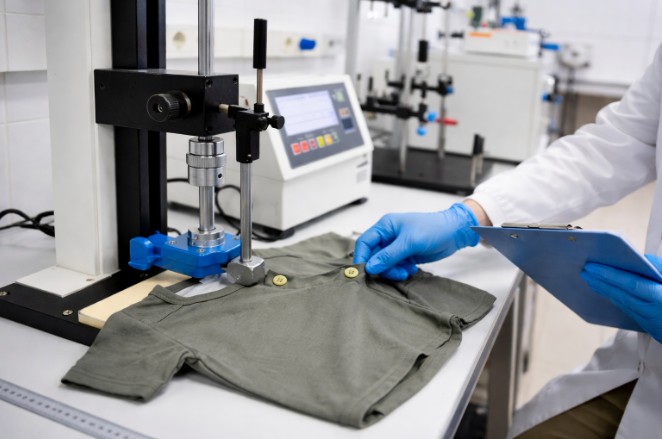
Overview of Major Global Regulations
Different countries have varying regulations, but all aim to protect children’s safety. For example, the EU EN14682 standard focuses on drawstring safety, while the US CPSIA covers lead content and flammability testing. Companies entering global markets must understand and comply with these standards.
EU Safety Standards
The EU enforces strict requirements on design and material safety. More information:https://ec.europa.eu
US CPSIA Regulations
US regulations emphasize chemical safety and flammability to ensure safe use under various conditions.
Comparison of International Testing Standards
| Standard | Focus | المنطقة |
| EN14682 | Drawstrings | EU |
| CPSIA | Chemicals & Flammability | US |
| ISO | General Safety | Global |
Testing Procedures and Quality Control Systems
A comprehensive testing process is essential to ensure compliance with Childrenswear Safety Standards. Companies should establish multi-stage inspection systems, including raw material testing, in-process inspections, and final product validation. Each stage must have clear standards and documentation for traceability.
Case Study
Preventing Product Recall
A brand conducted full testing before launch and discovered non-compliant drawstring lengths. Background:The company aimed to enter the EU market. Problem:Design failed to meet EN14682. Action:Redesign and retesting. Result:Successfully avoided recall and entered the market smoothly.
Lessons from Chemical Testing Failure
Another brand skipped full dye testing, resulting in excessive chemical content. Background:Rushed production. Problem:Lack of quality control. Action:Product recall and system overhaul. Result:Significant financial loss.
Building Brand Trust
A company improved transparency by publishing test reports. Background:Intense market competition. Problem:Low consumer trust. Action:Third-party certification and report disclosure. Result:Improved sales and brand image.
Supply Chain Management and Risk Prevention
Supply chain management is crucial for ensuring compliance. Companies must maintain long-term supplier relationships and conduct regular audits. A risk alert system should also be established to detect issues early.
| Risk Type | Prevention Method |
| Material Issues | Raw material testing |
| Design Defects | Design review |
| Manufacturing Errors | Production monitoring |
Technological Innovation and Future Trends
With technological advancements, safety testing is becoming more digitalized. AI can analyze risks, while big data helps predict potential issues. Reference:https://www.iso.org
How Brands Build Long-Term Competitive Advantage
Companies that consistently comply with Childrenswear Safety Standards and optimize processes can gain long-term advantages, including better product quality and stronger brand trust.
الأسئلة الشائعة
Q1 Why are childrenswear safety standards important
<span style="”font-weight:" 400;”>A1 Children are more vulnerable, and unsafe clothing can cause harm, so compliance is essential.
Q2 What tests are most critical
A2 Drawstring testing, small parts pull testing, and chemical analysis are key.
Q3 How can brands ensure compliance
A3 Establish testing systems and collaborate with third-party labs.
Q4 Are standards the same globally
A4 No, regulations vary by country and must be adapted accordingly.
Q5 What are the consequences of non-compliance
A5 Product recalls, fines, and legal liabilities can occur.
الخاتمة
Childrenswear Safety Standards are essential in the industry. Through proper design, testing, and supply chain management, companies can reduce risks and improve competitiveness.
اتصل بنا
If you want to ensure compliance with international safety standards and enhance your brand competitiveness, contact us today.
Company Name: Hanjen International Ltd.
العنوان: 5F, No. 657-8 Chung Cheng Road, Hsin Chuang District, New Taipei City, Taiwan
Phone: 886-2-2903 7662
Email: hanjen.intl.ltd@gmail.com