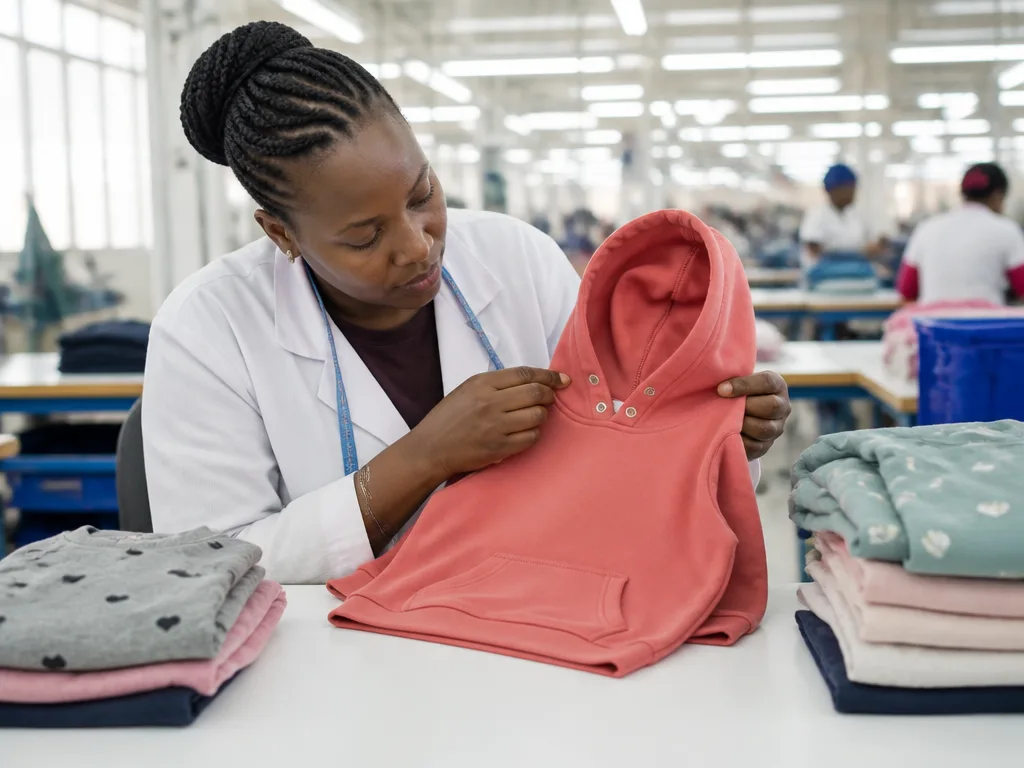
Children’s clothing is one of the most tightly regulated categories a sourcing manager can take on. A hoodie with a cord in the wrong place, a snap that pulls off, or a print with a non-compliant ink can turn a routine order into a recall, a detained container or a retailer chargeback. The rules are not complicated once you see how they fit together, but they are spread across several regulations on each side of the Atlantic, and the responsibility for meeting them sits with the importer and the brand as much as with the factory.
This guide walks through the childrenswear safety standards that matter most for brands selling into the United States and the European Union, explains which tests are actually required and which are buyer-driven, and shows how to build risk management into development and production instead of discovering problems at the testing lab. It is a practical map, not a substitute for advice from a qualified compliance professional or testing laboratory.
Why Childrenswear Is Regulated Differently
Children put things in their mouths, catch cords on playground equipment and cannot always pull free from a snag. That is why kidswear rules focus on mechanical hazards (strangulation from cords, choking from detached components), chemical hazards (lead and certain phthalates) and flammability.
In the US, a “children’s product” under the Consumer Product Safety Improvement Act (CPSIA) is one designed or intended primarily for children 12 years of age or younger. Once a garment falls into that category, a different compliance pathway applies: third-party testing at a CPSC-accepted laboratory, a Children’s Product Certificate and permanent tracking information. The first decision a brand should document for every style is therefore the age grade, because the age grade determines which rules apply.
In the EU there is no single children’s apparel regulation. General product safety law requires products to be safe, harmonised standards such as EN 14682 show how to meet that for cords and drawstrings, and REACH chemical restrictions apply to all textiles.
US Requirements: CPSC Rules for Children’s Apparel
The CPSC’s training material summarises the core US obligations for children’s apparel: CPSC textiles and apparel requirements overview. The main pieces are flammability, lead, phthalates (in limited cases), drawstrings, tracking labels and certification.
Flammability (16 CFR 1610). All clothing textiles sold in the US must meet the general wearing apparel flammability standard, which assigns fabrics to Class 1, 2 or 3 based on burn time and surface characteristics. Class 3 fabrics are considered dangerously flammable and cannot be used in clothing. Some fabrics are exempt from testing: plain-surface fabrics weighing at least 2.6 oz per square yard regardless of fiber, and fabrics made entirely of acrylic, modacrylic, nylon, olefin, polyester or wool, or blends of those fibers. Raised-surface fabrics such as brushed fleece and velour in cotton or cotton blends are the ones that most often need careful testing.
Children’s sleepwear (16 CFR 1615 and 1616). Sleepwear in sizes 0 to 14, including pajamas, nightgowns, robes and loungewear, must be flame resistant and self-extinguish, tested both new and after 50 launderings. Tight-fitting garments that meet specified dimensions, and infant garments in sizes 9 months and smaller, are exempt from the sleepwear standard but must still meet 16 CFR 1610, and tight-fitting sleepwear needs specific labels and hang tags. If a product is described or photographed as something to sleep in, treat it as sleepwear until you have confirmed otherwise.
Lead. Accessible components of children’s products are limited to 100 ppm total lead content, and paint and surface coatings to 90 ppm. The CPSC has determined that dyed or undyed textiles and nonmetallic thread do not exceed the lead limits, so they do not need third-party lead testing. Metal components such as snaps, buttons, grommets and zipper pulls, and painted or printed components, still have to comply and are the usual focus of lead testing.
Phthalates. The phthalate limits apply to children’s toys and to child care articles for children 3 and younger. For apparel this means items such as bibs and sleepwear for children under 3, including screen prints on that sleepwear.
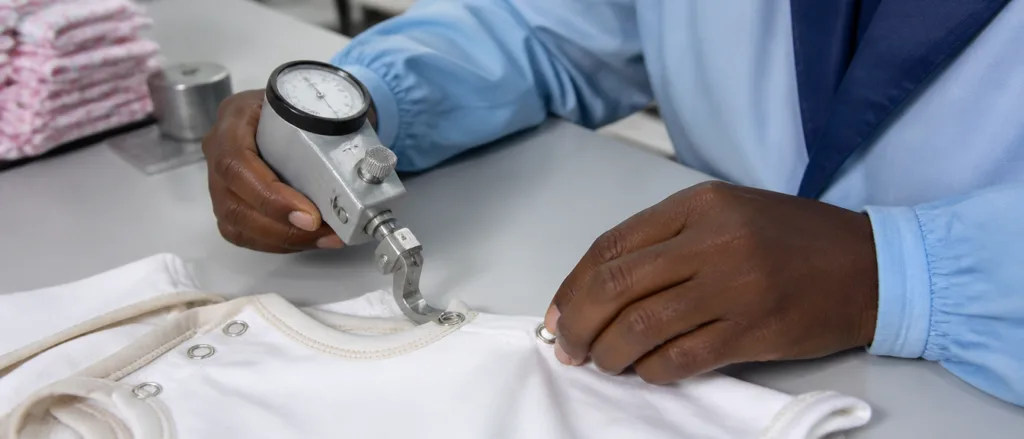
Small parts. The federal small-parts regulation for children under 3 lists children’s clothing and accessories such as buttons among its exemptions (16 CFR 1501.3). Detached buttons, snaps and appliqués can still cause choking incidents and recalls, so most brands set attachment-strength requirements and pull tests for infant and toddler styles.
Tracking labels. Every children’s product sold in the US needs permanent tracking information on the product and its packaging, to the extent practicable. A good tracking label identifies the manufacturer or brand, the place and date of production, and a batch or order reference that links back to production records. Plan it at the tech-pack stage so the label supplier and factory work from the same data.
Children’s Product Certificate. The CPC is the document in which the importer, or the domestic manufacturer for US-made goods, certifies that the product complies with every applicable children’s product safety rule. It must be based on passing test results from a CPSC-accepted third-party laboratory, it must list each rule being certified, and it must accompany the product or shipment and be available to the CPSC and US Customs and Border Protection on request. It is not submitted to the CPSC for approval. The factory supplies test reports and production data, but the importer is the legal certifier, so brands should keep the CPC process in their own hands.
Certification covers the product as produced, so material changes such as a new snap supplier or ink system can require new testing, and periodic testing applies to ongoing production. Component part testing from trim suppliers can support certification if traceability is sound.

Drawstrings: The Most Common Failure in Kids’ Outerwear
Cords and drawstrings cause more children’s clothing recalls than almost any other single feature, and both the US and EU rules are specific. The CPSC has classified certain drawstrings in children’s upper outerwear as a substantial product hazard under 16 CFR Part 1120, with ASTM F1816 as the referenced voluntary standard. According to the CPSC business guidance on drawstrings in children’s upper outerwear, hood and neck drawstrings in sizes 2T to 12 are a substantial product hazard. Waist and bottom drawstrings in sizes 2T to 16 must not extend more than three inches outside the channel when the garment is fully expanded, must have no toggles, knots or other attachments at the free ends, and, if made as one continuous string, must be bartacked so they cannot be pulled out of the channel.
“Upper outerwear” includes children’s hoodies, sweatshirts, jackets and vests, and the CPSC notes that ties are covered while belts are not. Many brands now design kids’ hoodies with no hood cord at all, which removes the hazard rather than managing it.
In Europe, EN 14682:2014 sets requirements for cords and drawstrings on children’s clothing up to the age of 14, including costumes and ski apparel. The standard divides the garment into zones (head, neck and upper chest; chest and waist; the lower edge of garments hanging below the crotch; the back; and sleeves) and sets stricter rules for young children than for older children and young persons. For young children, drawstrings and functional cords in the hood and neck area are not permitted; for older children, the rules restrict free ends, length and attachments. Intertek notes that EN 14682:2014 was harmonised under the EU’s general product safety framework, with the Commission decision effective from 24 August 2015 (Intertek insight bulletin on EN 14682:2014).
The table below summarises the main US and EU requirements covered in this guide.
| Requirement | Market | What it covers | Typical evidence |
|---|---|---|---|
| Drawstrings in upper outerwear | US (16 CFR 1120, ASTM F1816) | No hood or neck drawstrings in sizes 2T–12; waist and bottom cords in 2T–16 limited to 3 inches, no toggles or knots, bartacked | Design review, measurement at inspection |
| Cords and drawstrings | EU (EN 14682:2014) | Zone-based limits for clothing up to age 14, stricter for young children | Lab assessment against the standard, design review |
| Flammability | US (16 CFR 1610) | All clothing textiles, Class 1–3 | Third-party test unless fabric is exempt |
| Children’s sleepwear | US (16 CFR 1615/1616) | Sizes 0–14 sleepwear and loungewear | Third-party flammability testing, new and after laundering |
| Lead content and surface coatings | US (CPSIA) | 100 ppm substrate, 90 ppm paint and coatings on accessible components | Third-party test of trims and prints |
| Phthalates | US (CPSIA) | Child care articles for ages 3 and under, such as sleepwear and bibs | Third-party test of plastic and printed components |
| Tracking label and CPC | US (CPSIA) | All children’s products | Permanent marking; certificate issued by importer or domestic manufacturer |
Building a Risk-Managed Development Process
The cheapest place to fix a childrenswear compliance problem is on the design sketch. Start each style with a risk review in the tech pack: confirm the age grade, list every component (fabric, thread, snaps, zippers, prints, labels), mark which rules apply, and flag features that need redesign, such as hood cords on a size 6 jacket. Then nominate compliant components early by collecting lead and phthalate reports for the exact trim part numbers and inks, and pre-test risky components at the sample stage before bulk fabric is committed.
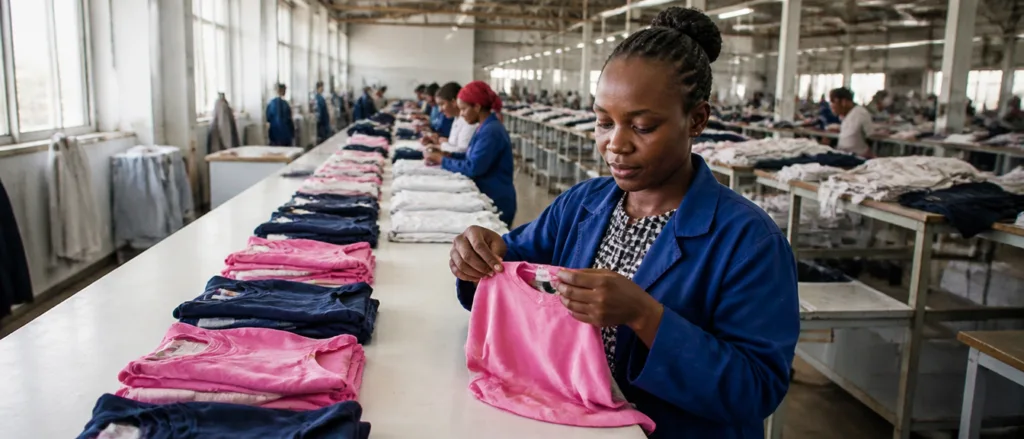
During production, controls should focus on the features that the risk review flagged. That usually means measuring waist and hem cord lengths on finished garments, checking bartacks, performing pull tests on snaps and buttons for infant and toddler styles, confirming that tracking and care labels match the order, and running finished goods through needle detection before packing. These records also support the CPC.
| Stage | Key risk-management action | Who owns it |
|---|---|---|
| Design and tech pack | Confirm age grade, list components, remove hood and neck cords for younger sizes | Brand product team |
| Component sourcing | Collect lead and phthalate reports for snaps, zippers, prints and plastics | Brand and factory sourcing |
| Sampling | Pre-test risky components and fabrics at a CPSC-accepted or accredited lab | Brand compliance |
| Bulk production | Inline checks on cords, bartacks, trim attachment and labels | Factory quality team |
| Pre-shipment | Final inspection, needle detection, test reports filed, CPC issued | Factory, brand and importer |
At HANJEN, kidswear is made at our Kenyan factory near Mombasa with printing and embroidery in-house, which makes it easier to control the inks and transfer materials used in children’s styles. Needle detectors and tensile testers support in-process checks, but US certification still relies on third-party testing at a CPSC-accepted laboratory, and we work with brands and their laboratories by supplying samples, component information and production records. For details of the audits and certifications we can share, see our compliance and certifications page, and for how inspections are organised on the floor, see our quality control process.
Frequently Asked Questions
Does every children’s garment need third-party testing in the US?
Children’s products need a Children’s Product Certificate based on third-party testing for each applicable rule. Some tests are not needed because of CPSC determinations or exemptions, for example lead testing of dyed or undyed textiles, or flammability testing of exempt fabrics. The components that are not exempt, such as metal snaps or printed graphics, still need testing.
Can a children’s hoodie have a hood drawstring if it is sold in size 14?
The US hood and neck drawstring hazard covers sizes 2T to 12, so a size 14 is outside that specific rule, although waist and bottom cords up to size 16 must still meet the length, toggle and bartack requirements. EN 14682 in Europe covers clothing up to age 14 with rules for older children. Many brands remove hood cords across all kids’ sizes to keep one compliant design.
Who issues the Children’s Product Certificate for imported goods?
For imported products, the US importer is responsible for issuing the CPC. The overseas factory supports the process with samples, component details and production records, and the testing must be done by a CPSC-accepted third-party laboratory.
Is EN 14682 mandatory in the EU?
EN 14682 is a harmonised standard under EU product safety law. Meeting it gives a presumption of conformity for the risks it covers, and retailers and market surveillance authorities treat it as the benchmark for children’s cords and drawstrings.
Do buttons and snaps on baby clothes fall under the small-parts rule?
Children’s clothing and accessories such as buttons are listed as exempt from the federal small-parts regulation. Detached components can still create a choking hazard, so brands should set attachment-strength requirements, test lead content in metal parts and include pull tests in production inspections.
Conclusion: Make Safety Part of the Design, Not the Afterthought
Childrenswear safety standards reward brands that plan early. When the age grade, cord design, trims and production checks are settled early, third-party testing becomes a confirmation step rather than a gamble. On the US side, keep the Children’s Product Certificate process under your control as the importer; on the EU side, design against EN 14682 from the first sketch.
If you are planning a kidswear line and want a manufacturing partner that understands these requirements and will work openly with your testing laboratory, contact the HANJEN team to discuss your styles, size ranges and compliance plan.