
The retail apparel landscape has undergone a structural transformation in sustainability requirements that has elevated GRS Certified Apparel from a niche specialty offering to a baseline expectation across major retail channels. Major retailers including Walmart, Target, Macy’s, Kohl’s, and specialty performance retailers have implemented vendor compliance frameworks that require Global Recycled Standard certification documentation for substantial portions of their assortments, with timelines that typically expand the certified portion of the assortment year over year. Brands operating in this environment cannot treat sustainability certification as optional for long-term retail success, with the reality that vendors lacking proper certification documentation increasingly face restrictions on assortment placement, promotional support, and growth opportunities within retail customer channels.
The underlying drivers of this transformation extend beyond retail buyer preferences to include consumer demand patterns, investor pressure on retail brands, and regulatory developments that affect both the US and EU markets where most brand operations earn their revenue. Consumer surveys consistently demonstrate that younger consumer segments place meaningful value on verified sustainability claims, with willingness-to-pay premiums of 5 to 15 percent for products with credible certification documentation. Investor pressure on public retail companies has elevated sustainability metrics to mainstream financial reporting status, with sustainability performance affecting capital costs, valuation multiples, and stakeholder confidence. Regulatory developments including the EU Corporate Sustainability Reporting Directive and US state-level regulations on greenwashing have created compliance exposure for unsubstantiated sustainability claims, with verified certification providing the documentation foundation that supports defensible claims.
This guide examines the strategic context driving the GRS certification trend, the technical framework that defines GRS certification requirements, the production considerations that affect achievability for brand operations, the cost implications that affect economic viability, and the common implementation mistakes that affect compliance reliability. The analysis draws on the official GRS standard documentation maintained by Textile Exchange, retail customer compliance frameworks from major US retailers, and direct experience supporting brand customer GRS implementation across activewear, swimwear, athleisure, and basic apparel categories. The conclusion is that GRS certification has shifted from a specialty positioning to a foundational requirement for retail success, with the brand operations that have invested in proper certification infrastructure positioned for sustainable competitive advantage relative to peers maintaining traditional sourcing without certification depth. The competitive positioning advantages compound over time as certification capability matures, retail customer relationships deepen, and consumer brand affinity strengthens through sustained certification messaging. Brand operations that established certification capability earlier in the trend cycle have generally captured stronger market positions than later-entering peers, with the first-mover advantages reflecting the cumulative effect of accumulated retail relationships and consumer preference development that takes time to build through sustained operational commitment to certified production.
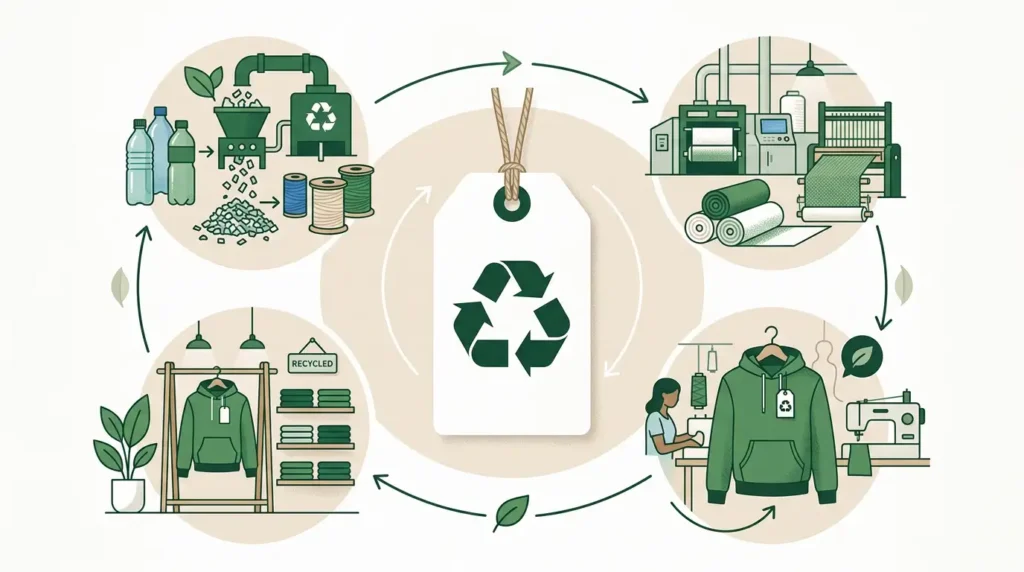
Why Retail Success Now Demands GRS Certified Apparel
The retail demand for certified apparel reflects converging pressures from consumer preferences, retail buyer requirements, and broader stakeholder expectations that have collectively elevated sustainability certification to a baseline expectation across major channels. The transformation has accelerated over the past five years, with the certification expectation transitioning from specialty retailer requirements to mainstream retail channel requirements. Brand operations that have not adapted their certification posture face progressive restrictions on retail channel access, with the gap between certified and non-certified vendors widening as more retailers tighten their compliance frameworks. The strategic implications for brand operations are substantial, with certification status now affecting both immediate channel access and longer-term growth opportunities across the retail customer relationships that drive brand revenue performance.
Consumer Demand for Verified Sustainability Claims
Consumer demand for verified sustainability claims has matured from initial interest among niche consumer segments to mainstream expectation across the broader consumer base. Recent consumer research from major industry analysts indicates that sustainability considerations affect purchase decisions for over 60 percent of US apparel consumers, with the percentage rising to over 75 percent among consumers under 35 years of age. The consumer expectation has shifted from generic sustainability messaging to specific verification requirements, with consumers increasingly skeptical of unsubstantiated claims and willing to reward brands that provide credible third-party verification. The shift has been driven partly by consumer education through media coverage of greenwashing controversies and partly by direct exposure to verification frameworks through retailers that prominently feature certified products in their assortments.
The willingness-to-pay dynamics for verified sustainability claims have strengthened over time, with current consumer research indicating premium tolerance of 5 to 15 percent for products with credible certification documentation in most apparel categories. The premium tolerance varies by category and price point, with higher-end products typically supporting larger sustainability premiums and value-positioned products supporting smaller but still meaningful premiums. The consumer dynamics support the financial case for brand investment in certification infrastructure, with the premium pricing capacity offsetting the modest certification cost overhead. Brand operations that have invested in certification depth typically achieve better gross margin performance than peers operating without certification, with the margin advantage compounding across multiple product categories and growing assortments. The premium pricing dynamics also extend to retail customer relationships, with retail buyers often providing more favorable terms to vendors that bring documented sustainability credentials supporting their assortment positioning. The favorable terms can include better shelf placement, marketing co-investment, promotional support, and growth opportunity allocation that drives long-term commercial performance. The brand certification investment therefore produces value across multiple commercial channels rather than just through direct consumer pricing impact. The Textile Exchange organization publishes detailed consumer research documenting these dynamics across major consumer segments and apparel categories.
Retail Buyer Requirements and Vendor Compliance
Retail buyer requirements for sustainability certification have intensified substantially over the past three years, with major US retailers implementing vendor compliance frameworks that establish minimum certification requirements for assortment placement. Walmart’s sustainability framework requires verified recycled content documentation for specific product categories, with the requirements expanding annually as the retailer scales its sustainability commitments. Target’s vendor compliance framework similarly requires certification documentation for sustainable products, with the certified portion of the assortment growing year over year. Specialty retailers including REI, Patagonia retail accounts, and major sporting goods chains often maintain more demanding certification requirements that affect vendor selection and assortment positioning.
The vendor compliance framework typically includes specific documentation requirements covering the certification scope, the certified products within the brand assortment, the supporting documentation chain from raw materials through finished goods, and ongoing audit trail evidence supporting the certification claims. Brands that meet the documentation requirements gain access to assortment opportunities, marketing support, and promotional placement that brands operating without proper documentation cannot pursue. The differential access creates meaningful commercial impact that extends beyond the immediate transactional relationship into longer-term growth trajectories. Brand operations should evaluate their certification posture against the specific requirements of their priority retail customers, with proactive certification investment supporting better commercial outcomes than reactive certification pursued only after retail customers raise specific concerns. The retail customer relationships also benefit from the operational discipline that certification implementation requires, with the structured documentation infrastructure supporting better retail customer compliance reporting and stronger retail customer confidence in the brand’s overall operational sophistication. Retail customers increasingly view certification depth as a proxy for broader operational quality, making certification investment a signal of the broader operational excellence that retail relationships value beyond the specific certification requirements.
Regulatory Pressure from EU and US Markets
Regulatory pressure from EU and US markets has added a compliance dimension to the certification trend, with regulatory frameworks creating both reporting obligations and exposure to greenwashing claims that affect brand operational risk. The EU Corporate Sustainability Reporting Directive requires comprehensive sustainability reporting from large companies operating in the EU market, with the reporting framework including specific provisions for supply chain due diligence, environmental impact, and social compliance dimensions. US brand operations serving the EU market through retail partners face indirect exposure to these requirements through retail customer due diligence processes, with retail customers extending the regulatory expectations to their vendor base through compliance frameworks. US state-level regulations have also developed, with California, New York, and other states implementing or considering legislation that affects sustainability claims and supply chain due diligence.
The regulatory framework provides additional motivation for brand certification investment beyond the consumer and retail customer drivers. Verified certification documentation provides the substantive foundation for sustainability claims, supporting compliance with both formal regulatory requirements and emerging legal frameworks affecting greenwashing. Brand operations that maintain proper certification documentation face lower regulatory risk than operations relying on unsubstantiated claims, with the certification investment producing both commercial benefits and risk mitigation that justify the operational overhead. The regulatory framework is likely to continue developing across both EU and US jurisdictions, with the brands that have established certification depth positioned to navigate the evolving requirements more effectively than brands attempting to develop certification capability reactively as specific regulatory requirements emerge. The regulatory framework also creates due diligence obligations that extend to the supply chain partners, with brand customers requiring their factory partners and fabric suppliers to maintain compliance documentation that supports the brand’s broader regulatory reporting requirements. The supply chain compliance flow-through effect makes the partner selection decision substantially more consequential than was historically the case, with established certified partners providing both immediate compliance value and longer-term strategic alignment with the regulatory trajectory. According to Brookings Institution research on sustainability regulations, the regulatory trajectory across major markets suggests continued tightening of substantiation requirements affecting all major apparel brands. The Carnegie Endowment for International Peace publishes additional research on the broader sustainability and trade regulatory framework that affects apparel sector operations across multiple jurisdictions. Brand operations should monitor these analytical sources alongside the official regulatory documentation to maintain comprehensive understanding of the evolving requirements that affect strategic planning across the regulatory landscape.
Understanding the GRS Certification Framework
The Global Recycled Standard certification framework was developed by Textile Exchange to provide rigorous third-party verification of recycled content claims across textile and apparel products. The framework addresses both the recycled content verification and the broader environmental and social criteria affecting the production process, providing comprehensive certification that supports defensible brand claims about product sustainability. The certification framework operates through a chain of custody approach that traces certified materials from raw fiber through final finished products, with each stage of the production chain requiring its own certification to maintain the integrity of the overall certified product. The framework structure produces certification documentation that withstands both retail customer due diligence and regulatory scrutiny, supporting the credibility that consumers and stakeholders increasingly demand.
The recycled content requirements under GRS specify minimum percentages that vary by product category and the specific certification level claimed. Products with recycled content of at least 20 percent qualify for the basic GRS certification, while products with recycled content of 50 percent or higher qualify for the GRS labeled certification that supports more prominent consumer-facing claims. The recycled content can come from either pre-consumer recycled material (typically manufacturing scrap recovered before reaching end consumers) or post-consumer recycled material (recovered from products that reached end consumers and were collected for recycling), with both sources qualifying under the GRS framework. The certification documentation specifies the recycled content percentage and source type, supporting transparent communication to consumers and stakeholders about the specific product attributes. The certification documentation also supports brand operational planning across multiple production seasons, with the documentation framework providing the substantive foundation for forward-looking sustainability commitments that brand operations may publish in their corporate sustainability reporting. The reporting alignment between certification documentation and corporate sustainability disclosures supports consistent messaging across the various stakeholder relationships, with the integrated approach producing stronger stakeholder confidence than fragmented sustainability communication that lacks substantive documentation foundation.
The environmental and social criteria under GRS extend beyond the recycled content verification to include chemical management restrictions, water and energy efficiency standards, and labor compliance requirements that affect production facility eligibility. The chemical management standards align with the broader Manufacturing Restricted Substances List frameworks that major apparel brands have adopted, with prohibited chemicals identified and substantiated through facility audits. The water and energy efficiency standards establish minimum performance requirements for facility operations, with audit verification supporting the compliance claims. The labor compliance requirements address worker rights, working conditions, and ethical employment practices, often referencing the standards established under broader social compliance frameworks. The integrated approach to environmental and social criteria produces a comprehensive certification that addresses the full range of sustainability dimensions that brands typically need to communicate to their stakeholders. The framework comprehensiveness distinguishes GRS from less rigorous certification options that may address only recycled content without the broader sustainability profile. Brand customers communicating to sophisticated stakeholders including consumers, retail customers, investors, and regulators benefit from the comprehensive framework foundation, with the integrated certification supporting credible communication across multiple dimensions rather than fragmented certification claims that may not satisfy specific stakeholder concerns.
How GRS Certified Apparel Is Verified
The verification process for recycled-certified apparel operates through structured audit and documentation procedures that produce reliable certification across the production chain. The verification framework addresses each stage of the production process from raw material sourcing through finished product delivery, with appropriate controls at each handoff point to maintain certification integrity. The verification process is conducted by approved certification bodies that hold accreditation under the Textile Exchange framework, with the certification bodies providing both initial certification audits and ongoing surveillance audits that maintain certification validity over time.
| Verification Stage | Audit Focus | Key Documentation | Typical Frequency |
|---|---|---|---|
| Recycler/Mechanical Processor | Source material verification, recycling process | Source claims, processing records | Annual audit |
| Yarn/Fiber Producer | Recycled content tracking, mass balance | Material flow records, transaction certificates | Annual audit |
| Fabric Mill | Mass balance verification, chain of custody | Yarn purchase records, fabric production records | Annual audit |
| Cutting and Sewing Factory | Material receipt, finished goods tracking | Fabric receipts, production records, finished goods records | Annual audit |
| Brand Customer | Product claims verification, marketing review | Transaction certificates, claim substantiation | As needed |
| Surveillance Audits | Ongoing compliance monitoring | Continued documentation maintenance | 12-18 month cycles |
| Transaction Certificates | Per-shipment certified material verification | Specific shipment recycled content documentation | Per shipment |
| Claim Verification | Marketing and labeling review | Product label substantiation | Pre-launch |
The verification process produces both facility-level certification that establishes ongoing compliance with the GRS framework and product-level transaction certificates that document the specific recycled content of individual shipments. The transaction certificates serve as the primary documentation that retail customers and regulatory authorities reference when verifying specific product claims, with the documentation chain from raw material through finished product supporting the certificate’s substantive validity. Brand customers should maintain comprehensive transaction certificate records as part of their broader compliance documentation infrastructure, supporting both routine business operations and exception scenarios where verification may be required. The transaction certificate framework also supports brand customer transparency in retail customer relationships, with retail buyers often requiring transaction certificate documentation as part of their vendor compliance frameworks. The transparency benefits compound across the various stakeholder relationships affected by sustainability documentation, with the unified certificate framework supporting consistent messaging across consumer, retail, regulatory, and investor communications. The records management infrastructure should support efficient retrieval when documentation is requested, with cloud-based document management solutions supporting both retention discipline and accessibility. The records retention requirements typically extend across multiple years to support both surveillance audit cycles and any longer-term verification needs that may emerge through retail customer due diligence or regulatory verification activities. Brand operations should consult with their certification body and legal counsel on the specific retention requirements applicable to their operations, ensuring that the records management infrastructure aligns with all relevant requirements.
Production Considerations for GRS Certified Apparel
Production considerations for GRS-certified products address the specific operational dimensions that brand operations must coordinate to support reliable certification across high-volume production programs. The considerations span recycled material sourcing, mill selection and qualification, factory selection and audit planning, and ongoing compliance management that maintains certification validity over the operational lifecycle. Brand customers operating significant GRS-certified volume typically maintain dedicated certification management capability that coordinates across these dimensions, providing the operational foundation that supports reliable certification at commercial scale. The investment in certification management capability is modest relative to the commercial benefits, with the operational overhead typically offset by the premium pricing capacity that certified products support. The certification management capability should be developed as part of the broader operational infrastructure rather than as a standalone function, with the integrated approach supporting better operational outcomes than fragmented certification management. Brand operations should structure their certification capability with appropriate organizational connections to sourcing, product development, quality, and finance functions, supporting the cross-functional collaboration that drives effective certification implementation and ongoing program management. The cross-functional collaboration should include explicit governance structures with clear accountability assignments, regular review cadences that capture program performance and emerging issues, and escalation pathways that enable rapid response when exception scenarios require coordinated attention. The governance discipline supports both routine operational excellence and effective response to specific issues that may emerge during program execution, contributing to the operational reliability that distinguishes mature certification programs from less developed alternatives. Brand operations should structure their certification governance with appropriate seniority and resource commitment, recognizing that the strategic importance of certification justifies the organizational investment required for effective execution at scale.
Recycled Polyester Sourcing and Mill Selection
Recycled polyester sourcing for GRS-certified production typically draws from a network of qualified recyclers and yarn producers that hold their own GRS certifications. Major recycled polyester suppliers operate in Taiwan, Korea, India, and increasingly in other markets, with the supply chain network including both mechanically recycled polyester from PET bottles and chemically recycled polyester from various input streams. The selection of specific recycled polyester sources affects both the technical performance characteristics of the finished product and the certification logistics that support reliable supply. Brand operations should engage with their fabric mill partners early in the program planning to identify the specific recycled polyester sources that fit the program requirements, with quality validation through sample testing supporting the technical performance verification.
Mill selection for GRS-certified production requires verification that the mill holds current GRS certification covering the specific yarn and fabric production scope required for the brand program. Not all mills hold GRS certification, and not all certified mills cover all yarn types or fabric constructions. The mill qualification process should include verification of the certification scope, sample production for technical validation, and operational alignment that supports reliable supply across the program lifecycle. Established mills serving the brand customer ecosystem typically maintain GRS certification across their primary production scope, with certification scope documentation available for brand customer review during qualification. The mill selection decision affects both the technical performance of the finished product and the operational reliability of the certification infrastructure, making it one of the most consequential decisions in the GRS program planning process. Brand operations should engage multiple candidate mills during the qualification phase, comparing both the certification scope and the technical capability across the candidates to identify the optimal partner for the specific program requirements. The comparison should include explicit assessment of the mill’s GRS audit history, the depth of certification across yarn types and fabric constructions, and the operational reliability demonstrated through prior brand customer programs. The qualification investment supports better program outcomes than tentative mill selection that may require costly mid-program changes if initial selection proves inadequate.
Chain of Custody Documentation
Chain of custody documentation requirements under GRS establish the substantive basis for the certification claims, with the documentation tracing certified materials from raw fiber through finished products. The documentation requirements apply at each stage of the production chain, with each certified entity maintaining records of certified material receipts, certified material processing, and certified material transfers to subsequent supply chain partners. The documentation framework operates through transaction certificates that accompany each transfer of certified material, with the cumulative chain producing the documentation foundation supporting the finished product certification claims. Brand customers operating mature GRS programs maintain documentation infrastructure that captures all the relevant transaction certificates, supporting both routine operations and any exception scenarios that may require verification.
The documentation discipline at the factory level affects the reliability of the chain of custody integrity, with established factories maintaining structured documentation systems that integrate certification records with broader production documentation. The documentation systems should support both the per-shipment certificate generation and the longer-term records retention that supports surveillance audits and any regulatory verification activities. Brand customers should verify the documentation infrastructure during factory qualification, with priority given to factories that have demonstrated documentation discipline through prior brand customer programs. The documentation reliability affects both the immediate certification validity and the longer-term sustainability of the program, with weak documentation infrastructure creating exposure that can compromise the entire certification framework over time.
Social and Environmental Criteria Compliance
Social and environmental criteria compliance under GRS extends beyond the recycled content verification to address the full sustainability profile of the production facility. The social criteria address worker rights, working conditions, fair compensation, and ethical employment practices, with audit verification supporting the compliance claims. The environmental criteria address chemical management, water and energy efficiency, and waste management practices that affect the facility’s environmental footprint. The combined social and environmental criteria produce comprehensive certification that aligns with broader sustainability frameworks brands typically reference in their stakeholder communications.
The compliance verification typically occurs through facility audits conducted by approved certification bodies, with the audits addressing both the documentary evidence and the operational reality through facility tours, worker interviews, and document examination. Facilities that satisfy the audit requirements receive ongoing certification, with surveillance audits maintaining the certification validity through periodic reverification. Brand customers should engage with their factory partners on the audit schedule and any corrective actions that may emerge from specific audits, supporting the operational continuity that maintains certification across the program lifecycle. The audit ecosystem in major production locations including Kenya operates effectively, with experienced certification bodies providing reliable audit services that support brand customer programs at commercial scale. Our facility certification status includes details about the specific certifications maintained and the audit history supporting ongoing compliance. Brand customers can also review category-specific GRS production capability at T-shirts and Polo for direct visibility into the production infrastructure supporting GRS-certified operations. The audit ecosystem in major production locations operates effectively, with experienced certification bodies providing reliable audit services that support brand customer programs at commercial scale. Brand customers can verify the audit body credentials through Textile Exchange’s published list of approved certification bodies, with the verification supporting informed decisions about which audit relationships to develop. The audit body relationship affects both the audit quality and the timing reliability of certification activities, with experienced audit bodies typically supporting more consistent timing and stronger findings management than less established alternatives.
Cost Implications of GRS certification
The cost implications of certified apparel include both the direct costs of certification compliance and the indirect costs affecting overall program economics. The direct costs include certification body fees for facility audits, ongoing surveillance audit costs, transaction certificate generation costs, and any consultancy support required for certification preparation and ongoing compliance. The direct certification costs typically run 0.5 to 2 percent of program value depending on the specific scope and operational structure, with smaller programs facing higher percentage overhead while larger programs benefit from scale economies. The direct costs are typically modest relative to the commercial benefits, with retail premium pricing and channel access advantages typically more than offsetting the certification overhead.
The indirect cost implications include any pricing premiums on recycled polyester relative to virgin alternatives, fabric mill GRS certified production capacity availability, and any operational complexity affecting program execution at the production facility. Recycled polyester pricing has become more competitive over time as production capacity has scaled, with current pricing typically running 5 to 15 percent above equivalent virgin polyester depending on the specific product specification and supply dynamics. The pricing premium is offset by both retail premium pricing and tax incentives in some jurisdictions, with the net economic impact often favorable for brand operations that have aligned their commercial strategy with certification investment. Brand customers conducting comprehensive program economics should incorporate all the cost dimensions into their analytical framework, producing realistic projections that support informed decision-making about program scope and pacing. The USITC tariff schedule provides current information on duty rates affecting recycled content products, supporting the cost modeling that drives strategic decisions. The cost analysis should also incorporate scenario sensitivity that captures the range of plausible outcomes across different supply dynamics, regulatory developments, and consumer preference evolution. The sensitivity analysis typically reveals that the certification investment produces favorable economics across most plausible scenarios, with the asymmetric outcome profile favoring certification investment over the alternative of operating without certification. The cumulative value across multi-year horizons substantially exceeds what single-year analysis would suggest, with the strategic positioning benefits compounding alongside the direct commercial impact of certified production.
Common Mistakes in GRS Compliance
Common mistakes in GRS compliance can compromise certification reliability and create exposure to both retail customer concerns and regulatory issues affecting brand operations. The mistakes typically reflect either insufficient initial program design or inadequate ongoing compliance management, with both categories of issues addressable through structured operational practices. Brand customers should treat compliance discipline as a strategic priority that warrants meaningful operational investment, with the costs of compliance failures often exceeding the costs of compliance infrastructure by an order of magnitude. The cost magnitude difference reflects the cascading nature of compliance failures, with single failures potentially affecting retail customer relationships, regulatory standing, consumer trust, and operational continuity in ways that compound across multiple business dimensions. Brand operations that have experienced compliance failures often invest substantially more in compliance infrastructure after the failure than would have been required to prevent the failure initially, demonstrating the inefficiency of reactive compliance management compared to proactive investment.
Inadequate Mill Verification and Source Validation
Inadequate mill verification represents one of the most consequential compliance mistakes because it can undermine the entire certification chain that depends on the mill’s GRS certification status. Brand customers sometimes assume that a mill’s general industry reputation implies GRS certification or that historical certification status remains current without explicit verification. The verification gap creates compliance exposure when the actual certification status differs from the assumed status, with finished product certification claims potentially lacking the substantive foundation required for valid GRS certification. Brand customers should implement structured mill verification processes that confirm current certification status through reference to the official Textile Exchange certification database, with verification occurring at program initiation and updated periodically as part of ongoing compliance management.
The source validation extends beyond the immediate fabric mill to address the upstream recycled material sources that feed into the mill’s production. The source validation should confirm that the recycled material sources hold appropriate GRS certifications and that the material flows from sources to mill maintain proper documentation chain of custody. The upstream validation can be challenging because brand customers typically have limited direct visibility into mill upstream sourcing, with the validation often relying on the mill’s own documentation and certification records. The reliance on intermediary documentation makes the relationship quality between brand customer and mill particularly important, with established mill relationships that support transparent documentation review producing better compliance outcomes than transactional relationships that may not provide the documentation depth required for full validation. Brand customers should also incorporate periodic on-site visits to fabric mills as part of their ongoing relationship management, supporting the operational visibility that complements the documentation review with direct observation of production practices. The combined approach to mill oversight produces stronger compliance assurance than either approach alone, supporting the certification reliability that brand operations require for credible sustainability claims across the program lifecycle.
Documentation Gaps Between Production Stages
Documentation gaps between production stages can compromise the chain of custody integrity that supports finished product certification claims. The transaction certificate framework requires that each transfer of certified material between supply chain partners be supported by appropriate transaction certificate documentation, with gaps in the documentation chain creating exposure to certification challenges. The documentation gaps can emerge through various operational issues including timing delays in certificate generation, missing certificates for specific transactions, or inconsistencies between transaction certificates and the underlying material flows they represent. Each type of gap creates potential compliance exposure that brand customers should address through structured documentation management.
The documentation management infrastructure should integrate the transaction certificate flow with broader production documentation, supporting comprehensive records that withstand audit scrutiny. Brand customers operating mature GRS programs typically maintain documentation systems that capture transaction certificates alongside the corresponding production records, providing the integrated documentation framework that supports reliable compliance over time. The documentation discipline should extend across all the production stages from raw material sourcing through finished goods delivery, with each handoff point maintaining the appropriate documentation chain. The investment in documentation infrastructure pays back through both reliable compliance outcomes and reduced operational disruption when audit verification activities require documentation production. Brand customers should periodically test the documentation retrieval capability through structured exercises, ensuring that the systems perform as designed when actual verification needs arise. The structured testing should simulate likely verification scenarios including retail customer due diligence requests, regulatory authority inquiries, and surveillance audit findings response, with the testing identifying any documentation gaps or retrieval issues that warrant correction before actual audit needs emerge. Brand operations should also benchmark their documentation infrastructure against industry leaders periodically, identifying capability gaps that warrant targeted improvement efforts. The benchmarking discipline supports continuous capability development that maintains the documentation excellence required for sustained certification reliability across changing operational and regulatory environments. The structured testing should simulate likely verification scenarios, with the testing identifying any documentation gaps or retrieval issues that warrant correction before actual audit needs emerge. The investment in proactive testing produces stronger compliance posture than reactive responses to actual issues, with the operational discipline contributing to the broader certification reliability. The risk mitigation value extends across multiple potential failure scenarios including regulatory enforcement actions, retail customer compliance findings, consumer-facing greenwashing controversies, and broader stakeholder confidence issues that could materially affect brand operations. Each failure scenario carries financial impact that can substantially exceed the certification investment cost, making the risk mitigation value substantial even before considering the direct commercial benefits of certification engagement. Industry frameworks such as those documented at the CBP trade agreement guidance provide additional reference for the broader documentation discipline that integrates with sustainability certification compliance, supporting the integrated operational excellence that distinguishes mature brand operations.
Confusion Between GRS and Other Recycled Standards
Confusion between GRS and other recycled standards can produce certification mistakes that affect both compliance reliability and stakeholder communication. Multiple certification frameworks address recycled content claims, with GRS being one of the most rigorous but not the only framework available. The Recycled Claim Standard (RCS), Bluesign system, and various brand-specific frameworks each address recycled content with different requirements, and brand customers sometimes confuse the requirements across the different frameworks. The confusion can produce documentation that satisfies one framework but not another, creating issues when retail customers or regulators specifically require GRS certification rather than alternative frameworks.
The proper approach addresses each certification framework on its specific terms rather than treating them as interchangeable. Brand customers operating with multiple retail customer relationships may need to maintain compliance with multiple certification frameworks, with the choice between frameworks depending on the specific retail customer requirements and the brand’s overall sustainability strategy. The multiple framework approach requires structured documentation that supports each framework appropriately, with the documentation discipline preventing the framework confusion that can otherwise compromise compliance integrity. Brand customers should engage their fabric mill and factory partners on the specific framework requirements applicable to their programs, ensuring that the operational structure supports the appropriate documentation across all relevant frameworks. The framework specificity also affects consumer-facing communication, with brand operations needing to ensure that their marketing claims align with the specific framework certification rather than making generic recycled content claims that may not be substantiated by the specific framework documentation. Brand operations should establish marketing claim review processes that verify the specific certification basis for each sustainability claim used in consumer-facing materials, supporting the substantive foundation that protects against greenwashing exposure. The marketing claim discipline should be supported by structured collaboration between sustainability, legal, and marketing teams, ensuring that the operational reality of certification documentation aligns with the marketing claims that consumers and stakeholders see in brand communications.
FAQ
Why is GRS Certified Apparel becoming a baseline retail expectation rather than a specialty option?
A1: GRS Certified Apparel is becoming a baseline retail expectation because of the convergence of consumer demand, retail buyer requirements, and regulatory pressure that has elevated sustainability certification from specialty positioning to mainstream channel access requirements. Major US retailers including Walmart, Target, Macy’s, Kohl’s, and specialty performance retailers have implemented vendor compliance frameworks requiring sustainability certification documentation for substantial portions of their assortments. Consumer surveys consistently demonstrate sustainability considerations affect purchase decisions for over 60 percent of US apparel consumers, with younger consumer segments showing even higher sensitivity. Investor pressure on public retail companies has elevated sustainability metrics to mainstream financial reporting status. Regulatory developments including the EU Corporate Sustainability Reporting Directive and US state-level regulations on greenwashing have created compliance exposure for unsubstantiated sustainability claims. The combined pressures have shifted the strategic calculation for brand operations, with brands that have not invested in certification facing progressive restrictions on retail channel access, marketing limitations, and growth opportunity constraints. The transformation has accelerated over the past three years and is likely to continue, with more retailers tightening certification requirements and more regulatory frameworks emerging across major markets. Brand operations developing forward-looking sourcing strategies should treat GRS certification as a foundational requirement rather than as an optional specialty, recognizing that the cost of certification investment is modest relative to the commercial impact of failing to meet evolving retail and consumer expectations. The transition from optional to required has accelerated in recent years and continues to develop, with each successive year typically introducing additional retail customer requirements, consumer preference shifts, or regulatory developments that further elevate certification importance. Brand operations should monitor these trends through structured industry intelligence channels and adjust their certification posture proactively rather than reactively, supporting the strategic agility that distinguishes leading brand operations from peers operating with reactive postures that miss opportunities and absorb avoidable risks.
What is the typical cost overhead of GRS certification for brand operations?
A2: The typical cost overhead of GRS certification for brand operations runs 0.5 to 2 percent of program value depending on the specific scope and operational structure, with smaller programs facing higher percentage overhead while larger programs benefit from scale economies. The cost components include certification body fees for facility audits, ongoing surveillance audit costs, transaction certificate generation costs, and any consultancy support required for certification preparation and ongoing compliance. The recycled polyester material premium relative to virgin alternatives adds additional cost ranging from 5 to 15 percent depending on the specific product specification and supply dynamics, though this material premium has narrowed substantially over the past several years as recycled polyester production capacity has scaled. The total economic impact of certification depends on both the direct costs and the offsetting commercial benefits including retail premium pricing capacity, channel access advantages, and consumer loyalty effects that drive long-term brand performance. Brand customers conducting comprehensive program economics typically find that the commercial benefits substantially exceed the certification overhead, particularly for brand operations targeting the consumer segments that prioritize sustainability considerations in their purchase decisions. The cost overhead is also modest relative to the regulatory risk mitigation that certification provides, with the documentation foundation supporting defensible sustainability claims that protect against greenwashing exposure across major regulatory frameworks. The investment payback typically occurs within the first 12 to 18 months of certified production at scale, with ongoing benefits compounding across multiple production seasons. Brand operations should also factor in the avoided cost of compliance failures that certification provides, with the documentation infrastructure protecting against potential greenwashing claims, regulatory issues, or retail customer compliance concerns that could materially affect brand operations. The risk mitigation value adds to the direct commercial benefits, producing a comprehensive value picture that supports robust justification for the certification investment across the various analytical perspectives that brand operations apply to strategic decisions.
How long does it take to establish GRS certification across a brand operation?
A3: The timeline to establish GRS certification across a brand operation typically runs 6 to 12 months from initial planning through operational program launch, with the specific timing depending on the existing supply chain configuration and the scope of the certification program. The timeline phases include supply chain mapping and gap analysis (typically 4 to 8 weeks), mill and factory qualification or certification preparation (typically 8 to 16 weeks), initial certification audit and resolution of any findings (typically 6 to 12 weeks), and operational program launch with initial production runs (typically 4 to 8 weeks). Brand operations working with manufacturing partners that already hold GRS certifications can compress the timeline substantially, with the qualification phase reducing to verification rather than certification preparation. Brand operations starting from supply chains that lack certification will face longer timelines as mill and factory partners work through the initial certification process. The factory selection decision substantially affects the timeline, with brands prioritizing speed-to-market should weight existing certification depth heavily in their qualification criteria. The implementation pacing should also align with the brand’s broader product development cycles, with certification timeline integrated with seasonal production planning to support reliable program execution. Brand customers should plan for explicit milestones during the implementation that capture both the certification progress and any technical product development that may be occurring in parallel, supporting the integrated program management that drives successful certification launches. The integrated program management approach also benefits from explicit governance structures that establish clear accountability for the certification implementation, with named individuals or teams holding responsibility for each major milestone and exception handling. The governance discipline supports timely decision-making and effective coordination across the various functional areas that contribute to certification implementation, distinguishing structured implementations from less disciplined approaches that may stall during exception scenarios or operational handoffs. Brand operations new to certification implementation often benefit from external program management support during the initial implementation, with experienced consultants providing both methodological guidance and specific project execution capability that supports successful launch.
What product categories work best for GRS certified production in Kenya?
A4: Product categories that work best for GRS certified production in Kenya are concentrated in synthetic and synthetic-blend apparel where recycled polyester serves as the primary fabric input. Activewear categories including athletic shorts, leggings, performance tops, sports bras, and base layer compression garments work particularly well due to the typical use of recycled polyester or polyester-spandex blends in these categories. Swimwear categories work very well due to the established use of recycled polyester in many swim fabrics combined with the technical capability that established Kenya factories have developed for swimwear production. Athleisure categories that combine performance fabrics with relaxed silhouettes also fit well, leveraging both the technical capability and the recycled content sourcing infrastructure. Synthetic outerwear including light jackets and shells works in the GRS framework where recycled polyester or recycled nylon serves as the shell fabric. The categories that face greater complexity include cotton-dominated products where recycled cotton supply is more limited, blend fabrics with multiple fiber sources requiring more complex chain of custody management, and highly engineered technical products that may require specific virgin fiber inputs not available in recycled form. Brand customers should conduct detailed analysis at the SKU level to identify the specific products that best fit the GRS certification framework given their fabric specifications and supply chain structure, prioritizing the implementation accordingly to capture the certification benefits while managing the operational complexity of multi-product certification programs. Our leggings production provides specific examples of GRS-certified production capability available through our Kenya operations. The category-specific assessment should also consider the supply chain partner ecosystem available for each category, with categories that have well-developed GRS certified mill networks supporting easier program execution than categories where certified mill capacity remains limited. Brand operations should engage with their factory partners during the category prioritization to understand the specific mill network available for each category, supporting realistic program planning that captures both the technical capability and the supply chain readiness that affect operational success. The realistic program planning should also incorporate buffer time for unexpected developments during implementation, with the buffer time supporting flexibility to address issues without compromising overall timing commitments. The program planning discipline distinguishes successful implementations from less disciplined approaches, with the structured planning supporting the operational rhythm that drives reliable certification launch and ongoing program management.
How does GRS certification compare to other sustainability certifications brands might consider?
A5: GRS certification compares favorably to other sustainability certifications across several important dimensions including the rigor of the verification framework, the comprehensiveness of the criteria, and the broad recognition by retail customers and regulators. The Recycled Claim Standard (RCS) shares the recycled content verification core with GRS but does not include the social and environmental criteria that make GRS more comprehensive. The Bluesign system addresses chemical management and environmental criteria but does not specifically certify recycled content claims. Various brand-specific frameworks address sustainability through proprietary requirements that may overlap with GRS but typically lack the third-party validation that supports broader stakeholder confidence. The GRS framework is widely recognized by major retailers and provides the documentation foundation that supports retail customer compliance frameworks across most major US channels. The choice between certification frameworks depends on the specific brand circumstances and retail customer requirements, with many brand operations maintaining compliance with multiple frameworks to support different retail customer relationships and sustainability positioning needs. Brand operations developing comprehensive sustainability strategy should evaluate the framework portfolio against their specific stakeholder requirements rather than selecting a single framework as universally optimal, recognizing that different frameworks serve different communication needs across the various stakeholder relationships that affect brand operations. The integrated approach to certification portfolio management distinguishes leading brand operations from peers operating with fragmented or inadequately substantiated sustainability positioning. The portfolio management discipline also supports more effective communication across the various stakeholder relationships, with the comprehensive certification documentation supporting consistent messaging that reinforces brand credibility rather than fragmented claims that may create stakeholder confusion or skepticism. Brand operations developing comprehensive sustainability strategy should engage their marketing, product development, and sourcing teams in joint planning that ensures the certification portfolio supports the broader brand positioning objectives across all relevant communication channels and stakeholder relationships.
Conclusion
GRS Certified Apparel has transitioned from a specialty positioning to a foundational requirement for retail success in 2026, with the convergence of consumer demand, retail buyer requirements, and regulatory pressure elevating sustainability certification to baseline expectation across major channels. Brand operations that have not invested in certification face progressive restrictions on retail channel access, marketing limitations, and growth opportunity constraints that can compromise long-term competitive positioning. The strategic implications extend beyond immediate transactional impact to include broader competitive dynamics that favor brand operations with established certification depth over peers operating with traditional sourcing without certification documentation.
The implementation pathway for establishing GRS certification is well-established for brands ready to take action. Supply chain mapping identifies the certification gaps in current operations, mill and factory qualification establishes the certification infrastructure, and operational implementation captures the commercial benefits that certified production supports. The investment required is meaningful but predictable, with the certification overhead typically representing 0.5 to 2 percent of program value while the commercial benefits including premium pricing capacity and channel access advantages substantially exceed the cost overhead. Brand operations should treat certification investment as a strategic priority that warrants senior management commitment, recognizing that the institutional capability built through certification implementation produces sustainable competitive advantages that extend across multiple product categories and growing assortments.
The implementation timeline of 6 to 12 months supports brand operations in achieving certification launch within strategic planning cycles, with experienced manufacturing partners providing the operational foundation that accelerates implementation relative to greenfield approaches. The accelerated timeline through experienced partners reflects the established certification infrastructure including pre-qualified mill networks, mature documentation systems, and operational rhythms that support reliable certification execution. Brand customers prioritizing speed-to-market should weight existing certification depth heavily in their factory qualification criteria, recognizing that the certification capability development represents one of the most consequential factors affecting program execution timeline. Brand customers ready to engage with structured certification implementation can connect with manufacturing partners that already maintain comprehensive certification infrastructure, leveraging the established operational capability to support faster time-to-market and reliable certification execution. The window of opportunity to establish certification capability ahead of further retail and regulatory tightening continues to narrow, with brand operations that act decisively in 2026 establishing positions that support continued advantages across the multi-year horizon ahead. The competitive dynamics suggest that further delay in certification adoption increases the strategic gap between brands operating with certification depth and brands operating without certification documentation. The widening gap reflects the cumulative effect of accumulated retail relationships, consumer preference development, and operational learnings that take time to build and that compound across multiple operating periods. Brands that act decisively now position themselves to capture both the immediate commercial benefits and the long-term strategic positioning that certification investment supports across the multi-year horizon ahead, while brands that defer continue to accumulate opportunity costs that affect competitive performance through each successive operating cycle. The choice between proactive engagement and continued delay is one of the most consequential strategic decisions facing apparel brand operations in the current sustainability transformation environment characterized by accelerating consumer expectations, retail customer requirements, and regulatory frameworks that collectively define the competitive landscape for apparel brand operations across the multi-year strategic planning horizon that defines successful apparel brand competitive positioning in the evolving global trade and consumer landscape that increasingly rewards brand operations with verified sustainability credentials and operational sophistication.
The cumulative value of GRS certification across multi-year operating horizons exceeds what single-year analysis would suggest, with strategic compounding effects supporting sustained competitive performance well beyond the immediate financial impact of certified production on individual seasons. Brand operations that engage with certification investment also typically experience improved operational discipline across broader functional areas, with the structured documentation requirements driving operational improvements that extend beyond the specific certification scope. The operational discipline development represents real organizational value that distinguishes certified operations from peers operating without the structured documentation infrastructure that certification implementation requires. Brand operations that engage with this comprehensive certification and operational framework typically achieve outcomes that exceed initial projections, with the structured approach producing benefits across multiple performance dimensions including financial results, operational excellence, regulatory risk mitigation, and strategic positioning that drives long-term retail success. Brands ready to begin can connect with our team through our Get A Quote page or review our specific category capabilities at Swimwear and Jackets for direct engagement on specific product opportunities. The strategic logic for action is clear, the implementation pathway is well-established, and the value at stake is substantial for any brand serving the US apparel market with meaningful production volume in qualifying categories that benefit from the GRS Certified Apparel combination of consumer trust, retail channel access, and regulatory risk mitigation supporting sustainable retail success in the evolving consumer and regulatory landscape characterized by increasing emphasis on verified sustainability across the global apparel industry. The strategic decision framework should incorporate explicit consideration of both the immediate commercial benefits and the longer-term competitive positioning that certification investment supports, with the integrated perspective producing stronger justification for action than narrower analysis focused only on near-term financial impact. Brand operations developing forward-looking strategies should treat certification capability as a foundational organizational capability rather than as a tactical addition to existing operations, with the institutional capability development supporting sustained advantages across multi-year horizons that extend beyond any specific market or consumer trend. The strategic positioning benefits compound across multiple operational dimensions, with certification depth supporting better retail customer relationships, stronger consumer brand affinity, more favorable regulatory positioning, and enhanced talent recruitment and retention through alignment with employee values around sustainability. Each of these dimensions contributes to the broader competitive positioning that drives long-term financial performance, with the integrated benefits providing comprehensive justification for the certification investment that extends well beyond the immediate commercial impact of certified production on individual product seasons.