
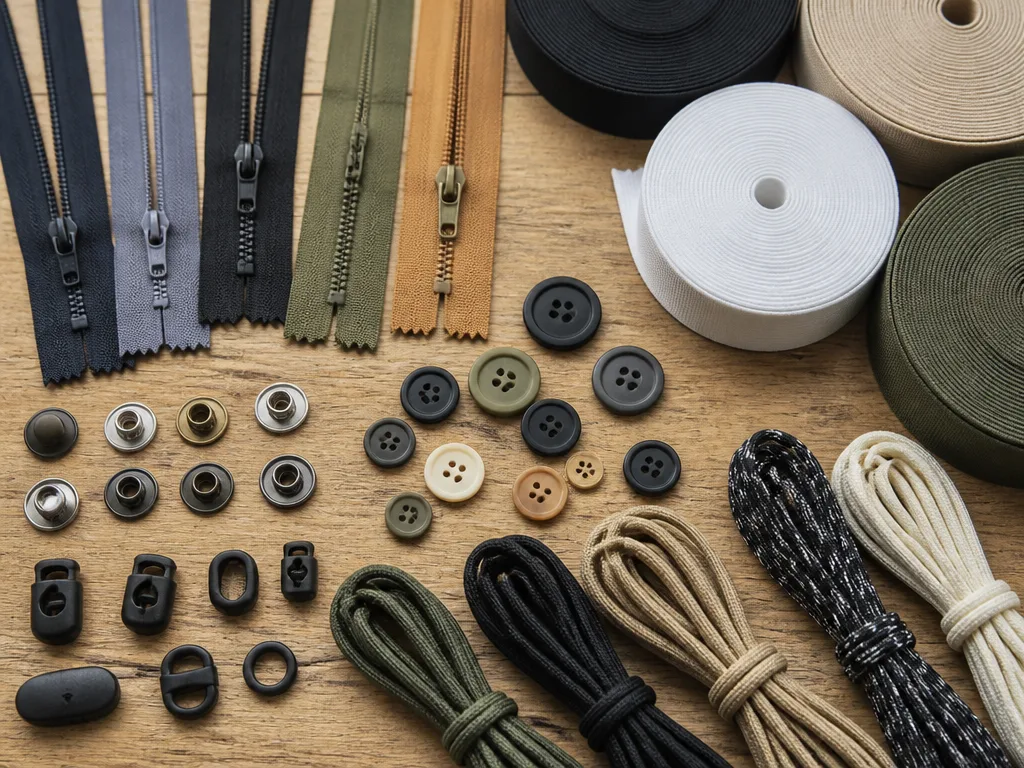
Trims are small items with a large influence on a garment. Zippers, buttons, snaps, labels, elastics, drawcords, hangtags and packaging often account for a modest share of the bill of materials, yet they shape how a product looks, how it functions and how it survives use. A cheap zipper that splits, a care label that scratches, or an elastic that loses its grip can undo the value of an excellent fabric and a well-made garment, while an over-specified trim package quietly erodes margin across every unit.
Good apparel trim sourcing is therefore a balancing exercise between cost, function, brand presentation, compliance and supply reliability. This guide explains the main trim categories and their cost drivers, compares nominated and factory-sourced trims, shows how trim cards keep everyone aligned, and outlines the testing that protects quality, so sourcing teams can make deliberate decisions rather than inheriting them.
Why Trims Deserve More Attention Than Their Cost Suggests
Trims affect three things a brand cares about. The first is function: a jacket depends on its zipper, a pair of shorts on its waistband elastic and drawcord, a children’s garment on its snaps. The second is brand perception, because customers touch labels, pulls and buttons every time they wear a product, and a branded zipper pull or a soft printed neck label signals quality in a way the fabric alone cannot. The third is supply: because many trims are made by specialist suppliers, a delayed or rejected trim can hold up an entire order even when fabric is ready and sewing capacity is booked.
For these reasons, trims should be planned at the same time as fabric, not added at the end of development. The earlier the trim package is defined, the more room there is to optimize it, and the less likely it is that a late substitution will compromise either cost or quality.
Nominated vs Factory-Sourced Trims
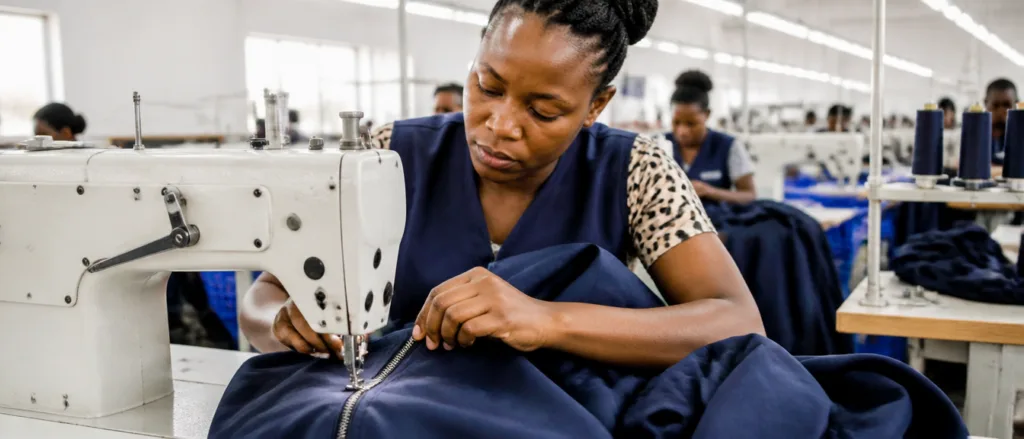
The most important decision in apparel trim sourcing is who chooses and buys each item. Nominated trims are specified by the brand from a named supplier, often under a brand-level agreement. Factory-sourced trims are selected or proposed by the garment manufacturer from its own supply base to meet the brand’s specification. Most programs use a mix: branded or high-risk items are nominated, while generic components are left to the factory.
| Factor | Nominated trims | Factory-sourced trims |
|---|---|---|
| Brand control | High: consistent look and quality across all factories | Moderate: depends on a clear specification and approval |
| Unit price | Often higher, but negotiated at brand level across volume | Often lower for generic items, with local or regional supply |
| Supply risk | Single supplier, possibly far from the factory | Factory manages supply and can switch sources more easily |
| Responsibility for defects | Shared; can be disputed between supplier and factory | Clearer: factory is responsible for the trim it buys |
| Best suited to | Branded labels, logo zippers and pulls, custom hardware, compliance-critical items | Standard elastics, threads, interlinings, generic buttons, polybags and cartons |
A useful rule is to nominate only what you genuinely need to control. Every nominated item adds coordination, freight and a potential bottleneck. If a plain black elastic meets the specification and passes testing, letting the factory source it usually saves cost and simplifies supply without any visible difference to the customer.
Where the Cost and Value Sit, Category by Category
Optimizing trims is less about squeezing unit prices and more about matching each component to its job. The table below summarises common categories, what drives their cost, and where the value levers usually are.
| Trim category | Main cost drivers | Common value levers |
|---|---|---|
| Zippers | Chain type (coil, moulded, metal), length, custom pulls, finishes, brand of supplier | Match chain gauge to use; standardise lengths across sizes where possible; reserve custom pulls for hero styles |
| Buttons and snaps | Material, finish, custom engraving, attachment method | Use stock shapes with custom colour rather than new moulds; confirm attachment strength suits the fabric |
| Labels | Woven vs printed, size, number of colours, material, number of labels per garment | Combine care and content information where rules allow; printed heat-seal or satin labels for comfort and cost |
| Elastics and drawcords | Width, rubber vs synthetic elastomer, knit or woven construction, custom jacquard branding | Specify by performance (stretch and recovery) rather than by brand; keep branded jacquard elastic for visible waistbands |
| Hangtags and packaging | Board weight, print finishes, strings and seals, polybag specification, carton strength | Simplify finishes; right-size polybags and cartons; align carton marks with your warehouse requirements early |
Standardisation is the biggest single lever. A brand that uses five slightly different black zippers across a collection pays more, carries more stock risk and creates more chances for mix-ups than one that uses two well-chosen options. Reviewing the trim list across a whole season, rather than style by style, often reveals easy consolidation. If you run a private label program, a defined core trim kit for labels, hangtags and packaging can be reused across styles and reorders.
Sustainability goals increasingly reach trims as well. Recycled polyester labels, zipper tapes and elastics, recycled-content polybags and certified-fibre or recycled board for hangtags are widely available, but each one adds a documentation requirement if you want to make a claim about it. Decide early whether recycled trims are part of a formal product claim, in which case they need chain-of-custody paperwork, or simply a lower-impact choice that you will not advertise. That decision affects which suppliers you can use and whether the item should be nominated or factory-sourced.

Trim Cards and Approval Discipline
A trim card is a physical or digital record of every approved component for a style and colourway: fabric swatches, thread colour, zipper, buttons, labels, elastic, hangtag and packaging, each with its supplier reference. It is the single document that sewing, cutting, warehouse and quality teams check against. Without one, small deviations creep in, such as a slightly different thread shade, a label in the wrong position or an elastic from a different lot.
Good practice is to build the trim card during sampling, have the brand approve it alongside the pre-production sample, and lock it before bulk materials are ordered. Any change after approval, whether forced by a supplier shortage or requested by the brand, should be documented and re-approved rather than handled informally. Trim approval is one step in the wider journey from tech pack to pre-production sample, and it should move in step with fabric and fit approval rather than trailing behind them.
The trim card also supports cost control. When every component is listed with its quantity per garment and price, it is easy to see which items drive cost and to test alternatives without disturbing the rest of the specification.
Testing and Compliance for Trims
Trims fail in predictable ways, so testing can be targeted. Zippers are commonly evaluated with ASTM D2061, Standard Test Methods for Strength Tests for Zippers, which covers properties such as chain strength, stop holding strength and resistance of the slider pull to pulling off. Snap fasteners can be checked with ASTM D4846, Resistance to Unsnapping of Snap Fasteners, which measures the force needed to separate them. Elastics should be tested for stretch and recovery after laundering, and colourfastness testing should include labels and trims as well as the main fabric, because a bleeding woven label can ruin a white garment.
Some trims also carry regulatory weight. For children’s clothing sold in the United States, the Consumer Product Safety Commission treats neck and hood drawstrings on children’s upper outerwear in sizes 2T to 12 as a substantial product hazard, and restricts waist and bottom drawstrings in sizes 2T to 16, as summarised in its business guidance on drawstrings in children’s upper outerwear. Small parts, snaps and decorative trims on kidswear need similar care, and the compliance requirements for children’s products should be confirmed with an accredited lab for each market. Care and fiber content labels must also meet the labelling rules in every country where you sell.
Inline inspection matters as much as lab testing. Checking that the correct trims are used in the correct positions, that snaps and buttons are attached securely and that zippers run smoothly is part of routine garment inspection; our quality control page describes how HANJEN approaches this at its Kenyan factory near Mombasa.
Frequently Asked Questions
Should I nominate all my trims to keep control?
Usually not. Nominate the items that carry your brand identity or compliance risk, such as branded labels, logo hardware and children’s product components, and let the factory source generic items to an approved specification. This keeps control where it matters while reducing cost and supply complexity.
What is the difference between a trim card and a bill of materials?
The bill of materials lists every component with quantities and costs. The trim card is the approved physical or digital reference that shows what each component looks like and where it goes, so production and quality teams can check garments against it.
How can I reduce trim costs without lowering quality?
Standardise components across styles, specify by performance rather than by brand where appearance does not matter, reserve custom items for visible brand touchpoints, and review packaging. Each change should still be tested and approved before bulk production.
Do trims need to be tested separately from the garment?
Many do. Zippers, snaps, elastics and labels have their own failure modes and test methods, and colourfastness testing should include trims. Testing the finished garment as well confirms that trims, fabric and construction work together.
Who is responsible if a nominated trim fails?
Responsibility depends on your agreements, which is why it should be defined before production. Typically the trim supplier is accountable for the component meeting its specification, while the factory is responsible for correct attachment and inspection. Clear specifications and test records make disputes easier to resolve.
Conclusion: Treat Trims as Part of the Product, Not an Afterthought
Apparel trim sourcing rewards early, deliberate decisions. Define the trim package alongside the fabric, nominate only what you need to control, standardise across styles, record every approved component on a trim card and test the items that carry functional or regulatory risk. Done well, trims improve how the product feels and performs while keeping cost and supply risk under control.
If you would like to review a trim package or discuss a new program, contact HANJEN and our team will work through it with you.