
The capability gap between leading apparel manufacturing facilities and developing operations is not bridged by equipment purchases alone. A factory can install the latest automated cutting systems, the most advanced flatlock sewing machines, and the most sophisticated quality control technology, then still produce inconsistent results because the operators, technicians, and managers lack the operational knowledge that transforms equipment investment into consistent production outcomes. The transfer of technical knowledge from established manufacturing operations to developing facilities is what bridges this gap, building the institutional capabilities that determine whether a factory delivers premium performance apparel quality consistently or struggles with variable outcomes that disappoint brand customers and consumers. Apparel Technical Transfer represents one of the most strategically important capabilities in modern global apparel manufacturing, with direct effects on production quality, operational efficiency, brand customer relationships, and ultimately the long-term competitive positioning of manufacturing operations across emerging production hubs including Africa, Southeast Asia, and Latin America.
The need for systematic technical transfer has intensified as the global apparel manufacturing landscape has diversified beyond the traditional Asian manufacturing concentration. The growth of African apparel manufacturing under AGOA preferential trade benefits, the expansion of Latin American near-shoring operations under USMCA, and the development of emerging Asian alternatives outside the established Vietnam-Bangladesh-Cambodia corridor all require capability transfer to support the quality standards that brand customers expect from premium performance apparel programs. The transfer process is more complex than simple training programs, requiring structured methodologies that bridge cultural, linguistic, and operational differences between source and destination operations while building the lasting institutional capabilities that support continuous improvement long after the initial transfer engagement ends. Manufacturing groups that have built strong technical transfer capabilities have achieved sustained competitive advantages by establishing high-performing operations across multiple geographic locations and supporting brand customers through the global supply chain diversification that has reshaped the industry over the past decade.
This guide examines the principles and methodologies of effective technical transfer in apparel manufacturing, the specific capability areas that benefit most from structured transfer programs, the equipment and process choices that support transfer success, the testing protocols that quantify transfer outcomes, and the practical implementation roadmap for manufacturing groups and brand customers seeking to develop their technical transfer capabilities. The analysis draws on manufacturing experience producing performance apparel for global brand customers, observed industry practices across leading multinational apparel manufacturing groups, and the operational experience of building production operations in emerging manufacturing locations including Kenya and other AGOA-eligible African countries. The depth of treatment reflects the complexity of the discipline and the strategic importance of getting technical transfer right for both manufacturing groups expanding into new geographies and brand customers diversifying their supplier base across multiple production hubs.
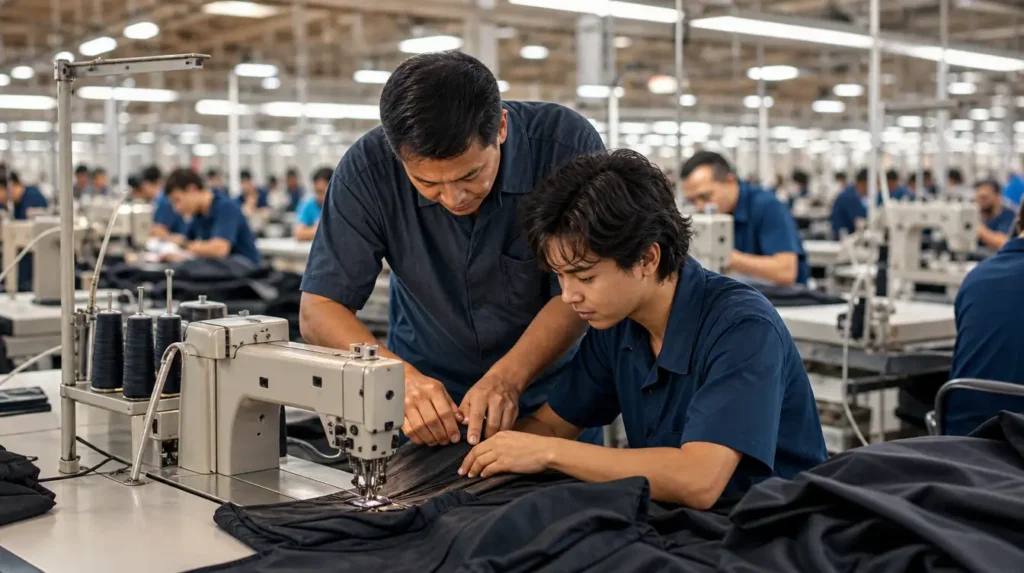
The Strategic Foundation of Apparel Technical Transfer
Effective technical transfer requires more than copying equipment and processes from one location to another. The strategic foundation begins with understanding what specifically needs to be transferred, who the recipients are, what existing capabilities they bring to the transfer, and what cultural and operational context shapes the receiving organization. Manufacturing groups that approach technical transfer as a strategic discipline rather than a tactical training exercise consistently achieve better outcomes, building lasting capabilities that compound across multiple production cycles and supplier relationships. The strategic foundation also helps brand customers evaluate manufacturing partners based on their technical transfer capability rather than only on their existing production capacity, since the transfer capability indicates the operation’s ability to maintain consistent quality across geographic expansion and personnel changes over time. Manufacturing groups with mature transfer capabilities also tend to have stronger overall management discipline and operational systems, since the capabilities required for effective transfer typically reflect broader organizational excellence that benefits all aspects of the operation.
The Knowledge Categories That Drive Manufacturing Outcomes
Technical transfer in apparel manufacturing covers multiple knowledge categories that interact to produce production outcomes. Explicit technical knowledge includes documented specifications, machine settings, process parameters, and quality standards that can be communicated through written documentation and formal training programs. This category is the easiest to transfer because the knowledge can be codified, but it represents only a portion of what actually determines production outcomes. Tacit operational knowledge includes the judgment, intuition, and pattern recognition that experienced operators and technicians develop through years of hands-on practice, often without explicit awareness of what they are doing. This category is more challenging to transfer because the knowledge resides in individuals rather than in documents, requiring direct mentoring and extended practice to build in receiving operations.
The cultural and management knowledge category includes the patterns of communication, decision-making, problem-solving, and continuous improvement that distinguish high-performing manufacturing operations from less effective ones. This category is the most challenging to transfer because it touches organizational behavior and leadership style, requiring sustained engagement between source and destination operations rather than discrete training events. Manufacturing groups that have built mature technical transfer capabilities address all three knowledge categories through integrated transfer programs that combine documentation, hands-on training, and embedded mentoring relationships. The integrated approach produces more complete capability transfer than programs focused on any single category, supporting the durable manufacturing capability development that determines long-term competitive positioning. The investment in comprehensive transfer programs is meaningful, but the resulting capability advantages prove more durable than narrower transfer approaches that may appear cost-effective in the short term but produce inadequate long-term outcomes. According to American Apparel and Footwear Association industry research, the manufacturers with most successful international expansion programs have consistently invested in comprehensive technical transfer methodologies that span all knowledge categories.
The Source-Destination Capability Gap Analysis
Effective technical transfer programs begin with rigorous capability gap analysis that quantifies the difference between source operation capabilities and destination operation requirements. The analysis identifies specific knowledge areas, skill levels, equipment configurations, and operational practices that need to be transferred to support the target production outcomes at the destination operation. The gap analysis should examine multiple dimensions including technical operator skills, technician maintenance capabilities, supervisor management competencies, quality control protocols, supplier relationship management, and continuous improvement practices. Each dimension contributes to the integrated production capability that determines manufacturing outcomes, and weakness in any dimension can produce quality issues that affect the operation’s ability to serve premium brand customers consistently.
The gap analysis output should drive the transfer program design, with specific transfer activities targeted to the highest-priority capability gaps and the strongest expected impact on production outcomes. Manufacturing groups that conduct rigorous gap analysis typically design more effective transfer programs than groups that rely on generic training approaches, since the targeted approach allocates transfer resources where they produce the strongest returns. The gap analysis also supports realistic timeline planning, with the transfer duration calibrated to the magnitude of capabilities to be developed rather than arbitrary schedules that may not produce the intended capability outcomes. Brand customers can review production capabilities at our Leggings production page where technical transfer has supported the development of premium production capability in our Kenya operations. The integrated capabilities developed through structured transfer support production across multiple performance apparel categories, demonstrating the cross-category value of foundational capability development rather than narrow product-specific training approaches.
Stakeholder Alignment and Transfer Champions
Successful technical transfer requires alignment across multiple stakeholders in both source and destination operations, with each stakeholder group contributing to or potentially undermining the transfer success. Source operation stakeholders include the executives committing resources to the transfer engagement, the technical experts conducting the actual knowledge transfer, the production managers releasing personnel for transfer duty, and the human resources teams managing the personnel logistics of extended international assignments. Each stakeholder group brings specific concerns and constraints that need to be addressed through structured engagement rather than expecting natural alignment. Destination operation stakeholders include the executives supporting the transfer initiative, the local managers coordinating with source operation experts, the operators and technicians receiving the knowledge transfer, and the support functions providing the infrastructure that enables effective learning.
The role of transfer champions deserves special attention. These are the individuals in both source and destination operations who personally champion the transfer program, allocate their time and political capital to ensuring its success, and serve as the primary points of accountability for transfer outcomes. Transfer programs without strong champions frequently fail despite excellent technical content because the inevitable challenges and competing priorities erode the program’s effectiveness over time. Manufacturing groups that have built mature technical transfer capabilities consistently identify and develop transfer champions as part of program design, rather than expecting champions to emerge naturally from program execution. The investment in champion development typically pays back through dramatically higher transfer success rates and faster capability development at destination operations. Manufacturing groups operating without strong champion identification and development tend to experience inconsistent transfer outcomes that depend on circumstantial factors rather than systematic management discipline.
Capability Areas That Benefit Most from Technical Transfer
Technical transfer programs deliver disproportionate value when focused on the capability areas that most strongly determine production outcomes. While every manufacturing capability benefits from some level of knowledge transfer, certain areas produce particularly strong returns on the transfer investment. Understanding which capabilities to prioritize helps manufacturing groups allocate transfer resources efficiently and helps brand customers evaluate the technical transfer maturity of their manufacturing partners. The prioritization should also consider the destination operation’s existing capability profile, since transferring capabilities that already exist locally produces lower returns than focusing on genuine capability gaps.
Technical Sewing and Construction Capabilities
Technical sewing and construction capabilities are among the highest-priority transfer areas because they directly determine the quality of finished garments. These capabilities include flatlock and overlock seam construction, specialized stitch types for different applications, fabric handling techniques for elastic fabrics, fit and pattern execution from technical packages, and the operator judgment that distinguishes consistent execution from variable quality. The transfer of these capabilities requires hands-on training programs where source operation experts work directly with destination operation operators on actual production work, building the skills through guided practice rather than only classroom instruction.
The training programs typically extend over several weeks to several months depending on the specific skill complexity and the destination operator existing experience level. Master operators from source operations typically spend extended periods at destination operations, working alongside local operators on production lines and providing immediate feedback as quality issues develop. The mentoring relationships that develop during these extended engagements often produce the most lasting knowledge transfer, since the local operators internalize the operator judgment and pattern recognition that are difficult to communicate through formal training alone. Manufacturing groups that maintain dedicated training operators specifically for transfer assignments typically achieve faster capability development at destination operations than groups that draw transfer trainers from active production roles. Brand customers can review category-specific construction capabilities at our Swimsuit page where transferred technical capabilities support consistent quality. The cross-product application of construction capabilities also supports manufacturing efficiency and capability depth, allowing operations with strong foundational training to flex across multiple product categories based on customer demand patterns.
Quality Control Systems and Methodology
Quality control systems and methodology represent another high-priority transfer area because they determine whether the operation can detect and correct quality issues before they reach finished products and consumers. These capabilities include in-line inspection protocols, statistical process control methods, defect classification and analysis systems, root cause analysis methodology, and corrective action implementation discipline. The transfer of quality control capabilities requires both technical training on specific methodologies and cultural development of the quality consciousness that drives consistent quality outcomes across all operational decisions.
The cultural dimension of quality control is often underestimated in technical transfer programs but has substantial impact on the eventual outcomes. Operations with strong quality cultures treat quality as everyone’s responsibility, expect operators and technicians to identify and report quality issues, and reward continuous improvement contributions across all organizational levels. Operations with weak quality cultures treat quality control as a separate function disconnected from production, focus on catching defects rather than preventing them, and may even tolerate quality issues that meet minimum standards without driving toward excellence. Building strong quality culture in destination operations requires sustained leadership engagement, clear communication of expectations, structured measurement and feedback systems, and patient development of organizational habits that support quality excellence. According to AATCC quality testing standards, the technical methodology for quality measurement provides a starting point that should be supported by appropriate organizational and cultural development to produce sustained quality outcomes. Operations that build strong quality cultures through patient capability development typically maintain their quality performance through personnel transitions and operational changes that would degrade quality at operations with weaker cultural foundations.
Equipment Maintenance and Technical Support
Equipment maintenance and technical support capabilities determine whether the operation can sustain production performance over time despite the inevitable wear and breakdown of manufacturing equipment. These capabilities include preventive maintenance scheduling, troubleshooting and repair methodology, supplier relationship management for parts and service, calibration protocols for precision equipment, and the technician judgment that prevents minor issues from becoming major production disruptions. The transfer of maintenance capabilities requires both formal technical training and extensive hands-on practice on actual equipment, since the troubleshooting capability develops only through experience with actual equipment problems.
The investment in maintenance capability transfer often pays back through dramatically improved equipment uptime and reduced repair costs over time. Operations with weak maintenance capabilities typically experience higher equipment downtime, larger repair expenses, and earlier equipment replacement requirements than operations with strong maintenance capabilities. The total cost difference can exceed 15 to 25 percent of equipment operating costs across the equipment lifecycle, justifying substantial investment in maintenance capability transfer programs. The maintenance capability also supports operational predictability that brand customers value when planning production schedules and product launches, with reliable equipment uptime supporting consistent production capacity that customers can depend on for their commercial commitments. The predictability extends across both routine operations and the periodic capacity surges that occur around product launches and seasonal peaks, where capacity reliability matters most for brand customer commercial outcomes and where capability gaps can produce the most disruptive consequences for brand commercial success and where the manufacturer’s track record of reliable execution becomes a critical factor in supplier selection decisions across the global performance apparel sourcing landscape that brand customers navigate when developing their long-term supply chain strategy, supplier relationships, and ongoing operational planning across multiple product seasons and geographic markets in the increasingly complex global apparel sourcing environment that defines competition for premium consumer attention and brand commercial success in the years ahead across multiple market segments and consumer demographics. Manufacturing groups operating across multiple geographic locations should establish standard maintenance protocols that apply consistently across the operation network, supporting both transfer efficiency and operational consistency. Brand customers can review the integrated capabilities of our operations through our Visit Factory page. The maintenance discipline established through transfer programs becomes a foundational capability that supports all subsequent operational improvements, creating compounding returns on the initial transfer investment.
Comparing Apparel Technical Transfer Approaches
The major approaches to apparel technical transfer produce distinctly different outcomes depending on their structure, intensity, and integration with destination operations. The table below summarizes the key characteristics of the most common approaches available in the global apparel manufacturing industry, providing a reference framework that manufacturing groups and brand customers can use to evaluate transfer program design and outcomes. The values are representative of typical industry practice and should be calibrated to specific transfer programs based on the source and destination operation contexts.
| Transfer Approach | Duration | Investment Level | Knowledge Coverage | Capability Outcomes | Sustainability | Typical Application | Best Suited For |
|---|---|---|---|---|---|---|---|
| Documentation Transfer Only | 1-2 months | Low | Explicit knowledge only | Limited | Weak | Process documentation | Established operations refining specific procedures |
| Short-Term Training Program | 2-4 weeks | Low-Moderate | Explicit plus initial tacit | Limited capability building | Weak to moderate | Specific skill upgrade | Established operations adding new technical capabilities |
| Embedded Training Engagement | 3-6 months | Moderate | Explicit plus tacit knowledge | Solid capability foundation | Moderate | Major capability development | Mid-stage operations expanding capability scope |
| Extended Master Trainer Assignment | 6-18 months | Moderate-High | Comprehensive knowledge | Strong capability development | Strong | New operation startup | Greenfield operations or major capability transformation |
| Multi-Year Sister Plant Partnership | 2-5 years | High | All knowledge categories | Comprehensive capabilities | Very strong | Long-term operation development | Strategic geographic expansion programs |
| Permanent Embedded Leadership | 3-10+ years | Very High | Complete knowledge integration | World-class capability development | Permanent | Premium operation establishment | Premium operations targeting tier-1 brand customers |
| Joint Venture Technical Integration | Permanent | Very High | Integrated operations | Equivalent to source operation | Permanent | Strategic partnership operations | Long-term strategic supply chain partnerships |
| Hybrid Multi-Method Programs | Variable | Variable | Customized coverage | Variable | Variable | Specific transfer requirements | Operations with specific capability gaps |
The comparison reveals that the transfer approach should match the destination operation’s existing capabilities, the strategic importance of the operation, and the brand customer requirements rather than defaulting to a single approach across all situations. The matching discipline produces stronger outcomes than uniform approaches that may waste resources on excessive transfer scope for some operations while providing inadequate support to operations needing more comprehensive development. Greenfield operations and operations targeting premium brand customers typically require extended master trainer assignments or sister plant partnerships to build the comprehensive capabilities needed for premium production. Established operations adding specific capabilities can succeed with shorter focused training programs at lower investment levels. The investment level scales with the comprehensiveness of capability development, with the most extensive programs requiring sustained multi-year commitment but producing the strongest long-term capability outcomes. Manufacturing groups designing transfer programs should consider both immediate capability needs and long-term strategic positioning to determine the optimal investment level for each operation. The investment decision framework should also consider the destination operation’s strategic role in the broader manufacturing network, since operations targeting premium brand customers and tier-1 product categories typically justify substantially higher transfer investment than operations serving more transactional product programs.
Manufacturing Process Control During Transfer Periods
The execution of technical transfer in operating manufacturing environments requires careful management of the transition period when destination operations are developing capabilities while still producing for brand customers. The transfer process inevitably introduces some operational variability as new operators learn techniques, processes are refined through practice, and quality systems mature toward target performance. Manufacturing groups that manage these transition periods carefully maintain brand customer satisfaction and production quality while building the lasting capabilities that support long-term success. Brand customers selecting manufacturing partners undergoing capability transfer should evaluate the transfer management discipline alongside the eventual capability targets, since the transition period quality outcomes substantially affect short-term commercial relationships. The evaluation should examine documented transfer protocols, prior transfer outcomes, and current transfer engagement progress, supporting evidence-based decisions about supplier reliability during capability development phases. The evidence-based approach produces stronger sourcing decisions than approaches based primarily on supplier marketing materials or surface-level facility visits that may not reveal the depth of transfer management discipline.
Phased Capability Implementation
Phased capability implementation supports orderly transition by introducing new capabilities incrementally rather than all at once. The phasing typically begins with foundational capabilities that support all subsequent learning, then progressively adds more advanced capabilities as the foundation stabilizes. For example, a new manufacturing operation typically begins with basic single-needle sewing operations before adding flatlock construction, then progresses to advanced applications including bonded seams or laser cutting. Each phase should be supported by appropriate training, equipment, and quality systems, with the operation reaching stable performance at each phase before progressing to the next.
The phasing also helps manage the inevitable learning curve in early operations. New operators and technicians typically produce some defects during the early learning period as they develop the skills and judgment that experienced personnel bring naturally to their work. The phased approach allows the operation to focus quality control resources on the active capability development areas while maintaining stable performance in already-established areas. Manufacturing groups that have managed multiple new operation startups typically maintain documented phasing protocols that have been refined through prior implementations, supporting more efficient subsequent transfers and reducing the operational risk associated with capability development. The accumulated learning across multiple transfer programs becomes a strategic asset that supports faster and more reliable capability development in subsequent operations. Manufacturing groups operating with mature transfer methodology typically achieve subsequent transfer outcomes in significantly less time than initial transfer programs, with the experience curve producing meaningful efficiency gains that benefit both the manufacturer and brand customers.
Production Volume Ramp Planning
Production volume ramp planning aligns the operation’s commercial volume with its capability development trajectory. Ramping volume too quickly relative to capability development produces quality issues that damage brand customer relationships and may force production to be transferred back to established operations. Ramping volume too slowly delays the financial returns from the transfer investment and may make the operation commercially unviable before reaching its full potential. The optimal ramp curve depends on the specific capability development pace, the destination operation infrastructure, and the brand customer commitments, with experienced manufacturing groups maintaining detailed ramp planning models that have been calibrated through prior transfer implementations.
The ramp planning should include specific milestones for capability achievement and production volume, with explicit decision points where the actual progress is compared against plan and adjustments are made if needed. Common milestones include first successful production runs, achievement of target quality metrics, qualification by brand customers for specific product programs, and progression through agreed capability tier classifications. Brand customers operating with manufacturing partners undergoing capability transfer should request transparent ramp planning documentation, since the planning quality often indicates the manufacturing partner’s overall transfer management discipline. The visibility into ramp planning also supports brand customer planning around volume commitments and product allocation decisions. The shared planning approach builds the trust and operational alignment that supports productive long-term relationships rather than transactional purchasing arrangements that may not serve either party’s longer-term interests.
Quality Assurance During Capability Development
Quality assurance during the capability development period requires extra rigor to catch the issues that inevitably emerge as new operators learn techniques and processes mature. Mature manufacturing groups typically deploy enhanced quality systems during early production phases, including increased inspection frequency, additional verification steps, and source operation expert review of selected production samples. The enhanced systems gradually transition to standard protocols as the operation demonstrates consistent capability achievement, supporting both quality protection during transition and operational efficiency at maturity.
The enhanced quality systems should be designed to provide useful feedback to the developing operation rather than only catching defects. Quality issues identified during the development period offer learning opportunities that, when properly addressed, build the operation’s capability for the long term. Manufacturing groups that treat development-period quality issues as learning opportunities rather than punitive triggers typically build stronger long-term capability and stronger relationships with the destination operation personnel. The constructive approach to quality issues during development also produces faster capability progression, since destination personnel feel supported in identifying and addressing issues openly rather than concealing problems that may grow to affect larger production volumes. Industry resources from ASTM International document quality assurance methodologies that support consistent measurement across multiple operations and transfer programs. Brand customers should view the development-period quality investment as protection of the long-term commercial relationship rather than as a cost to be minimized, since the investment supports the durable capability outcomes that ultimately drive sustained commercial value. The investment perspective on early-period quality management produces stronger long-term partnership outcomes than transactional approaches that prioritize immediate cost optimization at the expense of capability development support.
Implementation Roadmap for Apparel Technical Transfer Programs
Manufacturing groups and brand customers seeking to implement effective technical transfer programs can follow a structured roadmap that balances strategic ambition with operational realities. The roadmap typically extends across multiple phases that build upon each other, with each phase establishing the foundations for subsequent phase success. The phased approach also supports realistic resource planning and allows mid-course corrections based on observed outcomes rather than committing to multi-year programs without adjustment opportunities. Manufacturing groups operating with mature transfer capabilities typically maintain documented roadmap templates that have been refined through prior implementations, supporting more efficient new program design and faster decision-making on transfer-related issues. The template-based approach also supports knowledge sharing across the organization as multiple personnel apply the documented frameworks to specific transfer engagements, building the institutional capability that compounds across multiple programs.
Phase 1: Strategic Planning and Source Operation Preparation
The strategic planning phase defines the transfer program objectives, scope, timeline, and resource requirements. The phase typically extends across 2 to 4 months and includes detailed analysis of source operation capabilities, destination operation requirements, capability gap analysis, transfer methodology selection, resource allocation planning, and stakeholder alignment. The output should include a transfer program charter that documents the agreed objectives, scope, timeline, success metrics, and accountability structure across both source and destination operations. The charter serves as the reference document throughout program execution, supporting consistent decision-making and accountability when the inevitable challenges and adjustments arise during implementation. The charter discipline also supports productive communication between source and destination operations by establishing shared expectations that both parties can reference when discussing progress and addressing emerging issues.
The source operation preparation includes identifying and developing the personnel who will conduct the actual transfer work. The transfer trainers should typically be selected from among the most experienced and effective personnel in the source operation, with specific training in transfer methodology added to their existing technical expertise. The trainer development investment is meaningful but produces dramatic improvements in transfer outcomes compared to assigning random experienced personnel without specific transfer preparation. Manufacturing groups that have built mature transfer capabilities typically maintain dedicated trainer development programs that prepare personnel for transfer assignments through both technical and methodological training. The trainer development typically combines classroom instruction in adult learning principles, cross-cultural communication, and structured mentoring techniques with practical application in actual transfer engagements where developing trainers work alongside experienced trainers on live transfer programs.
Phase 2: Active Transfer Engagement
The active transfer engagement phase involves the actual capability transfer work between source and destination operations. The phase duration varies substantially depending on the transfer scope and approach, ranging from 3 to 6 months for embedded training programs to 2 to 5 years for sister plant partnerships. The phase typically includes initial orientation and assessment activities, structured training sessions, hands-on production work with source operation experts embedded in the destination operation, progressive capability handoff as destination personnel demonstrate proficiency, and regular progress reviews against the agreed milestones. The phase activities should be sequenced to build progressively from foundational capabilities through more advanced applications, supporting the natural learning progression that produces durable capability outcomes. The progression discipline also helps destination personnel build confidence in their developing capabilities, supporting the psychological foundation that sustains learning through the inevitable challenges and setbacks that occur during capability development. The psychological dimension is often underestimated but substantially affects the actual capability development outcomes, with operations that build strong learning cultures consistently outperforming operations that focus only on technical content delivery.
The active engagement phase requires careful management of the relationship between source and destination personnel, since the cultural and personal dynamics substantially affect the transfer outcomes. Source operation personnel typically need to balance providing direct guidance with developing destination operation autonomy, while destination personnel typically need to balance receiving training with developing their own judgment and capabilities. The relationship management often requires explicit attention rather than expecting it to develop naturally, with structured communication protocols, regular feedback sessions, and conflict resolution procedures supporting productive working relationships across cultural and organizational boundaries. Manufacturing groups operating with mature transfer capabilities typically include relationship management training in their transfer trainer preparation programs. The training emphasizes both technical communication skills and broader cultural sensitivity, recognizing that effective transfer requires building productive working relationships across organizational and cultural boundaries that may differ substantially from the trainer’s home operating environment.
Phase 3: Capability Validation and Phase 4: Continuous Improvement
The capability validation phase confirms that the destination operation has developed the targeted capabilities to the agreed standards. The phase typically extends across 1 to 3 months and includes comprehensive testing of capability achievement across all transferred areas, validation of capability sustainability through multiple production cycles without source operation support, brand customer qualification for specific product programs, and formal transition from transfer program to standard operation. The validation should be rigorous and evidence-based, with specific metrics and acceptance criteria documented in the transfer charter and verified through structured testing. The validation rigor protects both the manufacturing group and the brand customer by ensuring that capability claims are supported by actual demonstrated performance rather than aspirational assertions that may not reflect operational reality.
The continuous improvement phase extends indefinitely, with regular capability reviews, ongoing knowledge sharing between operations, and progressive capability enhancement supporting sustained competitive positioning. Manufacturing groups that maintain strong inter-operation knowledge sharing typically develop capabilities that progressively exceed the original transfer scope, building the strategic asset of integrated operation excellence. The knowledge sharing should flow in multiple directions over time, with destination operations eventually contributing innovations and improvements that strengthen source operations as well. The reciprocal knowledge flow strengthens the entire manufacturing network by capturing innovations from each operation and distributing them across the network for broader benefit. The network learning effects are particularly valuable for manufacturing groups operating across multiple geographic locations and product categories, since the diversity of operating contexts produces a wider range of innovations than any single operation could generate independently. The mature inter-operation knowledge sharing represents one of the strongest competitive advantages available to multinational manufacturing groups, supporting the kind of sustained competitive positioning that defines industry leaders. The knowledge sharing platforms and protocols become institutional assets that compound in value over time, with the cumulative learning across multiple operations and product categories producing capability levels that single-location operations cannot match through internal development alone.
Risk Considerations and Practical Limitations of Technical Transfer Programs
An honest assessment of Apparel Technical Transfer must acknowledge several practical limitations and trade-offs that manufacturing groups and brand customers should incorporate into their decision-making. The first consideration is the substantial investment required for successful transfer programs, with extended master trainer assignments and sister plant partnerships requiring multi-year commitments at meaningful cost levels. Manufacturing groups committed to premium operation development may find these investments well justified by the long-term capability and competitive positioning benefits, while groups operating in cost-sensitive segments may need to accept more modest transfer approaches that produce more limited capability outcomes. The optimization should match the strategic ambition and target competitive positioning rather than pursuing maximum transfer scope on every engagement. Manufacturing groups that have completed multiple transfer programs typically develop calibrated investment frameworks that support consistent decision-making across engagements rather than ad hoc resource allocation that produces variable outcomes.
The second consideration is that technical transfer success depends heavily on the existing capabilities and conditions at destination operations. Operations with strong foundational capabilities can absorb advanced transfer content efficiently, while operations with weaker foundations may need extensive remedial development before they can benefit from advanced transfer programs. The capability assessment during program planning should be honest and rigorous, with transfer scope and timeline calibrated to the actual destination operation conditions rather than aspirational targets that may not be achievable in the planned timeframe. The honest assessment may be uncomfortable when it reveals significant capability gaps that require longer transfer engagements than originally planned, but the alternative of pursuing unrealistic timelines typically produces worse outcomes including failed transfers and damaged supplier relationships. The assessment discipline becomes a foundational capability that supports realistic planning across all transfer engagements rather than only the initial assessment phase. The third consideration is that personnel turnover at destination operations can erode capability gains if not actively managed, with the operations particularly vulnerable during the early years after transfer completion when the capability foundations are still consolidating. Manufacturing groups should develop personnel retention strategies that protect the transfer investment, including competitive compensation, career development pathways, and the meaningful work that supports retention of the most capable personnel. The retention investment is often substantially smaller than the cost of repeating transfer programs to replace departed personnel, supporting the financial logic of patient retention strategy alongside capable recruitment.
The fourth consideration is that the source operation can experience meaningful disruption during transfer programs as experienced personnel are deployed to destination operations and resources are allocated to transfer support work. The disruption should be planned for and managed, with backfill strategies and resource reallocation supporting source operation performance during transfer engagements. The planning should consider both the personnel disruption and the broader operational disruption that comes from supporting transfer engagements at strategic distances from the source operation. The fifth consideration is that not every brand customer relationship requires the same level of capability transfer, with some product programs successfully serviced by operations with focused capability development while other programs require comprehensive operation excellence. Manufacturing groups should match the transfer investment to the customer relationship strategic importance and the operation’s intended customer portfolio rather than pursuing uniform excellence across all transferred capabilities. The sixth consideration is that the global apparel industry is changing in ways that affect technical transfer priorities, with evolving consumer preferences, sustainability requirements, and trade policy shifts all influencing which capabilities matter most for long-term competitive positioning. Industry resources from ISO international standards documentation support consistent capability assessment and development across changing industry conditions.
FAQ
What distinguishes successful Apparel Technical Transfer programs from unsuccessful ones?
A1: Successful Apparel Technical Transfer programs differ from unsuccessful ones across multiple dimensions that combine to produce dramatically different outcomes. The most successful programs begin with rigorous strategic planning that defines clear objectives, scope, timeline, and success metrics, while less successful programs often begin with vague aspirations and informal arrangements that produce inconsistent outcomes. Successful programs allocate substantial resources to source operation preparation including dedicated trainer development, while less successful programs often draw transfer trainers from active production roles without specific transfer preparation. Successful programs use extended engagement durations appropriate to the capability scope, with embedded master trainers staying at destination operations for 6 to 18 months or longer for major capability development, while less successful programs often rely on short training visits that cannot build the deeper tacit knowledge that determines production outcomes. Successful programs include explicit attention to cultural and management knowledge transfer alongside technical knowledge, while less successful programs often focus only on technical content and produce operations that look similar on paper but perform very differently in practice. Successful programs include structured measurement and feedback systems that drive continuous improvement, while less successful programs may declare completion based on activity metrics rather than capability outcomes. Successful programs include strong transfer champions in both source and destination operations who personally drive the program success, while less successful programs may lack this active leadership and gradually erode under competing priorities. The differences across these dimensions typically produce 3 to 5 times difference in long-term capability outcomes between successful and unsuccessful programs, justifying substantial investment in program design discipline. Brand customers and manufacturing groups should evaluate transfer program design across all these dimensions rather than focusing on any single element, since the integrated approach produces the strongest sustained outcomes that drive long-term competitive positioning. The evaluation framework should be applied consistently across multiple manufacturing partners and transfer engagements, supporting comparable assessment that informs strategic supplier selection and capability development decisions.
How long does effective technical transfer typically take?
A2: Effective technical transfer typically takes substantially longer than initial planning often anticipates, with realistic durations depending on the capability scope, the destination operation starting point, and the program intensity. Specific skill upgrades for established operations adding new capabilities typically take 2 to 6 months from initial training through demonstrated proficiency. Major capability development for mid-stage operations expanding their scope typically takes 6 to 18 months for the core transfer engagement, with continuous improvement extending indefinitely. New operation startups requiring comprehensive capability development typically require 18 to 36 months from initial transfer engagement to full capability sustainability without source operation support. Strategic geographic expansion programs involving multiple operations and complete capability suites typically extend across 3 to 5 years or longer, with sister plant partnerships sometimes maintained permanently. The duration estimates assume committed resources, capable personnel, and stable operating conditions, with delays commonly occurring when any of these conditions are not met. Manufacturing groups that have completed multiple transfer programs typically maintain calibrated duration estimates based on prior outcomes, with the historical data supporting realistic timeline planning for new programs. Brand customers should treat the duration estimates as ranges rather than precise commitments, since the actual durations depend on multiple variables that interact in complex ways. The investment in adequate duration produces stronger long-term capability outcomes than compressed timelines that may produce apparent completion without sustainable capability development. Manufacturing groups that have committed to longer transfer durations consistently report stronger long-term outcomes than groups that have rushed to declare completion under cost or schedule pressure. The duration discipline becomes a foundational characteristic of mature transfer capabilities, distinguishing operations committed to genuine capability development from those focused on near-term operational targets without supporting long-term sustainability. Brand customers evaluating manufacturing partners should consider the partner’s track record of completing transfer programs at appropriate durations rather than only the partner’s claims about transfer capability. The track record provides much stronger evidence of actual capability than marketing materials or aspirational statements about transfer methodology. Brand customers should request specific examples and outcomes from prior transfer programs during supplier evaluation, supporting evidence-based assessment of transfer capability across the dimensions that matter for their specific sourcing requirements and competitive positioning in the marketplace.
What role do brand customers play in supporting effective technical transfer?
A3: Brand customers play several important roles in supporting effective technical transfer programs at their manufacturing partners, with the customer engagement substantially affecting the transfer success and the eventual production capability outcomes. The first role is providing visibility into upcoming demand that allows the manufacturing partner to plan capability development aligned with future production requirements. Manufacturing partners cannot justify substantial transfer investments without confidence in eventual production volumes that produce returns on the investment. Brand customers that share rolling demand forecasts and engage manufacturing partners in long-term capacity planning support more aggressive capability development than customers who maintain transactional relationships with shorter visibility horizons. The second role is participating in capability validation as the destination operation develops new capabilities. Brand customer qualification for specific product programs typically marks an important milestone in transfer programs, signaling that the destination operation has reached the capability level needed to serve the customer reliably. The qualification process should be rigorous but constructive, with brand customers providing detailed feedback that supports continued capability development rather than only declaring pass or fail outcomes. The third role is supporting the development period through patient quality management and reasonable expectations during the inevitable learning curve. Brand customers that work collaboratively with manufacturing partners during early production phases typically build stronger long-term relationships than customers that apply punitive responses to early-period quality variations. The fourth role is contributing knowledge from the brand customer perspective that complements the manufacturer’s transferred knowledge. Brand customers often have valuable knowledge about consumer preferences, retail channel requirements, and product application contexts that support the manufacturer’s product development decisions. Brand customers that share this knowledge actively contribute to manufacturer capability development rather than treating manufacturing as a black box service. The combined effect of brand customer engagement across these roles can substantially accelerate or undermine the technical transfer outcomes, making customer engagement a meaningful variable in transfer program design. Brand customers that recognize their role in transfer outcomes typically build stronger long-term partnerships with their manufacturing suppliers, supporting the mutual investment that drives sustained commercial success for both parties.
How can manufacturing groups measure the return on investment in technical transfer?
A4: Measuring return on investment in technical transfer requires structured frameworks that capture both immediate operational improvements and longer-term strategic value creation. The immediate operational metrics include production yield improvements, quality defect rate reductions, equipment uptime improvements, and labor productivity gains at the destination operation. These metrics can be quantified through pre-transfer baseline measurement and post-transfer measurement at multiple intervals, with the differences attributable to the transfer program supporting financial valuation of the operational improvements. Typical operational improvements from successful transfer programs include 15 to 30 percent productivity gains, 30 to 50 percent quality defect rate reductions, and 10 to 20 percent equipment uptime improvements over the 12 to 24 months following transfer completion. The aggregate financial impact often exceeds the transfer investment within 12 to 18 months for major transfer programs, supporting the financial logic of substantial transfer investments. The strategic value metrics include capability for new product programs that the operation could not previously support, brand customer qualification for premium programs that command higher pricing, geographic positioning that supports trade preference programs like AGOA, and the operational resilience that comes from distributed production capability across multiple geographies. The strategic metrics are harder to quantify precisely but often produce larger long-term value than the operational metrics, justifying inclusion in the comprehensive return assessment. Manufacturing groups that measure transfer outcomes systematically typically build the historical database that supports more accurate planning for subsequent transfer programs, with the cumulative learning across multiple programs producing progressively better return outcomes over time. Brand customers can also benefit from supplier transfer measurement frameworks, since the measurement discipline often correlates with overall manufacturer capability and reliability across multiple dimensions of the supplier relationship. The measurement frameworks also support productive supplier dialogue about capability development priorities, with the data foundation supporting collaborative decisions about where to focus continued investment for maximum benefit.
What are the most common pitfalls in technical transfer programs and how can they be avoided?
A5: The most common pitfalls in technical transfer programs include inadequate strategic planning, insufficient source operation preparation, compressed timelines, focus on technical content while neglecting cultural transfer, weak measurement and feedback systems, insufficient stakeholder alignment, and failure to maintain continuous improvement after initial transfer completion. Inadequate strategic planning produces transfer programs without clear objectives or success criteria, leaving program execution vulnerable to drift and competing priorities. The pitfall is best avoided through rigorous upfront planning that produces a transfer program charter documenting the agreed objectives, scope, timeline, success metrics, and accountability structure. Insufficient source operation preparation produces transfer trainers without specific transfer methodology training, limiting their effectiveness even when their technical expertise is strong. The pitfall is best avoided through dedicated trainer development programs that build transfer skills alongside the existing technical expertise. Compressed timelines produce apparent transfer completion without sustainable capability development, leading to capability erosion when source operation support ends. The pitfall is best avoided through realistic timeline planning calibrated to the actual capability development pace rather than arbitrary schedules. Focus on technical content while neglecting cultural transfer produces operations that look similar on paper but perform very differently in practice. The pitfall is best avoided through integrated transfer programs that address technical, operational, and cultural knowledge categories explicitly. Weak measurement and feedback systems prevent program adjustments during execution and obscure the actual outcomes from program completion. The pitfall is best avoided through structured measurement protocols with regular review cycles and adjustment mechanisms. Insufficient stakeholder alignment produces program execution that depends on individual heroic efforts rather than systematic organizational support. The pitfall is best avoided through explicit stakeholder engagement and the development of strong transfer champions in both source and destination operations. Failure to maintain continuous improvement after initial transfer completion allows capability erosion as personnel turnover and changing requirements affect the operation. The pitfall is best avoided through ongoing knowledge sharing between operations and structured continuous improvement programs that extend indefinitely beyond initial transfer completion. Brand customers seeking to support effective transfer programs at their manufacturing partners should evaluate the partner’s approach across all these dimensions, since the integrated approach produces the strongest sustained outcomes. The brand customer engagement in evaluation also signals to the manufacturer that capability development matters to the customer, supporting alignment around the substantial investments that produce premium capability outcomes over time.
Conclusion
Apparel Technical Transfer represents one of the most strategically important capabilities in modern global apparel manufacturing, with direct effects on production quality, operational efficiency, brand customer relationships, and ultimately the long-term competitive positioning of manufacturing operations across emerging production hubs. The discipline goes beyond simple training programs, requiring structured methodologies that bridge cultural, linguistic, and operational differences between source and destination operations while building the lasting institutional capabilities that support continuous improvement long after the initial transfer engagement ends.
The strategic foundation of effective technical transfer begins with understanding the multiple knowledge categories that drive manufacturing outcomes: explicit technical knowledge, tacit operational knowledge, and cultural management knowledge. Each category requires different transfer approaches, and the integrated coverage across all categories produces stronger outcomes than focused programs that address only one category. Successful transfer programs also include rigorous capability gap analysis, stakeholder alignment, transfer champion development, and structured measurement that drives continuous improvement throughout program execution and beyond.
The capability areas that benefit most from technical transfer include technical sewing and construction, quality control systems, and equipment maintenance, with each area producing substantial returns through improved production outcomes and operational sustainability. The major transfer approaches range from short documentation-based programs through extended sister plant partnerships, with the optimal approach depending on the destination operation’s existing capabilities, the strategic importance of the operation, and the brand customer requirements. Manufacturing groups designing transfer programs should match the approach to the specific situation rather than defaulting to a single methodology across all transfer engagements.
Brands and manufacturing partners ready to engage in Apparel Technical Transfer programs that capture the full benefits can connect with experienced manufacturing partners who maintain the technical capabilities, training expertise, and category understanding required for successful capability development. Our team can support program development and execution through our Get A Quote process, drawing on over 50 years of OEM and ODM manufacturing experience including the development of integrated production capabilities across our Taiwan and Kenya operations. The combination of disciplined transfer methodology and patient capability development is what transforms a manufacturing operation into a high-performing partner that consistently delivers the quality and reliability that brand customers expect from premium production. The investment in technical transfer excellence produces returns through stronger consumer satisfaction at the brand customer level, lower production disruption, and sustained brand reputation that supports long-term commercial success across the industry. Manufacturing groups committed to long-term competitive positioning should treat technical transfer as a foundational capability rather than a tactical activity, building the methodological excellence and transfer champion development that produces durable capability outcomes across multiple geographic operations and product categories. The brands and manufacturing groups that have invested most consistently in technical transfer excellence have built sustained competitive advantages that remain valuable through multiple economic cycles and market shifts, demonstrating the strategic value of the patient capability development approach in apparel manufacturing globally. Industry research from Textile Exchange documents the connection between manufacturing capability development and consumer satisfaction outcomes that drive brand commercial success in performance apparel categories. The accumulated organizational knowledge in transfer methodology becomes a barrier to entry for competitors seeking to challenge established positions through similar geographic expansion approaches, since replicating the depth of capability requires committing similar resources over equivalent time horizons. This dynamic creates structural advantages for manufacturing groups that began their transfer capability development early, with the head start widening into substantial competitive separation as additional capability layers accumulate over time. The compounding nature of these advantages makes them particularly valuable for long-term commercial planning, supporting the strategic logic of investment in fundamental capability development that drives sustained competitive positioning across multiple product cycles and changing market conditions in the global performance apparel manufacturing industry. Brand teams committed to long-term competitive positioning should treat technical transfer maturity as a foundational supplier evaluation criterion, recognizing that operations with strong transfer capabilities tend to demonstrate broader operational excellence that supports reliable long-term partnership outcomes for brand customers across multiple product categories and changing market conditions over time. The integrated supplier evaluation approach considering transfer capability alongside other dimensions supports stronger sourcing decisions and more durable supplier relationships across multiple product seasons and competitive cycles in the global performance apparel manufacturing industry.