A few years ago, most apparel brands could answer the question “where was this made?” with the name of a sewing factory. Today that answer is no longer enough. US Customs can detain a shipment until the importer proves where the cotton was grown, retailers ask for fabric mill and yarn supplier details at onboarding, and the EU is preparing to remove products made with forced labour from its market. Traceability has become a condition of market access, not a sustainability extra.
This guide explains apparel supply chain traceability in practical terms: the supply chain tiers you need to map, the documents that prove origin at each tier, the regulations driving the change, and how a garment factory in Kenya that uses imported fabric under AGOA’s third-country fabric provision can document origin in a way that satisfies both trade preference rules and forced-labour enforcement. The goal is to help sourcing and compliance teams build files that hold up when a customs officer or auditor asks for them.
What Apparel Supply Chain Traceability Means
Traceability is the ability to follow a product and its materials backwards through each stage of production, with records that show who made what, where and when. Visibility and traceability are often used interchangeably, but they are different. Visibility means knowing the names of your suppliers. Traceability means being able to link a specific shipment of finished garments to specific fabric lots, the yarn those lots were made from and, ultimately, the fiber source, with documents that a third party can verify.
The apparel industry usually describes the chain in tiers. The tiers are not perfectly standardised across companies, but the model below is widely used and is a good basis for building a supplier map.
| Tier | Stage | Typical suppliers | Key traceability records |
|---|---|---|---|
| Tier 1 | Finished garment production | Cut-and-sew factory and any decoration units | Purchase orders, cutting and production records, packing lists, commercial invoices |
| Tier 2 | Fabric and trims | Knitting or weaving mill, dye house, printer, trim suppliers | Fabric invoices, roll and lot numbers, dyeing records, mill declarations |
| Tier 3 | Yarn | Spinning mill, filament producer | Yarn invoices, lot numbers, spinning mill production records |
| Tier 4 | Raw material | Cotton gin, farm or merchant; polymer or recycled feedstock supplier | Bales or feedstock purchase records, origin documents, transport documents |
Most brands have good records at Tier 1 and reasonable records at Tier 2. The gaps usually appear at Tiers 3 and 4, which is exactly where forced-labour enforcement focuses, because the risk is concentrated in raw material production rather than in garment assembly.
The Regulatory Drivers
The most immediate driver for US importers is the Uyghur Forced Labor Prevention Act (UFLPA). Under the UFLPA, goods mined, produced or manufactured wholly or in part in the Xinjiang Uyghur Autonomous Region (XUAR), or by an entity on the UFLPA Entity List, are presumed to be made with forced labour and are barred from entry into the US. The presumption has applied to goods imported since June 21, 2022. To overcome it, the importer of record must show clear and convincing evidence that the goods were not made wholly or in part with forced labour, and must comply fully with the government’s guidance and respond to CBP’s questions (CBP: UFLPA enforcement FAQs).
Two points from CBP’s guidance are especially relevant to apparel. First, the law follows inputs, not the country of final assembly: CBP states that any goods made with inputs from the XUAR are presumed to be made with forced labour, which means a garment sewn in Kenya, Central America or anywhere else is covered if its cotton or other inputs came from the region. Second, the evidence CBP looks for is practical supply chain documentation: transaction records showing country of origin and components, such as packing lists, bills of lading and manifests; documents identifying every party involved in manufacturing and export, together with a supply chain flow chart; and records of the origin of raw materials, including invoices, contracts, purchase orders and proof of payment and physical transfer.
In Europe, Regulation (EU) 2024/3015 prohibits products made with forced labour from being placed on the EU market or exported from it. The regulation entered into force on December 13, 2024 and will apply from December 14, 2027, and it applies to all companies regardless of their legal form or the scope of their activities (Finnish Government: EU forced labour regulation). Brands selling into the EU should expect to need the same kind of supply chain documentation by then.
Trade preference programs are the third driver. Duty-free access under AGOA depends on rules of origin, and the importer may be asked to support the preference claim. The AGOA Extension Act (H.R. 6500) extended the program through December 31, 2028 and kept the third-country fabric provision (H.R. 6500 bill text). For a detailed walkthrough of how AGOA works for importers, see our AGOA guide for US importers.
| Driver | Market | Status | What it requires in practice |
|---|---|---|---|
| Uyghur Forced Labor Prevention Act | United States | In force since June 21, 2022 | Evidence tracing inputs to raw material origin; clear and convincing evidence to rebut the presumption |
| Regulation (EU) 2024/3015 on forced labour | European Union | In force December 13, 2024; applies from December 14, 2027 | Ability to show products are not made with forced labour, for both EU market and exports |
| AGOA rules of origin | United States | Extended through December 31, 2028 with third-country fabric provision | Records supporting the duty-free origin claim for each shipment |
| Retailer and marketplace requirements | US and EU | Varies by buyer | Supplier maps, mill disclosure, audit reports and sometimes fiber testing |
The Documents That Prove Origin
A traceability file is only as strong as its weakest link. The strongest files are built from documents created in the ordinary course of business, consistent with each other, and connected by references such as purchase order numbers, lot numbers and container numbers. CBP itself notes that documents should be ones produced in the normal course of business, translated into English where needed.
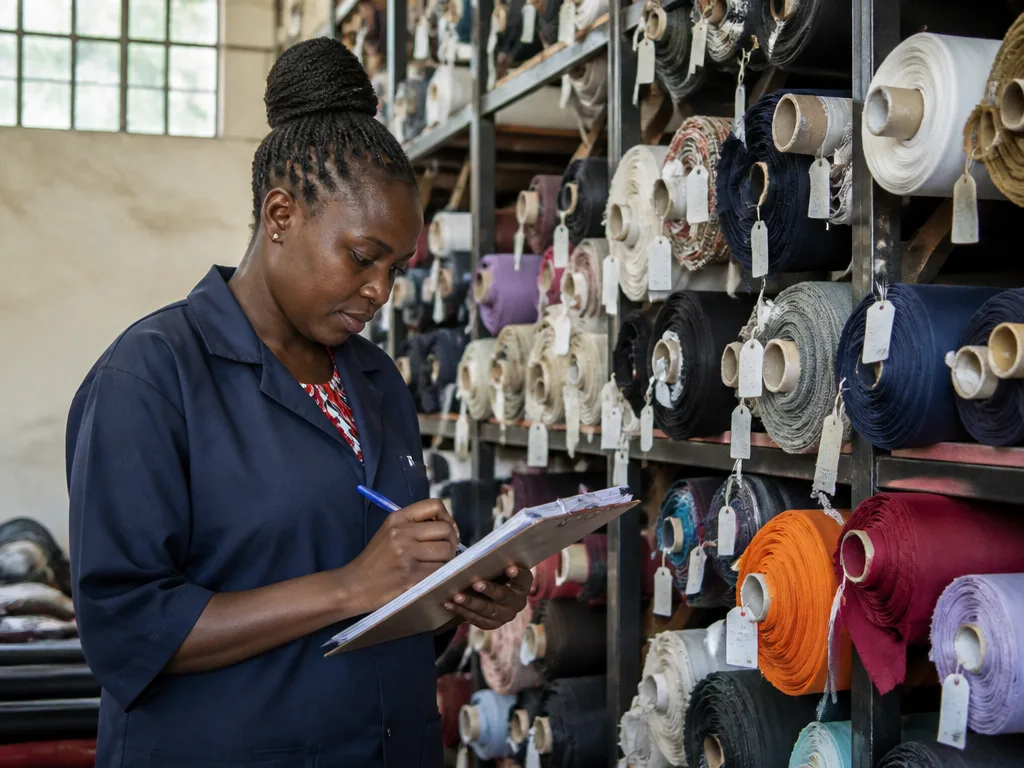
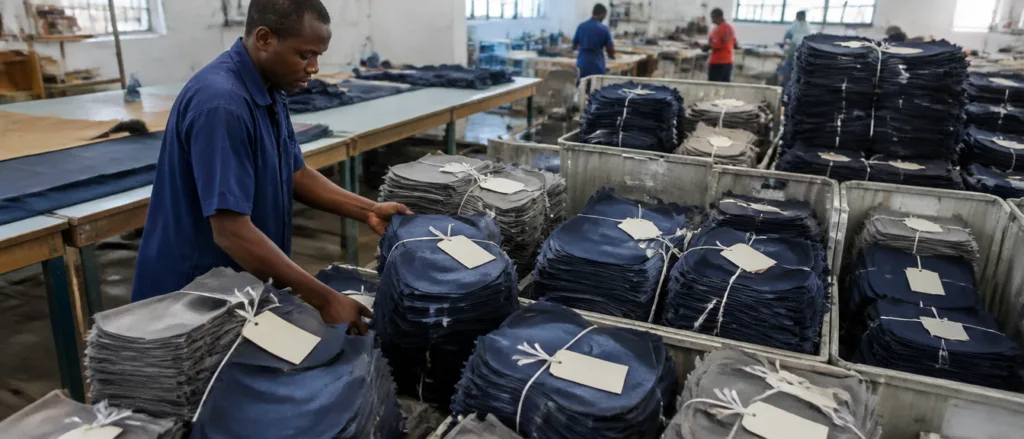
At the garment factory, the core documents are the brand’s purchase order, the factory’s fabric and trim purchase orders, receiving records showing which fabric rolls arrived for which order, cutting records and bundle tickets linking fabric lots to cut pieces, production and packing records, and the commercial invoice, packing list and bill of lading for the finished goods. At the fabric tier, you need the mill’s invoices and packing lists with roll or lot numbers, dyeing and finishing records, and a declaration of the yarn used. At the yarn tier, you need the spinner’s invoices and production records identifying the fiber purchased. At the raw material tier, you need records of where the cotton bales or other fibers were bought, their origin, and how they were transported.

Consistency is what reviewers check first. Quantities should reconcile from fiber to yarn to fabric to garments, allowing for normal process losses. Dates should make sense: fabric cannot be invoiced before the yarn it was made from was delivered. Names and addresses should match across documents. A file that contains every document but cannot reconcile volumes or dates is weaker than a smaller file that ties together cleanly.
How a Kenyan Factory Using Third-Country Fabric Documents Origin
Kenyan apparel exporters commonly use fabric imported from outside Africa, which AGOA’s third-country fabric provision allows for qualifying lesser-developed beneficiary countries. That creates two parallel documentation needs that sourcing teams sometimes treat as one. The AGOA origin claim depends on where the garment was cut and sewn and on the program’s rules; the forced-labour question depends on where every input came from, all the way back to the fiber. A shipment can fully qualify for AGOA and still face UFLPA questions if the fabric’s cotton cannot be traced.
A sound approach for a garment made in Kenya from imported fabric looks like this. The factory records which fabric lots were used for each order, from receiving through cutting. For each fabric purchase, it obtains the mill’s commercial documents and a declaration naming the yarn suppliers and the fiber origin, supported by the yarn invoices. Where cotton is involved, the file should reach back to the cotton purchase records or to a recognised traceability program, and where a brand’s risk assessment calls for it, laboratory fiber-origin testing can be added as a supplementary check. The export documents for the finished garments then reference the same order numbers, so the whole chain can be followed from the container back to the fiber.
Responsibility should be agreed in writing. The brand decides which fabrics and mills are approved and sets the documentation standard; the factory collects and organises records for each order; and the importer keeps the file ready to present to CBP if a shipment is reviewed. Agreeing this before the first bulk order prevents the scramble that follows a detention notice.
How HANJEN Approaches Traceability
HANJEN produces garments at its Kenyan factory near Mombasa for export to the US and Europe, and helps customers with AGOA origin documents and customs paperwork. Because cutting, sewing, printing and embroidery happen in-house, the link between fabric lots, cut bundles and finished cartons stays inside one facility, which makes order-level records easier to keep consistent. We work with customers to agree which upstream documents each program needs and to collect them from fabric suppliers as part of the order, not after shipment.
Traceability requirements differ by brand, retailer and product, so we prefer to discuss them at the development stage. For information on the audits and certifications we can share, see our compliance and certifications page, and for an overview of how duty-free access works, see our page on AGOA duty-free apparel.
Frequently Asked Questions
Does the UFLPA apply to garments made outside China?
Yes. CBP states that any goods made with inputs from the XUAR are presumed to be made with forced labour. A garment sewn in Kenya or anywhere else is covered if its cotton or other inputs came from the region, so importers need records that trace inputs back to their origin.
Is a supplier declaration enough to prove origin?
A declaration is useful but is rarely enough on its own. CBP looks for transaction records, records identifying all parties, and evidence of raw material origin including invoices, contracts and proof of payment and transfer. Declarations are strongest when backed by commercial documents that reconcile.
Does AGOA eligibility mean my shipment is UFLPA compliant?
No. AGOA eligibility concerns rules of origin for duty-free entry, while the UFLPA concerns whether any input was made with forced labour. A garment can qualify for AGOA and still need UFLPA documentation for its fabric and fiber.
When does the EU forced labour regulation start to apply?
Regulation (EU) 2024/3015 entered into force on December 13, 2024 and applies from December 14, 2027. It covers products placed on the EU market and products exported from it.
How far back in the supply chain should a brand trace?
For forced-labour risk, as far as the raw material, because that is where enforcement focuses. In practice, brands start with full Tier 1 and Tier 2 records and extend to yarn and fiber for higher-risk materials such as cotton.
Conclusion: Build the File Before You Need It
Apparel supply chain traceability is now part of getting goods into the US and, from late 2027, the EU. The brands that handle it well map their tiers, agree documentation standards with suppliers before production, and keep order-level files that reconcile from fiber to finished carton. For garments made in Kenya with imported fabric, that means documenting AGOA origin and input origin as two separate but connected tasks.
If you want to discuss how traceability documentation would work for your styles and fabrics, contact HANJEN and we will walk through the records your program needs.