
The performance characteristics of Recycled Polyester Activewear have become one of the most important technical questions for apparel brand operations developing sustainable product lines. Consumer expectations for activewear have continued to rise even as sustainability requirements have intensified, creating the dual challenge of delivering both environmental responsibility and the technical performance that activewear consumers demand. Recent advances in recycled polyester production technology, fabric construction methods, and finishing processes have closed most of the historical performance gaps between recycled and virgin polyester, with current generation recycled polyester activewear products delivering performance characteristics that match or exceed virgin alternatives across the dimensions that matter most for activewear end-use.
This guide examines the technical foundations of recycled polyester performance, the specific performance dimensions affecting activewear applications, the production considerations that affect achievable performance levels, the common concerns brand operations encounter and their resolution, and the strategic implementation framework supporting successful activewear program development. The analysis draws on technical research from textile engineering literature, manufacturing experience supporting brand customer activewear programs across multiple categories, and direct comparison testing between recycled and virgin polyester products produced under controlled conditions. The conclusion is that recycled polyester has reached technical maturity that supports virtually all activewear applications, with brand operations that have not yet engaged with recycled polyester production missing both commercial opportunities and operational learnings that compound as the technology continues to develop.
The strategic context for the technical analysis includes the broader sustainability trends reshaping consumer apparel markets, with brands operating in activewear categories particularly affected by consumer expectations for environmental responsibility. Consumers purchasing activewear products demonstrate sustainability sensitivity that exceeds the apparel sector average, with willingness-to-pay premiums for verified sustainable products supporting commercial cases for brand investment in recycled production capability. The alignment between consumer expectations and the technical maturity of recycled polyester production produces an environment where brand operations can capture commercial benefits through engagement with recycled production while delivering the performance characteristics activewear consumers expect. The strategic implications extend beyond immediate product economics to include the broader competitive positioning that affects long-term brand performance, with brands operating with established recycled polyester capability gaining sustainable advantages over peers operating with traditional virgin polyester production approaches.
Why Recycled Polyester Activewear Matters in 2026
The strategic importance of recycled polyester applications in 2026 reflects multiple converging factors including consumer preference evolution, retail channel requirements, environmental impact considerations, and competitive positioning dynamics. Brand operations that have engaged with recycled polyester production have generally outperformed peers across activewear category metrics including market share growth, retail customer relationship strength, and consumer brand affinity development. The performance gap between brands operating with recycled polyester capability and brands operating without this capability has widened over the past several years and is likely to continue widening as the underlying drivers persist. Brand operations developing forward-looking activewear strategies should treat recycled polyester capability as foundational rather than optional, recognizing that the strategic implications extend across multiple performance dimensions affecting long-term competitive positioning.
Consumer Demand for Sustainable Performance
Consumer demand for sustainable performance products has matured from interest among niche consumer segments to mainstream expectation across the broader activewear consumer base. Recent consumer research from major industry analysts indicates that sustainability considerations affect purchase decisions for over 70 percent of US activewear consumers, with the percentage rising to over 80 percent among consumers under 35 years of age. The demand intensity in activewear exceeds the apparel sector average, reflecting both the consumer demographics that gravitate toward activewear products and the performance-conscious mindset that extends from product technical features to environmental performance considerations. The consumer expectation has shifted from generic sustainability claims to specific verification including verified recycled content percentages and credible third-party certification documentation.
The willingness-to-pay dynamics for sustainable activewear demonstrate premium tolerance of 8 to 18 percent above equivalent virgin polyester products in most product categories, with the premium tolerance varying by price point and brand positioning. The premium pricing capacity supports the financial case for brand investment in recycled polyester production capability, with the modest cost overhead of recycled production typically offset multiple times by the premium pricing capacity that certified recycled products support. Brand operations that have invested in recycled polyester capability have generally achieved better gross margin performance than peers operating with virgin-only production, with the margin advantage compounding across product categories and growing assortments. The consumer dynamics also support broader brand value development, with sustainability credentials contributing to long-term brand equity in ways that affect valuation, capital costs, and stakeholder confidence beyond the immediate transactional impact. The brand equity development supports sustainable competitive advantages that compound across multiple market cycles, distinguishing brands with established sustainability positioning from peers operating with weaker credentials. Brand operations should treat sustainability investment as a strategic priority rather than as an incidental marketing concern, recognizing that the cumulative effect of sustained investment in credible sustainability positioning produces brand value that becomes increasingly difficult for competitors to replicate over time. The Textile Exchange organization publishes detailed consumer research documenting these dynamics across activewear and other apparel categories.
Environmental Impact Reduction Through Recycled Materials
Environmental impact reduction through recycled polyester production produces measurable benefits across multiple environmental performance dimensions that brand operations can communicate to consumers and stakeholders. Recycled polyester production typically reduces energy consumption by approximately 35 to 55 percent compared to virgin polyester production from petroleum feedstock, depending on the specific recycling process and energy mix at the production facility. Greenhouse gas emissions associated with recycled polyester production are typically 30 to 50 percent lower than virgin alternatives, contributing to the carbon footprint reduction that sustainability frameworks increasingly require. Water consumption during fiber production is also lower for recycled polyester, with reductions typically ranging from 20 to 40 percent depending on the specific production conditions.
The environmental impact also extends to upstream considerations including reduced petroleum extraction demand, reduced waste plastic in landfills and oceans, and reduced manufacturing emissions from raw material processing. Each of these impact dimensions contributes to the overall environmental footprint reduction that consumers and stakeholders increasingly value, with the cumulative impact supporting the credible sustainability claims that brand operations communicate through marketing and corporate sustainability reporting. The impact data should be documented through verified life cycle assessment studies that withstand stakeholder scrutiny, supporting the substantive foundation that distinguishes credible sustainability claims from greenwashing concerns. Brand operations developing comprehensive sustainability strategies should incorporate the environmental impact data into their stakeholder communications, providing the substantive context that supports the broader sustainability narrative across consumer and corporate channels. The communications discipline should align the impact data with consumer-facing claims and corporate sustainability reporting, supporting consistent messaging across the various stakeholder relationships affecting brand operations. The integrated communications approach distinguishes credible sustainability positioning from less substantiated alternatives, supporting the brand credibility that consumers and stakeholders increasingly require for long-term commercial relationships.
Cost Dynamics and Commercial Viability
Cost dynamics for recycled polyester have evolved substantially over the past several years, with current pricing supporting commercial viability across most activewear product categories. Recycled polyester yarn pricing typically runs 5 to 15 percent above equivalent virgin alternatives depending on the specific specification, recycling process, and supply dynamics. The pricing premium has narrowed from substantially higher levels several years ago as recycled polyester production capacity has scaled and operational efficiencies have improved. The current pricing premium is typically more than offset by the premium pricing capacity that certified recycled products support in retail channels, producing favorable program economics for brand operations engaging with recycled production at meaningful volume.
The commercial viability extends beyond direct pricing economics to include the broader strategic positioning benefits that recycled polyester production supports. Brand operations with established recycled polyester capability gain access to retail channel opportunities that brands operating without this capability cannot pursue, with the differential channel access supporting commercial outcomes that extend beyond unit pricing to include shelf placement, marketing co-investment, and growth opportunity allocation. The strategic positioning benefits compound over time as accumulated retail relationships and consumer brand affinity development support sustainable competitive advantages that distinguish recycled-focused brands from peers operating with virgin-only production. Brand operations developing comprehensive economic analysis should incorporate these strategic dimensions alongside the direct pricing economics, producing analytical foundations that capture the full commercial picture supporting recycled polyester investment decisions. The strategic positioning benefits also extend to brand value development that affects long-term valuation and capital costs, with verified sustainability credentials contributing to investor confidence and stakeholder relationships that compound over multi-year horizons. The brand value impact is particularly significant for public companies and brands seeking growth capital, with sustainability credentials increasingly factoring into financial analyst evaluations and capital allocation decisions across the apparel sector. The analytical sophistication distinguishes leading brand operations from peers operating with narrower analytical frameworks, with the comprehensive perspective supporting better strategic decisions across multiple dimensions affecting program success. Brand operations should structure their economic analysis to capture both quantitative pricing data and qualitative strategic considerations, producing balanced analytical conclusions that support confident decision-making at the senior management level.
How Recycled Polyester Is Made and Its Performance Properties
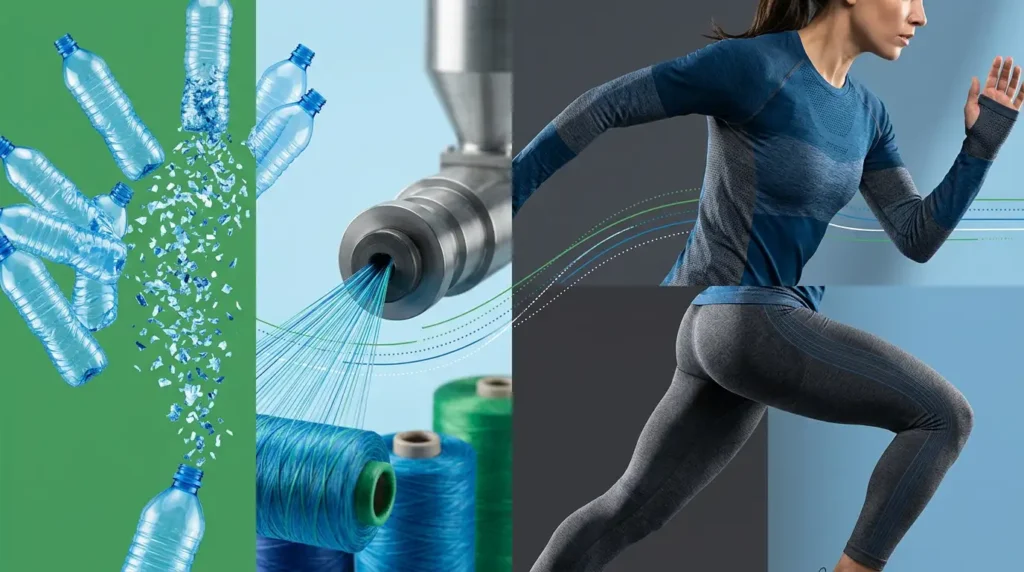
Recycled polyester production operates through several distinct processes that affect both the technical performance characteristics of the resulting fiber and the supply chain economics that affect program viability. Mechanical recycling represents the most established production pathway, with post-consumer PET bottles serving as the primary feedstock that gets shredded, washed, and re-extruded into recycled polyester fibers. Chemical recycling represents an emerging pathway that breaks down PET back to its monomer components and re-polymerizes into virgin-quality recycled polyester, supporting performance characteristics that more closely match virgin alternatives. Each production pathway has specific advantages and considerations affecting the final product performance, with the optimal pathway depending on the specific application requirements and supply chain configuration.
The performance properties of recycled polyester depend on the specific production process, the input feedstock quality, and the downstream processing applied to the recycled fiber. Mechanically recycled polyester from post-consumer PET typically delivers tensile strength within 5 to 8 percent of virgin polyester, color consistency that may require additional processing to match virgin standards, and processability that supports most apparel construction techniques without significant adjustment. Chemically recycled polyester typically delivers performance characteristics essentially identical to virgin polyester due to the fundamental molecular reformation that occurs during the chemical process. The performance differentials between recycled and virgin polyester have narrowed substantially as production technology has matured, with current generation recycled polyester supporting most apparel applications without meaningful performance compromise. The maturation has been driven by sustained investment in recycling technology, yarn production processes, and quality control systems that collectively support the consistent performance brand operations require. The investment trajectory continues, with ongoing improvements in chemical recycling capacity, mechanical recycling efficiency, and feedstock quality producing further performance enhancements that benefit brand operations engaging with recycled production.
The specific performance characteristics affecting activewear applications include moisture wicking capability, breathability, abrasion resistance, color fastness, dimensional stability through wash cycles, and stretch recovery. Recycled polyester supports moisture wicking and breathability at levels comparable to virgin polyester through similar yarn structures and fabric constructions. According to CBP guidance documentation on AGOA preferential treatment, recycled polyester sourcing under the third-country fabric provision allows AGOA-eligible factories to use competitive recycled fabrics from non-AGOA mills while still claiming AGOA duty-free treatment on the finished garments, supporting the integrated economic case for recycled polyester production at AGOA factories. The integrated framework combining sustainability certification with AGOA preferential treatment produces particularly compelling economics for activewear brand operations targeting both cost optimization and sustainability commitments. Abrasion resistance is typically within commercial tolerance ranges, though specific high-abrasion applications may benefit from chemically recycled polyester or specific yarn engineering that addresses the slightly lower mechanical strength of mechanically recycled material. Color fastness and dimensional stability typically meet commercial requirements with appropriate finishing processes, though brand operations should validate these characteristics through structured testing for their specific products. Stretch recovery in elastane-blended fabrics performs similarly across recycled and virgin polyester, with the spandex component dominating the stretch behavior. The fabric performance under repeated wash cycles, which represents one of the most consequential consumer-facing performance dimensions, has been extensively tested for recycled polyester products with results demonstrating wash cycle durability comparable to virgin polyester equivalents. The wash performance reflects both the underlying fiber characteristics and the appropriate finishing processes that support dimensional stability through consumer use cycles. Brand operations should validate wash performance for their specific products through structured testing that simulates consumer use, supporting confidence in the long-term performance the recycled polyester products will deliver to consumers. According to research on textile sustainability, the performance gap between recycled and virgin polyester has narrowed to commercially acceptable levels across most apparel applications. The Carnegie Endowment for International Peace publishes additional analysis on global trade dynamics affecting apparel sourcing decisions, including the broader regulatory and consumer preference trends that shape activewear strategic planning. Brand operations should monitor these analytical sources alongside primary technical data to maintain comprehensive understanding of the strategic environment affecting recycled polyester program decisions.
Performance Comparison: Recycled vs Virgin Polyester
A structured performance comparison between recycled and virgin polyester reveals the specific dimensions where the materials differ and the dimensions where they perform equivalently. The comparison framework should address both the foundational fiber properties and the application-specific characteristics affecting activewear end-use performance. The results presented below reflect typical performance for current generation recycled polyester products from established recycling and yarn production sources, with specific products potentially varying based on the particular supply chain and production configuration. Brand operations should validate performance for their specific products and supply chain configurations through structured testing, with the table data serving as directional reference rather than as definitive specifications. The performance variability across supply chain configurations underscores the importance of careful supplier selection and ongoing quality validation, supporting reliable program execution that delivers consistent product performance across high-volume production.
| Performance Dimension | Virgin Polyester | Mechanically Recycled | Chemically Recycled | Activewear Significance |
|---|---|---|---|---|
| Tensile Strength | Baseline | 92-95% of virgin | 98-100% of virgin | Affects durability |
| Color Fastness | High | Slightly variable | High | Affects appearance retention |
| Moisture Wicking | Excellent | Excellent | Excellent | Critical for performance |
| Breathability | Excellent | Excellent | Excellent | Critical for comfort |
| Abrasion Resistance | High | Moderate to High | High | Affects garment lifespan |
| Dimensional Stability | Excellent | Excellent with finishing | Excellent | Affects fit consistency |
| Stretch Recovery | Good with spandex | Good with spandex | Good with spandex | Critical for activewear |
| UV Resistance | Moderate | Moderate | Moderate | Affects outdoor durability |
The performance comparison demonstrates that recycled polyester delivers performance characteristics within commercial tolerance ranges for most activewear applications, with chemically recycled polyester achieving virtual parity with virgin polyester across all dimensions. Mechanically recycled polyester shows minor performance differentials in tensile strength and color fastness that may affect specific high-performance applications but that fall within acceptable ranges for the substantial majority of activewear products. Brand operations should incorporate this performance data into their product development decisions, selecting the appropriate recycled polyester source for each specific product application based on the performance requirements and the supply chain economics that affect program viability. The selection process should also consider the brand’s specific quality positioning and consumer expectations, with premium brands potentially favoring chemically recycled polyester for the marginal performance advantages while value-positioned brands typically achieving full commercial success with mechanically recycled alternatives. The selection considerations should be documented during product development, supporting consistent decision-making across the product portfolio and providing the analytical foundation for ongoing optimization as supply chain options continue evolving. Brand operations should also engage with their fabric mill partners on the specific recycled polyester options available through their supply chain, with the engagement supporting informed selection that captures the full range of available options rather than defaulting to specific suppliers without comprehensive evaluation.
Production Considerations for Recycled Polyester Activewear
Production considerations for recycled activewear production address the specific operational dimensions that brand operations must coordinate to support reliable production at commercial scale. The considerations span yarn supplier selection, fabric mill engagement, factory selection and capability, and ongoing quality management that maintains performance consistency across high-volume production programs. Brand operations should treat each consideration as a strategic decision that affects program success, with the integrated approach to production planning supporting better operational outcomes than fragmented decision-making that addresses each dimension separately.
Mill Selection and Yarn Quality Validation
Mill selection for recycled polyester production requires verification that the candidate mill maintains the specific GRS certifications and operational capabilities required for reliable program execution. Major recycled polyester yarn producers operate in Taiwan, Korea, India, and increasingly in other markets, with each producer offering specific yarn specifications and quality consistency profiles. The mill qualification process should include detailed review of certification documentation, sample yarn testing for the specific specifications required by the brand program, and operational alignment that supports reliable supply across the program lifecycle. Brand operations engaging multiple candidate mills during qualification typically achieve better program outcomes through both better technical fit and stronger commercial relationships.
The yarn quality validation should include both initial sample testing and ongoing quality monitoring through structured testing protocols that capture specific performance dimensions affecting the brand product specifications. Initial sample testing should address tensile strength, color consistency, processability through the intended fabric construction, and any application-specific properties relevant to the product end-use. Ongoing quality monitoring should validate that the production yarn meets the established specifications consistently, with periodic testing supporting early identification of any quality drift that would warrant corrective action. The investment in quality validation infrastructure pays back through reliable product performance and reduced exposure to quality issues that could affect brand reputation and retail customer relationships. Our leggings production capability includes the integrated quality validation infrastructure that supports reliable recycled polyester programs at commercial scale. The mill engagement should also include detailed discussion of capacity availability, lead time reliability, and the specific service levels that support commercial scale brand programs. Capacity considerations affect the practical viability of brand programs, with mills operating near full capacity sometimes unable to support new brand customer onboarding even when their certification scope and technical capability would otherwise be suitable. The capacity engagement should occur early in the qualification process, supporting realistic program planning that aligns brand timing requirements with mill capacity availability. Brand operations engaging with structured mill qualification typically achieve better program outcomes than tentative qualification approaches that may miss optimal mill partners or commit to suboptimal partners due to inadequate due diligence.
Knitting and Finishing Process Optimization
Knitting and finishing process optimization addresses the technical dimensions affecting how recycled polyester yarns are converted into activewear fabrics. Modern circular knitting machines support recycled polyester yarn handling with minimal adjustment from virgin polyester production, supporting efficient production at commercial scale. The knitting process selection affects both the fabric performance characteristics and the production economics, with different fabric constructions supporting different end-use requirements at varying cost points. Brand operations should engage with their fabric mill partners on the specific knitting construction that best supports their product specifications, with the engagement typically including sample fabric production and performance testing to validate the specification before commercial production commits.
The finishing processes applied to recycled polyester fabrics affect both the technical performance and the aesthetic characteristics of the final product. Standard finishing processes including heat setting, dyeing, and any specialty treatments work effectively with recycled polyester, with finishing parameters typically requiring minor adjustment from virgin polyester finishing to optimize the specific characteristics. Color consistency in dyed recycled polyester may require additional finishing process attention to address any color variability inherent in the recycled feedstock, with established finishing operations developing process protocols that support consistent color outcomes across production lots. Specialty finishes including moisture wicking, antimicrobial, UV protection, and water resistance can be applied to recycled polyester fabrics with results comparable to virgin polyester finishing, supporting the full range of performance functionality that activewear products typically incorporate. The finishing capability also extends to specialty processes such as garment dyeing, brushing, peaching, and various surface treatments that affect the aesthetic and tactile characteristics of finished products. Modern finishing operations support the full range of treatments with recycled polyester, enabling brand operations to achieve the specific look and feel objectives without compromise on the recycled content positioning. The integration of finishing capability with broader production infrastructure supports the operational efficiency that drives commercial scale brand programs, with established finishing operations developing process protocols that produce consistent results across high-volume production runs.
Construction Techniques for Activewear Performance
Construction techniques for activewear performance affect how the recycled polyester fabric is engineered into finished garments that deliver the specific performance characteristics activewear consumers expect. Flatlock seam construction supports comfort against the skin during high-movement activities, eliminating the seam ridge that traditional sewing construction produces. Coverstitch construction provides clean seam finishing on knit fabrics with appropriate stretch characteristics. Bonded seam construction supports both performance and aesthetic objectives in technical applications, with the seamless appearance becoming increasingly common in premium activewear products. Each construction technique has specific equipment and operator skill requirements that affect production capability, with established factories maintaining the integrated infrastructure that supports the full range of construction options.
The construction technique selection should be matched to the specific product specifications and performance requirements, with the engineering decisions affecting both the finished product characteristics and the production economics. Brand operations should engage with their factory partners during the product development phase to validate the construction approach against the performance specifications, supporting the integrated product development that drives reliable program execution. The factory partner’s construction capability should be validated through sample production that demonstrates the expected performance under controlled conditions, supporting confidence in the production capability before commercial volume commitments. Brands evaluating production capability should consider the specific equipment infrastructure including flatlock and coverstitch sewing machines, automated cutting systems for elastic fabric handling, and bonded seam construction equipment that affects the achievable construction range. Our facility capabilities include the integrated construction infrastructure supporting recycled polyester activewear production across major activewear categories. Brand customers can also review specific construction capability documentation at our Jackets and Swimwear dedicated pages, providing visibility into the specific construction options supported across major product categories. The construction infrastructure investment represents accumulated capability that brand customers benefit from immediately rather than requiring development from scratch, supporting faster time-to-market and lower execution risk than greenfield production approaches.
Common Performance Concerns and Their Resolution
Common performance concerns brand operations encounter during recycled polyester activewear program development typically reflect either historical perceptions about recycled material limitations or specific technical considerations that warrant focused attention. The performance concerns can be addressed through structured technical engagement with experienced production partners that have resolved similar concerns through prior brand customer programs. The resolution approach combines technical validation through structured testing with operational best practices that support reliable performance outcomes across high-volume production programs. Brand operations new to recycled polyester engagement often benefit from direct consultation with experienced production partners during the program development phase, leveraging the accumulated experience and technical knowledge that supports faster resolution of typical concerns. The consultation approach typically produces stronger program outcomes than independent problem-solving, with the experienced partner perspective addressing concerns through proven solutions rather than reactive troubleshooting that may not capture optimal approaches.
Color consistency concerns are commonly raised because mechanically recycled polyester from post-consumer feedstock may show slight color variability across production batches due to feedstock variation. The concerns are addressable through established finishing processes that include batch tracking, color matching protocols, and quality control verification that ensures finished product color falls within commercial tolerance ranges. Brand operations should establish color tolerance specifications during product development, supporting clear performance criteria that production teams can target consistently. The color tolerance specifications should be validated through sample production across multiple batches, demonstrating the achievable consistency before commercial production commits at scale.
Durability concerns sometimes arise from the slight tensile strength differential of mechanically recycled polyester compared to virgin alternatives. The concerns are addressable through fabric construction adjustments that compensate for the modest strength differential, including yarn diameter selection, knit density optimization, and finishing process tuning that supports overall fabric durability. The construction adjustments typically produce activewear products with durability characteristics fully meeting commercial expectations, with the recycled content supporting the broader sustainability positioning while delivering the technical performance activewear consumers expect. Brand operations should validate durability through structured testing protocols that simulate real-world wear and care conditions, supporting confidence in the long-term performance of the recycled polyester products. The validation testing supports both product specification confidence and consumer-facing claims that demonstrate the durability of certified recycled products. Brand operations conducting validation testing should structure their protocols to capture both controlled laboratory conditions and simulated consumer use scenarios, providing the comprehensive validation that supports credible performance claims. The dual-track testing approach reveals both the technical baseline and the practical performance under real-world conditions, distinguishing comprehensive validation from narrow laboratory-only assessment that may not reflect actual consumer experience.
Hand feel concerns occasionally arise from perceptions that recycled polyester may produce stiffer or less luxurious fabric than virgin alternatives. Modern recycled polyester production technology and finishing processes have largely resolved hand feel issues, with current generation products delivering hand feel characteristics that match virgin polyester across most applications. Brand operations developing premium products should validate hand feel through structured comparative evaluation, supporting confidence in the premium product positioning that recycled polyester now reliably supports. The hand feel evaluation should include both technical instrumentation measurements and consumer panel evaluation, providing comprehensive verification of the achievable performance. Brand operations should also establish hand feel specifications during product development that capture both objective and subjective dimensions, supporting consistent product outcomes across multiple production runs. The specification discipline produces more reliable consumer experiences than less rigorous approaches, with consistent hand feel contributing to the overall product quality that consumers expect from premium activewear products.
Strategic Implementation in Brand Activewear Programs
Strategic implementation of recycled polyester production in brand activewear programs follows a structured approach that addresses both the technical product development and the broader operational integration required for reliable execution at scale. The implementation framework should align with the brand’s broader product development cycles, sustainability strategy, and retail customer commitments, supporting integrated planning that captures the strategic value while managing operational complexity. Brand operations should treat the implementation as a sustained organizational commitment rather than as a tactical product development project, with the institutional capability development supporting continued benefits across multiple production seasons and category expansions. Brand operations should structure the implementation with appropriate senior management sponsorship and dedicated program management, supporting the organizational commitment that drives successful execution at scale. The implementation governance should include explicit accountability assignments, regular review cadences capturing program performance and emerging issues, and clear decision-making frameworks that enable timely resolution of exception scenarios. The governance discipline distinguishes structured implementations from less disciplined approaches, with the operational rhythm supporting the reliable execution that drives commercial success.
Category Prioritization for Initial Implementation
Category prioritization for initial recycled polyester implementation should consider both the technical fit between the categories and recycled polyester capability and the commercial impact of recycled positioning in each category. Performance-focused activewear categories including running, training, yoga, and athletic wear typically support the strongest commercial cases due to the consumer demographics that gravitate toward these categories and their sustainability sensitivity. Athleisure categories that combine performance fabrics with relaxed silhouettes also fit well, leveraging both the technical capability and the consumer sustainability preferences. Premium activewear positioned at higher price points typically supports stronger premium pricing capacity for sustainability credentials, supporting favorable program economics. The category prioritization should balance the technical fit, commercial impact, and operational complexity across the available categories, supporting structured initial implementation that captures available value while building organizational capability for subsequent expansion.
The prioritization should also incorporate the brand’s specific retail customer relationships, with category prioritization aligned to the retail customers that place greatest emphasis on certified recycled production. Major US activewear retailers including specialty performance retailers, sporting goods chains, and mass-market retailers with sustainability commitments often have specific certified product expectations that affect their assortment planning. Brand operations should align their initial implementation with these retail customer expectations, capturing both immediate commercial benefits and longer-term retail relationship strengthening through the alignment with retail customer strategic priorities. The retail-aligned implementation typically produces stronger commercial outcomes than purely internal prioritization that may not reflect the retail channel realities affecting brand performance. Brand operations should also engage their retail customer relationships during the prioritization phase, leveraging the retail buyer perspective on consumer trends and assortment opportunities that may inform optimal category prioritization. The retail engagement supports both better category selection and stronger commercial relationships through demonstrated alignment with retail customer strategic priorities. Brand operations should also incorporate consumer research data into the prioritization process, identifying the specific consumer segments and product categories where recycled polyester credentials produce the strongest commercial impact. The consumer-centered prioritization supports better commercial outcomes through alignment with actual consumer demand patterns rather than internal assumptions about consumer preferences. Detailed consumer research can be commissioned through major industry analysts or accessed through retail customer market research that brand operations may have available through their commercial relationships.
Specification Development and Technical Standards
Specification development for recycled polyester activewear should establish clear technical standards covering yarn specifications, fabric construction parameters, finishing requirements, performance criteria, and quality tolerances. The specification framework provides the foundation for consistent production across multiple seasons and any factory changes that may occur over the program lifecycle. Brand operations should engage their product development, sourcing, and quality teams in joint specification development, ensuring that the specifications capture the operational reality alongside the technical performance objectives. The collaborative specification development typically produces stronger specifications than individual function development, with the cross-functional input addressing the various dimensions affecting program execution.
The technical standards should reference established industry frameworks where applicable, supporting both the substantive validity of the specifications and the operational efficiency of using widely-recognized references. Standards from ASTM International, AATCC, and ISO provide established measurement protocols for the various performance dimensions that affect activewear quality. The standards should be integrated with the brand’s broader quality management framework, supporting consistent quality outcomes across the AGOA program and any other production locations the brand may use. The integration also supports knowledge transfer across the brand operation, with consistent technical standards facilitating staff training, performance management, and continuous improvement across the various functional areas contributing to product development and production execution. The standards integration also supports more effective communication with external partners including factories, fabric mills, and certification bodies, with shared technical references reducing communication friction and supporting more efficient operational coordination. The cumulative benefits of standards integration extend across both internal operations and external supply chain relationships, producing operational excellence that distinguishes mature brand operations from less developed alternatives.
Quality Validation and Continuous Improvement
Quality validation for recycled polyester activewear programs should include both initial validation that confirms the production capability before commercial commitments and ongoing validation that maintains performance consistency across production. Initial validation typically includes proto sample production, fit sample iterations, and pre-production sample approval, with each stage demonstrating specific aspects of the production capability. Pre-production samples should be subjected to comprehensive testing across the relevant performance dimensions, providing the substantive foundation for commercial production approval. The validation infrastructure should be supported by appropriate testing capability either internally or through accredited third-party laboratories, ensuring that the validation produces credible results that withstand both internal review and external due diligence.
Continuous improvement processes should capture lessons from each production cycle and apply them systematically to subsequent operations, supporting program evolution that improves both the technical performance and the operational efficiency over time. The improvement processes typically include performance metric tracking, root cause analysis of any quality issues that emerge, structured feedback loops between production teams and product development teams, and periodic specification reviews that incorporate accumulated learnings. Brand operations that institutionalize continuous improvement disciplines typically achieve better long-term program outcomes than peers operating with static program management, with the cumulative learning supporting sustainable competitive advantages that distinguish leading brand operations. The continuous improvement investment is modest relative to the value created, with the analytical and operational discipline producing benefits across multiple performance dimensions that affect long-term brand performance. The improvement processes typically yield specific operational refinements including yarn specification adjustments, finishing parameter optimization, construction technique improvements, and quality control protocol enhancements that collectively support better product outcomes. Brand operations should document these improvements systematically, building the institutional knowledge that supports continued program excellence across multiple operating cycles and personnel changes that may occur over the program lifecycle. The institutional knowledge represents real organizational value that distinguishes mature programs from less developed alternatives, supporting sustained competitive performance through accumulated operational excellence.
FAQ
How does Recycled Polyester Activewear performance compare to virgin polyester equivalents?
A1: recycled activewear performance compares favorably to virgin polyester equivalents across most performance dimensions, with current generation recycled products delivering characteristics that match virgin alternatives across the metrics that matter most for activewear end-use. Tensile strength of mechanically recycled polyester typically runs 92 to 95 percent of virgin polyester, with chemically recycled polyester achieving 98 to 100 percent of virgin performance. Moisture wicking and breathability performance match virgin polyester essentially completely due to similar fiber structures and yarn engineering. Dimensional stability through wash cycles meets commercial expectations with appropriate finishing processes. Stretch recovery in elastane-blended fabrics performs comparably across recycled and virgin alternatives. Abrasion resistance is within commercial tolerance ranges for most applications, with specific high-abrasion uses potentially benefiting from chemically recycled polyester or yarn engineering adjustments. Color fastness in mechanically recycled polyester may show slight variability that established finishing processes can address through batch tracking and color matching protocols. The cumulative performance picture supports virtually all activewear applications without meaningful performance compromise, with the modest performance differentials in specific dimensions easily addressed through fabric construction and finishing process optimization. Brand operations should validate specific performance against their product specifications through structured testing during product development, but the technical foundation supports confident commercial decisions about engaging with recycled polyester production for activewear programs at scale. The technical foundation has been validated through extensive industry testing and accumulated commercial production experience, with major brand customers across the activewear sector successfully implementing recycled polyester programs without performance compromise. The brand customer success patterns provide additional validation beyond pure technical testing, demonstrating that the technical capability translates into operational reality through structured implementation with experienced production partners. Brand operations new to recycled polyester production should leverage this accumulated industry experience rather than treating their implementation as a novel technical challenge, accessing both the technical knowledge and the operational best practices that experienced manufacturing partners bring to brand customer engagements. The accumulated knowledge transfer accelerates time to commercial production while reducing execution risk, supporting better program outcomes than alternative approaches based on independent technical development. Brand operations should structure their engagement with experienced partners to capture both the immediate program execution and the longer-term capability development that ongoing partnership produces, supporting institutional learning that extends across multiple product categories and program iterations.
What activewear products work best with recycled polyester production?
A2: Activewear products that work best with recycled polyester production include the broad range of categories that brand operations actually source, with limited exceptions in highly specialized technical applications. Athletic shorts, leggings, performance tops, sports bras, base layer compression garments, and athleisure products all work effectively with recycled polyester construction. Running and training apparel including shorts, T-shirts, tank tops, and outer layers function well with recycled polyester at performance levels matching virgin alternatives. Yoga and fitness apparel benefits from the technical capability that recycled polyester supports, with the elastane-blended fabrics performing comparably to virgin polyester equivalents. Outerwear including light shells and windbreakers works well with recycled polyester face fabrics, with technical performance meeting commercial expectations. Specific applications that may face capability limitations include highly engineered technical outerwear with specialized fabric requirements, certain professional sports applications with strict performance specifications, and specialized medical or industrial applications where regulatory requirements may favor virgin material specifications. Brand operations developing comprehensive activewear strategies can engage with recycled polyester across the substantial majority of their product range, with category prioritization based on commercial impact and operational fit rather than technical limitations. The breadth of viable applications supports comprehensive brand engagement with recycled polyester production rather than limited niche implementations that capture only modest portions of the available value.
How do brand operations validate the technical performance of recycled polyester products?
A3: Brand operations validate technical performance through structured testing protocols that address the relevant performance dimensions for each specific product application. The validation typically includes both standard textile testing covering tensile strength, dimensional stability, color fastness, abrasion resistance, and other foundational properties, and application-specific testing addressing performance dimensions that matter most for the specific end-use. Standard testing should reference established industry frameworks including ASTM International, AATCC, and ISO protocols, supporting credible results that withstand stakeholder scrutiny. The USITC Harmonized Tariff Schedule provides additional regulatory reference covering the duty rate frameworks affecting activewear imports, supporting the comprehensive analytical foundation that drives strategic decisions about recycled polyester program development. Brand operations conducting comprehensive analysis should reference both the technical testing standards and the regulatory frameworks to ensure that analytical conclusions reflect the full strategic environment. Application-specific testing might include moisture management performance evaluated through standard wear-test protocols, fabric performance under repeated wash cycles representative of consumer use, durability testing under simulated wear conditions, and consumer evaluation through structured panels. The testing should be conducted by appropriately qualified laboratories either internal or through accredited third-party testing services, ensuring credible results. The validation should occur at multiple stages including initial sample evaluation, pre-production approval, and ongoing quality monitoring during commercial production. The multi-stage validation framework supports both initial program launch confidence and sustained quality performance across multiple production runs. Brand operations should integrate the validation activities with their broader quality management framework, supporting consistent practices across all production locations and product categories. The integration produces operational efficiency through standardized practices while maintaining the technical rigor that supports reliable performance outcomes. Brand operations should establish testing protocols that capture both the technical performance and the consumer experience dimensions, supporting comprehensive validation that reflects the full picture of product capability. The validation investment is modest relative to the strategic value of confident technical claims, with the structured approach supporting brand confidence in the products and the credible documentation that supports retail customer and consumer communications about product performance.
What cost premium should brands expect for recycled polyester activewear production?
A4: Brand operations should expect recycled polyester yarn cost premiums of 5 to 15 percent above equivalent virgin polyester depending on the specific specification, recycling process, and supply dynamics. The total fabric cost premium incorporating yarn premium, processing differences, and any specialty finishing requirements typically runs 8 to 18 percent at the fabric level, with the specific premium varying by construction and finishing complexity. The fabric cost premium translates to a finished garment cost premium of approximately 4 to 10 percent depending on the proportion of fabric cost in the total garment cost structure, with simpler garments showing higher percentage impact and more complex garments showing lower percentage impact. The cost premium is typically more than offset by the premium pricing capacity that certified recycled products support in retail channels, with current consumer research indicating premium tolerance of 8 to 18 percent above equivalent virgin alternatives in most activewear categories. The net economic impact for brand operations is therefore generally favorable, with the modest cost overhead supporting commercial outcomes that exceed alternatives based purely on virgin polyester production. The cost picture has improved over time as recycled polyester production capacity has scaled, with current pricing substantially better than the higher premiums that affected earlier program implementations. Brand operations should also consider the long-term cost trajectory, with continued capacity expansion likely to further narrow the price gap over time. The strategic implications support brand investment in recycled polyester capability now to capture both immediate commercial benefits and the long-term positioning value as the broader market continues evolving toward sustainability standards. The broader market evolution suggests that the cost picture will likely improve further over time as production capacity continues scaling and operational efficiencies continue developing. Brand operations that engage early in the recycled polyester transition typically achieve better cost outcomes than later-entering peers, with the cumulative cost advantages compounding across multiple operating periods to produce material differences in program economics. The early engagement also positions brand operations to capture the strongest supplier relationships and capacity allocations during periods of high demand, supporting operational reliability that later-entering peers may not be able to access. The relationship development advantages compound the cost advantages, producing comprehensive competitive positioning that distinguishes early adopters from later-entering peers across multiple performance dimensions.
How do brands ensure their Recycled Polyester Activewear claims are credible to consumers and stakeholders?
A5: Brand operations ensure their Recycled Polyester Activewear claims are credible through proper third-party certification, structured documentation chain of custody, transparent communication, and substantive operational practices supporting the claims. Third-party certification through frameworks such as the Global Recycled Standard provides the substantive foundation that supports defensible claims, with the certification documentation withstanding both consumer scrutiny and regulatory verification. The chain of custody documentation traces certified materials from raw fiber through finished products, with transaction certificates supporting each transfer between supply chain partners. Transparent communication addresses the specific recycled content percentages, source types, and certification frameworks supporting the claims, avoiding vague or unsubstantiated language that creates greenwashing exposure. Substantive operational practices align the brand’s actual operations with the claimed sustainability positioning, supporting the credibility that distinguishes authentic sustainability commitments from marketing-only positioning. Brand operations should also incorporate ongoing verification practices including periodic supply chain audits, third-party verification of marketing claims, and structured feedback mechanisms that capture stakeholder concerns and address them substantively. The credibility infrastructure represents real organizational investment that pays back through stakeholder confidence development and protection against greenwashing exposure that could materially affect brand operations. Brand operations developing comprehensive credibility frameworks typically engage their sustainability, marketing, legal, and operational teams in joint planning, ensuring that the credibility approach captures all the relevant dimensions affecting stakeholder perception and operational reality. The integrated approach supports the consistent messaging across consumer, retail, regulatory, and investor communications that distinguishes credible sustainability positioning from less substantiated alternatives. The consistency of messaging across multiple stakeholder relationships compounds the credibility benefits, with each consistent message reinforcing the brand’s substantive sustainability positioning. Brand operations that fragment their sustainability communications across different stakeholder relationships typically generate less credibility than operations maintaining unified messaging frameworks, with the fragmentation potentially creating credibility gaps that affect overall brand reputation.
Conclusion
Recycled Polyester Activewear has reached technical maturity that supports virtually all activewear applications, with current generation products delivering performance characteristics that match or exceed virgin alternatives across the dimensions that matter most for activewear end-use. The combination of technical capability, environmental impact reduction, and consumer demand alignment produces a strategic environment where brand operations can capture commercial benefits through engagement with recycled production while delivering the performance activewear consumers expect. Brand operations that have not yet engaged with recycled polyester production miss both immediate commercial opportunities and the operational learnings that compound as the technology continues to develop.
The strategic implications for brand operations extend beyond immediate product economics to include broader competitive positioning that affects long-term performance. Brands operating with established recycled polyester capability gain access to retail channel opportunities, consumer segments, and stakeholder relationships that brands operating with virgin-only production cannot pursue. The differential access creates meaningful commercial impact that compounds over multiple operating periods, with the cumulative effect supporting sustained competitive advantages that distinguish recycled-focused brands from peers operating with traditional virgin polyester production approaches.
The implementation pathway for transitioning to recycled polyester production is well-established for brand operations ready to take action. Category prioritization identifies the products that best fit the recycled polyester capability and that produce the strongest commercial cases, supplier qualification establishes the production partnerships supporting reliable execution, and structured implementation moves volume on a controlled timeline that minimizes execution risk. The investment required is meaningful but predictable, with the modest cost overhead typically more than offset by the premium pricing capacity that certified recycled products support in retail channels. Brand operations should structure the investment commitment with appropriate senior management visibility and resource allocation, supporting the organizational priority that drives successful execution. The investment should be planned with multi-year horizon perspective rather than as single-season tactical project, recognizing that the strategic value develops progressively as accumulated operational learnings, supplier relationships, and consumer brand affinity compound across successive operating cycles.
Brand operations ready to engage with structured recycled polyester implementation can connect with experienced manufacturing partners that maintain established certification infrastructure, comprehensive technical capability, and operational rhythms supporting reliable program execution. The engagement typically begins with discovery conversations that capture portfolio characteristics, current sourcing baseline, and strategic objectives, followed by structured planning that produces specific implementation roadmaps supporting smooth program launches. Brands ready to begin can connect with our team through our Get A Quote page or review specific category capabilities at Leggings and Swimwear for direct engagement on specific product opportunities. The strategic logic for action is clear, the technical foundation supports confident commercial decisions, and the value at stake is substantial for any brand operating in activewear categories where the Recycled Polyester Activewear combination of technical performance, environmental responsibility, and commercial viability produces the comprehensive value proposition that defines successful sustainable activewear brand operations in the competitive marketplace characterized by evolving consumer expectations and increasing emphasis on verified sustainability across the global apparel industry. The competitive marketplace dynamics will likely continue evolving in ways that further reward brand operations with established recycled polyester capability, with the cumulative competitive advantages compounding across multiple market evolution cycles. Brand operations developing forward-looking strategies should treat recycled polyester capability as a foundational organizational capability that warrants meaningful operational investment, recognizing that the capability development supports sustained competitive performance well beyond the immediate market dynamics that motivate the initial investment. The strategic logic supports decisive action within the current window of opportunity, with the brands that engage now establishing the foundational capabilities that will support continued advantages across the multi-year horizon defining apparel brand competitive performance in the evolving consumer and regulatory landscape. The combination of technical maturity, environmental impact reduction, consumer demand alignment, and commercial viability produces a comprehensive value proposition that few alternative product strategies can match, supporting strategic prioritization of recycled polyester production across activewear brand operations of meaningful scale. Brand customers conducting comprehensive analysis typically identify recycled polyester engagement as one of the highest-value strategic initiatives available within their current operational scope, with the analytical conclusions supporting confident senior management commitment to the institutional capability development required for successful implementation. The capability development should be planned with multi-year horizon perspective, recognizing that the strategic value develops progressively through accumulated operational excellence rather than emerging immediately from initial implementation. Brand operations that adopt this long-term perspective typically achieve better outcomes than peers operating with shorter-horizon perspectives that may underweight the cumulative effects of sustained capability development. The cumulative effects compound across multiple performance dimensions including financial results, operational excellence, retail customer relationship strength, consumer brand affinity, and stakeholder confidence, with each dimension reinforcing the others to produce comprehensive competitive positioning that distinguishes leading brand operations from peers operating with less integrated approaches to sustainability and operational excellence. The integrated competitive positioning supports sustained financial outperformance that typically exceeds what individual program economics would suggest, with the cumulative strategic effects producing brand value that becomes increasingly difficult for less sophisticated competitors to replicate over time. The competitive moat development represents one of the most important but least visible benefits of sustained recycled polyester investment, supporting long-term brand defensibility that justifies the strategic priority of capability development across the brand operation in the increasingly competitive sustainable activewear market characterized by accelerating consumer expectations, evolving regulatory frameworks, and intensifying retail customer requirements that collectively define the competitive landscape for apparel brand operations across the multi-year strategic planning horizon defining successful sustainable apparel brand operations. The combination of immediate commercial benefits and long-term strategic positioning creates favorable risk-return profiles that justify the operational investment across virtually all reasonable analytical frameworks brand operations apply to strategic decisions.