
Introduction
As global apparel brands diversify supply chains beyond Asia, Africa apparel manufacturing is rapidly gaining attention. Among emerging factories in East Africa, Twaweza Kenya Apparel (EPZ) Limited stands out as a strong example of how international manufacturing standards can combine with local workforce development.
The word Twaweza, derived from the Swahili language, means “We Can.” This name reflects the confidence and capability of Kenya’s workforce while symbolizing the broader rise of African industrial manufacturing.
Located inside Kenya’s Export Processing Zone (EPZ), Twaweza Kenya Apparel (EPZ) Limited benefits from government incentives, export-focused policies, and preferential trade access to major global markets through the African Growth and Opportunity Act (AGOA).
According to the World Bank, Africa’s textile and apparel industry could become a major driver of industrial employment and economic growth in the coming decades:
https://www.worldbank.org/en/topic/trade/publication/africa-textile-industry
As global brands increasingly seek supply chain resilience, factories like Twaweza Kenya Apparel (EPZ) Limited demonstrate how Africa apparel manufacturing can become an important complement to Asian production hubs.
Why Africa Apparel Manufacturing Is Expanding
For decades, global apparel production was dominated by Asian manufacturing hubs such as China, Vietnam, and Bangladesh. However, rising labor costs, geopolitical uncertainty, and supply chain disruptions have accelerated the search for alternative manufacturing regions.
Africa has emerged as a promising solution due to several structural advantages:
- Young workforce demographics
- Competitive labor costs
- Trade agreements such as AGOA
- Strategic geographic location
Kenya, in particular, has become one of East Africa’s leading apparel exporters.
|
Comparison Category |
Southeast Asia |
South Asia |
East Africa |
|
Logistics Distance to the United States |
Far |
Medium |
Medium |
|
Trade Incentives |
Limited |
Limited |
AGOA |
These factors explain why manufacturers such as Twaweza Kenya Apparel (EPZ) Limited are gaining increasing attention from global sourcing teams.
The Strategic Role of EPZ Garment Factories in Kenya
Kenya’s Export Processing Zone system was created to attract international manufacturing investment. Companies operating within EPZs enjoy tax incentives, simplified export procedures, and infrastructure designed for industrial production.
More details about Kenya’s EPZ program can be found here:
https://epzakenya.go.ke/
Typical benefits include:
|
Policy Incentive |
Details |
|
Corporate Tax |
10-year tax holiday |
|
Import Duties |
Duty-free machinery and materials |
|
Export Requirement |
Majority of production must be exported |
|
Foreign Ownership |
100% foreign ownership allowed |
For Twaweza Kenya Apparel (EPZ) Limited, the EPZ environment allows the factory to remain competitive while maintaining international production standards.
How AGOA Gives African Garment Factories a Global Advantage
AGOA Trade Benefits
The African Growth and Opportunity Act (AGOA) allows qualifying African countries to export apparel products to the United States without tariffs.
Because US import tariffs on apparel often range between 10% and 16%, AGOA provides a substantial cost advantage.
This trade preference makes factories like Twaweza Kenya Apparel (EPZ) Limited attractive sourcing options for American and European apparel brands.
AGOA’s Impact on Global Sourcing Strategies
Many fashion brands now use a multi-region sourcing model, which distributes production across Asia, Latin America, and Africa.
Under this strategy, Africa apparel manufacturing acts as a complementary production base rather than a replacement for Asia.
Policy Uncertainty
However, AGOA is periodically renewed by the US Congress, meaning that manufacturers must prepare contingency strategies.
Twaweza Kenya Apparel (EPZ) Limited mitigates this risk by expanding export markets beyond the United States.
Local Workforce Development and Cultural Integration
Successful manufacturing in Africa requires more than just infrastructure. Cultural understanding and workforce training are equally important.
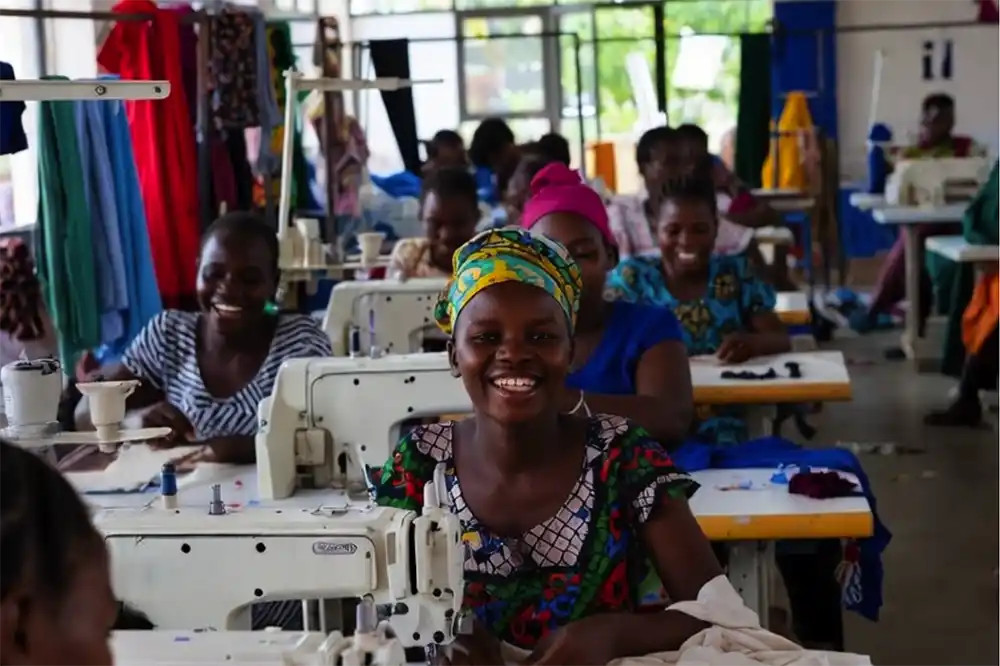
The name Twaweza symbolizes empowerment and local capability. The factory integrates local cultural awareness with modern industrial management.
Key workforce strategies include:
|
Management Area |
Implementation Strategy |
|
Communication |
Training in Swahili and English |
|
Skill Development |
Structured sewing apprenticeship programs |
|
Community Engagement |
Local employment and education initiatives |
|
Cultural Respect |
Recognition of local traditions |
Through these efforts, Twaweza Kenya Apparel (EPZ) Limited builds a sustainable workforce foundation.
Case Studies in African Garment Manufacturing
International Brand Trial Order
Background: A European fashion brand wanted to diversify production beyond Asia.
Problem: The brand questioned whether African factories could meet quality standards.
Action: Twaweza Kenya Apparel (EPZ) Limited established a pilot production program.
Result: After successful delivery, the brand transferred part of its production to Kenya.
Worker Skill Training Program
Background: Many workers initially lacked garment manufacturing experience.
Problem: Early productivity levels were below global averages.
Action: The factory implemented a three-month technical training program.
Result: Productivity improved significantly and employee retention increased.
Logistics Optimization
Background: Export shipments experienced delays at ports.
Problem: Customs clearance slowed deliveries.
Action: Partnerships with logistics providers streamlined export processes.
Result: Shipping times improved and supply chain reliability increased.
Future Growth of Africa Apparel Manufacturing
Research from McKinsey suggests Africa’s apparel industry could generate millions of jobs in the coming decades.
https://www.mckinsey.com/industries/retail/our-insights/africas-apparel-industry
Key growth drivers include:
|
Industry Trend |
Description |
|
Regional Supply Chains |
Development of African textile inputs |
|
Foreign Investment |
Increased partnerships with global brands |
|
Technology Adoption |
Automation and digital manufacturing |
|
Sustainable Production |
Eco-friendly textile innovations |
Factories like Twaweza Kenya Apparel (EPZ) Limited are helping position Kenya as a key player in Africa apparel manufacturing.
FAQ
Q1 Why are global brands exploring Africa apparel manufacturing
A1 Africa offers competitive labor costs, trade advantages through AGOA, and opportunities to diversify supply chains.
Q2 What does EPZ garment factory mean
A2 EPZ refers to Export Processing Zone factories that receive tax incentives and export-focused manufacturing policies.
Q3 What products are commonly produced in Kenyan garment factories
A3 T-shirts, sportswear, knitwear, and other basic apparel products suitable for mass export.
Q4 Is AGOA permanent
A4 No. AGOA requires periodic renewal by the United States Congress.
Q5 Why is Kenya attractive for garment manufacturing
A5 Kenya offers political stability, export infrastructure, and access to AGOA trade benefits.
Conclusion
The rise of Twaweza Kenya Apparel (EPZ) Limited reflects the broader transformation of Africa apparel manufacturing. By combining EPZ incentives, AGOA trade advantages, and workforce development strategies, Kenya is building a stronger position in the global apparel supply chain.
As infrastructure and industrial capabilities continue to improve, Africa is likely to become an increasingly important production base for global fashion brands.
Contact Us
If you would like to learn more about Africa apparel manufacturing, global garment supply chains, or partnership opportunities with Twaweza Kenya Apparel (EPZ) Limited, please contact us.
Company Name: Hanjen International LTD.
Address: 5F, No. 657-8 Chung Cheng Road, Hsin Chuang District, New Taipei City, Taiwan
Phone: +886-2-2903 7662
Email: hanjen.intl.ltd@gmail.com