
Introduction
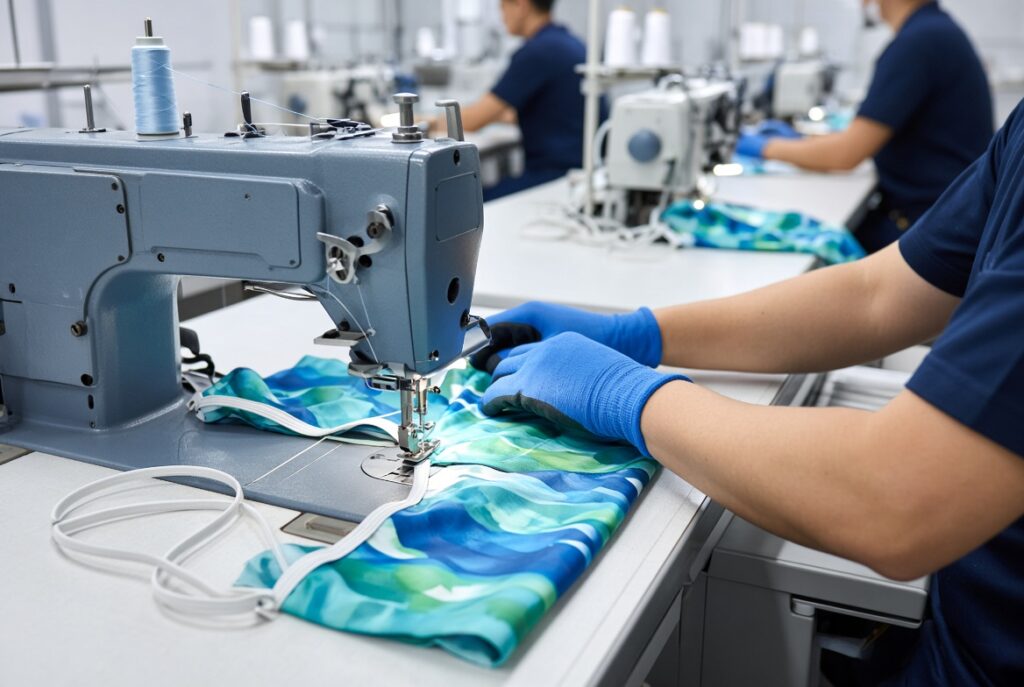
Swimsuit production demands specialized expertise far beyond standard apparel manufacturing. Fabric stretch recovery, chlorine resistance, negative ease patterning, and elastic seam integrity determine whether a product succeeds or fails in the market. Brands that overlook these details often face high return rates, customer complaints, and damaged reputation. This guide breaks down the most important technical and operational factors in swimsuit production, presents professional judgment with clear reasoning, discloses risks, and outlines practical alternatives. It also explains how partners with strong quality systems and flexible capacity, such as those operating in export-focused environments, support consistent results. External standards and internal resources from established manufacturers provide supporting evidence throughout.
Fabric Selection and Performance Testing Foundations
Fabric forms the foundation of every successful swimsuit production project because it governs durability, comfort, opacity when wet, and shape retention after repeated use. Industry standard constructions typically blend nylon or polyester with elastane in ratios near 80/20 or 78/22 to deliver four-way stretch and strong recovery. Professional judgment requires suppliers to furnish complete test reports covering stretch recovery above 95 percent, chlorine resistance aligned with AATCC methods, and wet opacity performance. Reasoning follows a clear sequence: measure fabric behavior under simulated pool and seawater conditions, compare against target performance thresholds, then approve only materials that meet all criteria. Risk disclosure shows that low-cost fabrics using ordinary elastane can lose more than 40 percent of elasticity after chlorine and UV exposure, resulting in bagging and loss of support. Alternative approaches include specifying chlorine-resistant elastane such as Lycra Xtra Life equivalents and incorporating GRS-certified recycled content when brand positioning supports the cost. Practical steps involve small-batch soak testing during sampling to replicate real-world conditions before committing to bulk. This early investment reduces later returns and protects brand equity. Authoritative guidance appears at https://www.oeko-tex.com/ for chemical safety verification and https://global-standard.org/ for recycled material standards. Internal experience documented at https://hanjen.tw/about-us/ demonstrates long-term supply chain management that supports reliable fabric sourcing. Neglecting these checks remains one of the most common causes of failure in swimsuit production.
Nylon Versus Polyester Performance Trade-offs
Nylon blends deliver soft hand feel and attractive luster suited to fashion and resort styles, yet they generally show lower chlorine durability than polyester. Polyester blends provide superior colorfastness and faster drying, making them preferable for high-frequency pool or competitive use. Professional reasoning prioritizes market segment: leisure collections favor nylon while performance lines favor polyester. Risk arises when blend ratios vary between batches, producing inconsistent recovery or hand feel. Alternatives include textured PBT polyester constructions that further improve chlorine resistance. Brands that apply a single fabric across all end uses frequently encounter premature aging in some styles.
Recycled Materials Cost Benefit Evaluation
Recycled nylon options such as ECONYL enhance sustainability credentials but typically increase material cost by 20 to 40 percent. Judgment requires assessing whether brand positioning can absorb the premium and whether supply remains stable. Risk includes greater batch-to-batch variation that can affect color and hand. Alternatives involve phased introduction supported by full certification documentation. Official references at https://global-standard.org/ confirm GRS validity. This route strengthens brand narrative when technical performance is verified rather than assumed.
Negative Ease Patterning Requirements in Swimsuit Production
Patterning for swimsuit production must apply negative ease because highly elastic fabrics expand on the body. Drafting patterns to full body measurements produces loose garments that shift and lack support in water. Professional standards reduce paper patterns by 10 to 20 percent according to measured fabric stretch and desired compression. Reasoning proceeds by recording body measurements, testing fabric elongation and recovery, calculating the reduction factor, and validating through fit sessions. Risk disclosure notes that excessive reduction creates discomfort and pressure points especially at bust and hip, while insufficient reduction allows movement and exposure. Alternatives include developing multiple pattern sets for different body types and applying careful grading rules that preserve proportion across sizes. Practical execution requires multiple negative-ease prototypes during sampling together with detailed wear-test notes. Experienced pattern makers working with technical teams achieve the necessary precision. Overlooking negative ease ranks among the most frequent errors made by new brands and directly drives poor fit and elevated returns. Equipment and process strengths shown at https://hanjen.tw/advantages/ support accurate cutting and pattern realization. Additional method references appear at https://www.aatcc.org/.
Grading Consistency Across Size Ranges
Grading must account for directional stretch differences so that proportions remain consistent from smallest to largest size. Professional practice maintains detailed grading rule tables and re-verifies them before each production run. Risk includes software optimized for woven garments generating incorrect increments. Alternatives involve manual refinement of critical zones to lock in fit.
Wet and Dry Fit Validation Cycles
Every pattern adjustment requires both dry and wet fit sessions that simulate actual wear. The process consumes time yet sharply reduces bulk risk. Teams record measurements and feedback until targets are met.
Seam Construction and Elastic Thread Selection
Seams and thread in swimsuit production must elongate and recover in concert with the fabric or they become failure points. Common constructions include overlock, flatlock, and zigzag stitches that accommodate stretch. Professional judgment selects high-quality polyester threads with chlorine and UV resistance while controlling tension to avoid tightness or looseness. Risk disclosure indicates that ordinary threads break after repeated stretch cycles or that narrow seam allowances fray. Alternatives employ dual-needle overlock or specialized elastic threads with reinforcement at high-stress zones. Experience shows incorrect thread choice shortens garment life more than almost any other factor. Manufacturers should supply thread test data and maintain in-line inspection stations. Standards references are available at https://www.iso.org/. Quality-focused production environments with disciplined process control execute these requirements reliably.
Elastic Edge and Silicone Application Details
Leg openings and waistbands frequently incorporate clear silicone or fold-over elastic for grip and comfort. Reasoning matches width and tension to local load requirements. Risk includes silicone that feels abrasive when too thick or fails to hold when too thin. Alternatives test multiple specifications before locking the final combination.
Lining and Support Structure Decisions
Double lining improves opacity and support yet adds bulk and cost. Judgment follows style positioning. Premium constructions almost always require lining to guarantee wet opacity.
End-to-End Quality Control and Testing Protocols
Quality systems for swimsuit production cover incoming fabric, cutting, sewing, and finished goods. Professional processes apply four-point fabric inspection, in-line audits, final inspection, and needle detection. Minimum tests include colorfastness, stretch recovery, chlorine resistance, and wet opacity. Risk arises when reliance on sampling alone misses batch-wide issues. Alternatives institute dual-layer controls and retain samples for traceability. Practical recommendation is to align factory capabilities with major brand audit expectations. Supporting information appears at https://www.wrapcompliance.org/. Robust control sharply reduces complaints and builds long-term trust. Partners that maintain documented systems and export discipline support these requirements effectively. Further checklist guidance is available at https://hanjen.tw/apparel-quality-control-checklist/.
Sustainability Certifications and Supply Chain Transparency
Modern swimsuit production cannot ignore sustainability expectations. GRS recycled content and OEKO-TEX chemical standards have become baseline requirements for many markets. Professional judgment verifies certificate authenticity and supply chain visibility to avoid greenwashing. Risk includes counterfeit documentation or unstable supply that disrupts schedules. Alternatives partner only with fully certified sources and introduce materials in stages. Verification resources stand at https://www.oeko-tex.com/ and https://global-standard.org/. These practices strengthen brand position while meeting regulatory and consumer demands.
Sampling to Bulk Transition Risk Management
The transition from approved sample to bulk remains the highest-risk phase in swimsuit production. Sample success does not guarantee bulk consistency because fabric lots, machine condition, and operator technique introduce variation. Professional practice requires a pre-production sample sign-off before line start together with strict acceptance criteria. Risk includes color drift, dimensional change, and seam inconsistency. Alternatives insert intermediate checkpoints and protect schedule buffers. Many brands that compress this stage experience full-lot returns.
Three Case Studies from Real Swimsuit Production Projects
Case Study 1
A new fashion brand developed resort bikinis with a focus on cost reduction. Background centered on selecting ordinary elastane fabric to lower expenses. The problem emerged as rapid loss of elasticity and color fading after limited wear. Handling involved the factory recommending chlorine resistance testing which the brand declined. Results showed return rates above 30 percent within three months followed by full product recall and costly re-production.
Case Study 2
A performance brand created competition one-pieces for athletes. Background focused on pattern development that applied insufficient negative ease. The problem appeared as increased water resistance and garment shifting during use. Handling required the technical team to re-measure fabric stretch data, revise the patterns and upgrade seam elasticity. Result delivered successful athlete wear trials, positive market feedback and increased sales volume.
Case Study 3
A sustainability-focused brand introduced recycled materials into its collection. Background included incomplete supplier certification documents. The problem caused failure during a major brand audit. Handling involved switching to suppliers holding both GRS and OEKO-TEX certifications plus conducting fresh sampling. Result achieved successful audit clearance and entry into European and North American retail channels.
These examples show that partners maintaining disciplined capacity and quality systems reduce exposure to comparable failures.
Timeline Cost Balance and Partner Selection Criteria
Timelines for swimsuit production depend on fabric lead times, sampling rounds, and seasonal peaks, so adequate buffers remain essential. Professional judgment constructs detailed schedules with clear review gates. Risk of compressed schedules is quality decline. Alternatives confirm fabric inventory and capacity early. Cost control balances materials, construction methods, and volume without sacrificing critical performance attributes. Partners that combine technical capability with flexible order quantities and documented processes deliver the most reliable outcomes. Sample development support is outlined at https://hanjen.tw/oem-apparel-development-sample-services/.
| Fabric Type | Primary Composition | Best Use Case | Key Advantages | Key Cautions |
| Nylon elastane blend | Nylon 80 percent elastane 20 percent | Fashion and resort | Soft hand attractive luster | Chlorine resistance needs reinforcement |
| Polyester elastane blend | Polyester 80 percent elastane 20 percent | Pool and performance | High colorfastness quick dry | Hand feel can be firmer |
| Recycled nylon | Recycled nylon plus elastane | Sustainability focused | Strong environmental story | Higher cost batch consistency checks required |
| Test Item | Minimum Requirement | Test Method | Failure Impact | Recommended Frequency |
| — | — | — | — | — |
| Stretch recovery | 95 percent or higher | Elongation and recovery | Bagging and loss of shape | Every fabric lot |
| Chlorine resistance | Pass relevant standard | Controlled immersion | Elasticity loss color change | Sampling and pre-bulk |
| Wet opacity | No show-through | Wet visual evaluation | Exposure complaints | Every style confirmation |
| Production Stage | Critical Checkpoint | Responsible Team | Common Issues | Preventive Action |
| — | — | — | — | — |
| Fabric incoming | Four-point inspection | Quality | Defects shade variation | Strict rejection protocol |
| Cutting | Marker and knife accuracy | Technical | Dimensional drift | Calibrated auto cutting |
| Sewing | In-line audit | Production | Broken seams | Tension calibration |
| Finished goods | Final inspection needle check | Quality | Metal contamination | Dual detection systems |
FAQ
Q1 What is the most commonly overlooked detail in swimsuit production
A1 Chlorine and UV resistance of the fabric is frequently ignored and leads to early aging. Full testing during sampling and selection of resistant elastane prevents the majority of these failures.
Q2 How should negative ease be calculated accurately
A2 Reduce paper patterns by 10 to 20 percent according to measured fabric stretch and confirm through repeated fit sessions. Different body zones can receive adjusted factors to avoid pressure or looseness.
Q3 How are appropriate threads and seam types selected
A3 High-elasticity polyester threads combined with overlock or flatlock constructions under controlled tension perform best. Critical zones benefit from dual-thread reinforcement so seams move with the fabric.
Q4 Are sustainable materials suitable for every swimsuit production project
A4 They suit brands with clear positioning but require cost and supply evaluation. Phased introduction with full certification avoids schedule and quality disruption.
Q5 Why can bulk production still fail after successful sampling
A5 Fabric lot variation, machine condition, and operator differences introduce change. Pre-production sample approval plus strict in-line checks are required to control risk.
Summary
Success in swimsuit production rests on disciplined attention to fabric performance, negative ease patterning, seam construction, and comprehensive quality systems. Each element requires data-driven judgment, clear risk awareness, and workable alternatives. Brands that apply these principles work more effectively with manufacturers and produce garments that retain shape, comfort, and appearance through real use. Partners that maintain rigorous process control and flexible capacity further reduce exposure to common failure modes. Ongoing attention to industry standards and sustainability expectations supports long-term competitiveness.
Contact Us
Company Name: Hanjen International LTD.
Address: 5F, No. 657-8 Chung Cheng Road, Hsin Chuang District, New Taipei City, Taiwan
Telephone: +886-2-2903 7662
Email: hanjen.intl.ltd@gmail.com
If you are seeking a reliable partner for swimsuit production, contact Hanjen International Ltd. We bring decades of OEM and ODM experience focused on high-quality apparel and swimwear, flexible MOQs, and complete technical support. We look forward to collaborating on excellent products.