
How to Choose a Reliable Clothing Manufacturer in Kenya: 12 Checklist Points and Why Twaweza Is a Strong Fit
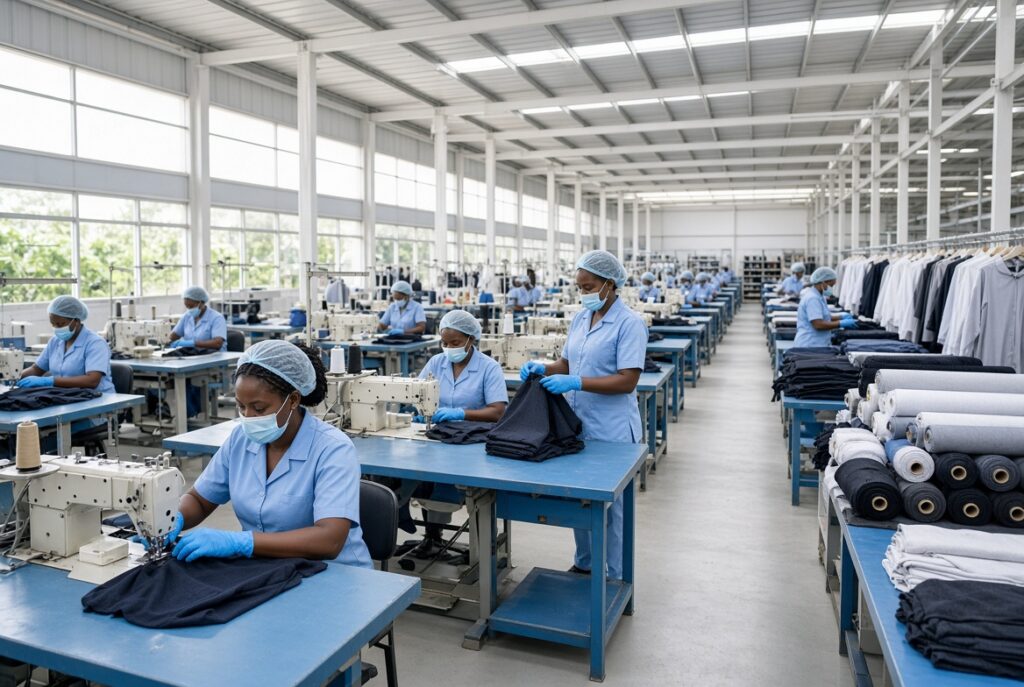
Global supply chain changes and AGOA benefits have increased interest in East African apparel production. Kenya offers duty advantages for the U.S. market, solid port access, and growing Export Processing Zone capacity. However, factory quality and compliance vary widely. Selecting a reliable clothing manufacturer in Kenya requires structured evaluation rather than price comparison alone. Brands that skip checks often face delays, quality issues, or compliance problems. This guide outlines twelve practical checklist points based on sourcing experience and risk assessment. It also explains why Twaweza, linked to Hanjen’s Kenya operations, can suit brands focused on knit apparel. References include official trade sources and Hanjen materials at https://hanjen.tw/ and https://hanjen.tw/about-us/. The content follows EEAT principles with clear judgment, risk notes, and verifiable links.
Kenya Apparel Industry Context and the Value of Selecting a Reliable Clothing Manufacturer in Kenya
Kenya’s apparel industry centers on Export Processing Zones near Athi River and Mombasa. AGOA provides preferential access to the U.S. market, reducing or eliminating duties on qualifying garments. A young workforce and Mombasa Port transit times of about 25–27 days to the U.S. East Coast add logistics value. Official KenInvest and EPZA materials confirm these advantages and the presence of factories serving international buyers. Challenges remain, including power reliability, uneven management standards, labor compliance gaps, and equipment condition. Choosing a reliable clothing manufacturer in Kenya balances tariff savings against consistency, quality systems, and partnership stability. Buyers usually build scorecards covering certifications, capacity, quality, communication, and logistics. Alternatives exist in neighboring countries, yet Kenya keeps strengths in port access and AGOA continuity. Key references include the U.S. Trade Representative AGOA page at https://ustr.gov/issue-areas/trade-development/preference-programs/african-growth-and-opportunity-act-agoa and the EPZA site at https://www.epzakenya.com/.
Foundational Requirements for Any Reliable Clothing Manufacturer in Kenya
Before the twelve checklist points, confirm basic operational and legal standards. A reliable clothing manufacturer in Kenya should hold EPZ registration, valid export documents, and AGOA certificate capability. Product focus must match brand needs, as knit and woven production use different equipment and skills. Factories need recent shipment records, client references, and capacity figures that match physical facilities. Payment terms, letter-of-credit acceptance, and openness to third-party inspection offer useful financial signals. Current WRAP, SMETA, GRS, or similar audits are essential for most Western brands. Hanjen’s certifications and Kenya overview at https://hanjen.tw/start-kenya-oem-partnership-guide/ show expected documentation. Even strong factories can face labor turnover or material delays, so contracts should include buffers. Evaluating two or three factories through samples and trial orders produces better decisions than relying on claims alone. Further context comes from ILO reports at https://www.ilo.org/ and Sedex at https://www.sedex.com/.
Industry Positioning and Product Alignment
Knit specialists usually operate circular knitting and finishing equipment, while woven factories need different cutting and sewing setups. Brands should request proof of prior work in the exact category. Broad claims without evidence often lead to fit problems, construction defects, and delayed schedules.
EPZ Status and Trade Preference Capability
EPZ registration offers input duty exemptions and easier export processes but requires compliance with export ratios. Brands must confirm the factory can obtain AGOA visas and certificates of origin to prevent unexpected duties at U.S. entry.
Financial and Operational Transparency
Full financial statements are rare, yet staged payments, bank references, and capacity utilization details serve as practical stability indicators. Factories that refuse reasonable transparency deserve extra caution.
First Six Checklist Points Certification Capacity and Equipment
The first six points cover infrastructure and compliance. Point one requires current WRAP, GRS, SMETA, or brand audits with full reports. Point two compares declared monthly capacity, lines, and workforce against floor space and shipment history. Point three reviews machine brands, age, and maintenance because older equipment raises defect rates. Point four checks raw-material control and whether the factory has reliable fabric and trim sources. Point five measures sample speed, accuracy, and revision rounds. Point six confirms incoming, in-process, and final AQL inspection systems. Verify each point through documents and site visits. Temporary equipment rentals or borrowed certificates are common risks, so third-party reports matter. Starting with a limited trial order tests real performance before scaling. References include WRAP at https://www.wrapcompliance.org/ and Textile Exchange GRS information at https://textileexchange.org/standards/.
Certification Validity and Audit Currency
Certificates must be current and cover the actual site and products. Request the full audit report to check open issues and corrective actions.
Capacity Claims Versus Historical Output
Declared capacity is credible only when it matches line counts, headcount, and verified shipments from the past twelve months. Large gaps suggest exaggeration or underuse.
Equipment Condition and Maintenance Records
Machine brands, age, and maintenance logs indicate process stability. Outdated or poorly maintained equipment often causes skip stitches and measurement problems.
Remaining Six Checklist Points Quality Delivery Communication and Logistics
The next six points focus on execution. Point seven checks four-point fabric inspection and consistent AQL use. Point eight reviews capacity planning and material tracking systems. Point nine measures response speed, language ability, and technical problem solving. Point ten assesses factory-to-port logistics and AGOA documentation experience. Point eleven examines balanced payment terms between prepayment and post-inspection settlement. Point twelve considers willingness to improve equipment or sustainability practices. Set a clear minimum score and note any exceptions. Local infrastructure issues can still cause delays, so include force-majeure and buffer clauses. Partners with both Taiwan technical support and Kenya production often provide stronger communication. See Hanjen’s timeline at https://hanjen.tw/apparel-production-timeline/ and quality guide at https://hanjen.tw/apparel-quality-control-checklist/. Additional trade resources appear at https://www.cbp.gov/.
Three Practical Case Studies
Case Study 1
A mid-sized U.S. casual brand making knit T-shirts and joggers wanted AGOA duty savings. Early low-cost Kenyan factories produced inconsistent sizing and repeated delays. The brand applied the twelve-point checklist, required full certifications and capacity data, and conducted an on-site audit. The chosen factory met standards, delivered on time with acceptable quality, and supported later volume growth under preferential tariffs.
Case Study 2
A European performance brand needed functional fabrics and moisture-management construction. Several factories claimed experience, but lab tests showed shortfalls. The brand required third-party test reports and limited trial production before placing larger orders. The selected partner passed the technical requirements and built a stable ongoing supply relationship.
Case Study 3
An Asian children’s-wear start-up lacked experience with Kenyan export documents and AGOA processes. It partnered with a supplier offering Kenya production plus Taiwan technical and administrative support. The arrangement improved communication, ensured correct documentation, and enabled a successful first U.S. shipment. These cases show that checklist use plus trial orders delivers better results than price-only selection when choosing a reliable clothing manufacturer in Kenya.
Practical Evaluation Tables for Quality and Risk Management
The tables below offer practical tools for factory assessment.
| Checklist Item | Evaluation Focus | Risk Level | Recommended Action |
| Certification completeness | Valid WRAP GRS SMETA coverage | High | Request full audit reports |
| Monthly capacity data | Line count versus shipment history | Medium | Cross-verify historical output |
| Sample accuracy | First-pass dimensional and construction approval | High | Require at least two confirmation rounds |
| On-time delivery rate | Past twelve-month performance | High | Demand supporting shipment records |
| Communication response | Reply consistency within twenty-four hours | Medium | Test actual technical dialogue |
| Logistics documentation | AGOA and customs experience | Medium | Review prior export file samples |
Second table addresses common risks and mitigation approaches.
| Potential Risk | Possible Consequence | Preventive Measure | Contingency Option |
| Power instability | Production interruption | Confirm generator capacity | Split orders across sites |
| Raw-material delay | Schedule slippage | Lock fabric early | Maintain local safety stock |
| Labor turnover | Quality variation | Training and retention programs | Stabilize key operations staff |
| Port congestion | Late vessel departure | Book space in advance | Air-freight contingency |
| Compliance gap | Brand reputation exposure | Schedule regular third-party audits | Qualify alternative factories |
Third table compares factory scale suitability.
| Factory Type | Suitable Order Volume | Primary Strength | Primary Limitation |
| Large EPZ facility | High stable volume | Equipment depth and compliance systems | Higher minimum order quantities |
| Mid-size specialist | Medium customized runs | Greater flexibility | Limited peak capacity |
| Smaller workshop | Low-volume trials | Rapid response | Higher operational risk |
Complete the tables with on-site observations. Their value rises when combined with independent checks and trial production results.
Why Twaweza Aligns as a Reliable Clothing Manufacturer in Kenya for Many Brands
Twaweza Kenya Apparel EPZ Limited is located near Mombasa in the Mazeras area and specializes in knit apparel such as T-shirts, joggers, hoodies, and jackets using polyester and spandex. Trade records show regular U.S. shipments, confirming export experience. As part of the Hanjen network, it can access Taiwan-based product development and quality support. EPZ status enables AGOA benefits, and existing capacity suits mid-to-large knit programs. Brands needing knit expertise plus African production advantages find a practical fit. Any factory faces local infrastructure or labor risks, so full checklist use and trial orders remain necessary. Other Kenyan EPZ options exist, yet Twaweza’s knit focus and supply-chain links offer clear differentiation. More background is available at https://hanjen.tw/about-us/.
Decision Process and Long-Term Partnership Guidance
After the twelve-point review, follow a staged process: document checks, sample approval, limited trial production, and formal contract. Clear pass-fail criteria and timelines reduce delay. Long-term partnerships benefit from regular reviews of quality, delivery, and compliance, with order volumes adjusted accordingly. Contracts should define standards, inspection methods, and liability while keeping at least one backup supplier. Rising sustainability expectations favor factories willing to invest in measurable improvement. Monitor policy changes through KenInvest and industry reports. Selecting a reliable clothing manufacturer in Kenya is an ongoing process. Systematic methods create more durable supply chains than opportunistic choices.
FAQ
Q1 What risk is most frequently overlooked when evaluating Kenyan apparel factories
A1 The most common oversight is accepting certificates without checking validity, scope, and full audit findings, while also failing to match declared capacity against actual shipment history. Both gaps often lead to later quality or delivery problems.
Q2 Does AGOA automatically grant duty-free treatment to every Kenyan factory
A2 No. Preferential treatment requires meeting rules of origin, obtaining the proper visa and certificate of origin, and shipping qualifying products. Brands must confirm the factory’s practical experience before counting on duty savings.
Q3 Are large EPZ factories suitable for small trial orders
A3 Large factories often have higher minimums and may deprioritize small runs. Mid-size specialists or factories that accept development orders are usually better for initial trials.
Q4 How can a brand confirm that quality systems are actually operating
A4 Beyond written procedures, request recent inspection records and defect data, and observe in-process and final inspection during a trial order or third-party audit. Documents alone are not enough.
Q5 What specific points should brands emphasize when considering Twaweza
A5 Complete the full twelve-point checklist, confirm knit capability and current capacity, and use the technical link with Hanjen. Begin with samples and a controlled trial order.
Summary
Selecting a reliable clothing manufacturer in Kenya needs disciplined evaluation instead of lowest-price decisions. The twelve checklist points covering certification, capacity, equipment, quality, delivery, communication, logistics, payment, and improvement culture reduce risk effectively. Kenya’s AGOA and EPZ advantages create real opportunity, yet factory differences require careful filtering. Twaweza suits many knit programs and benefits from Hanjen’s network, but independent checklist verification and trial production remain essential. Brands that use structured assessment and keep contingency options build stronger, more competitive supply chains.
Contact Us
Company Name: Hanjen International LTD.
Address: 5F, No. 657-8 Chung Cheng Road, Hsin Chuang District, New Taipei City, Taiwan
Telephone: +886-2-2903 7662
Email: hanjen.intl.ltd@gmail.com
If you are evaluating production partners in Kenya or need OEM/ODM support from sampling through bulk delivery and global logistics, Hanjen International Ltd. welcomes your inquiry. We look forward to discussing how our Taiwan and Kenya capabilities can support your apparel programs.