
Introduction
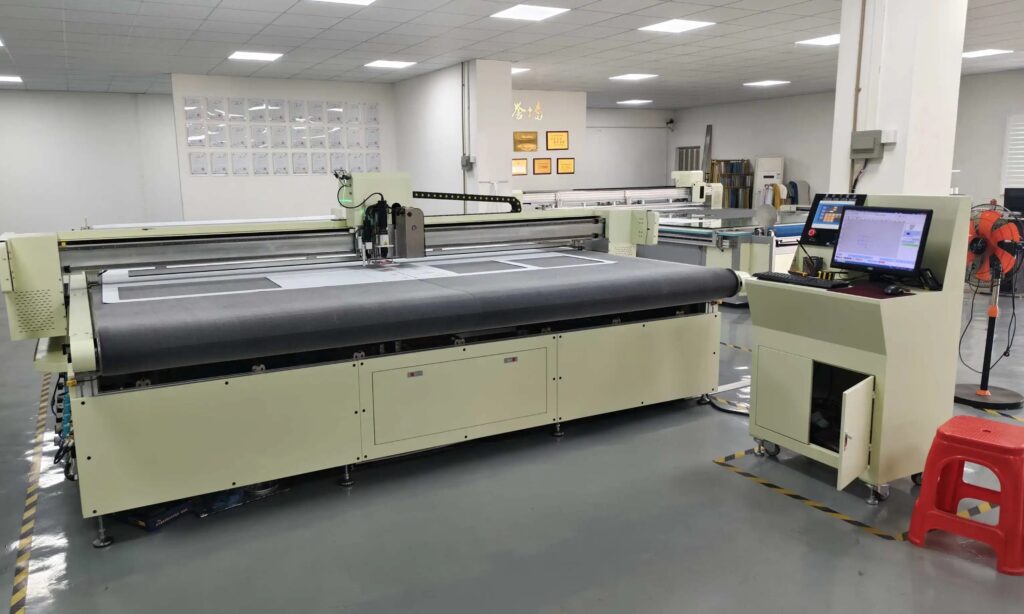
In today’s textile and manufacturing industries, precision and efficiency have become critical competitive factors. Traditional cutting methods rely heavily on manual operations, which not only introduce errors but also make it difficult to maintain consistent quality in large-scale orders. The emergence of Automated Cutting Room technology addresses these long-standing challenges. By integrating digital design, automated nesting, and high-precision cutting equipment, companies can reduce costs while achieving superior quality control. Studies show that automated cutting systems can reduce material waste to below 5%, significantly outperforming traditional methods (https://www.sciencedirect.com/science/article/pii/S0925527319301234). Additionally, as global supply chain pressures increase, fast delivery and consistent quality have become key factors for brand partnerships. Therefore, adopting Automated Cutting Room is no longer optional but an industry standard.
Core Technologies Behind Automated Cutting Room
The operation of an Automated Cutting Room is built upon several key technologies, including CAD design systems, automated nesting algorithms, and high-precision cutting equipment. These technologies work together to ensure consistency from design to cutting. CAD systems convert designs into digital patterns and optimize layout through algorithms to minimize fabric waste. More information can be found at https://www.autodesk.com/solutions/cad-software. Meanwhile, high-precision cutting equipment uses laser or blade control, achieving accuracy within millimeters. This level of precision is particularly important for high-end garments and technical fabrics. Additionally, systems often integrate IoT technology for monitoring and data feedback, ensuring every production batch meets standards. Through this integration, Automated Cutting Room enhances efficiency while creating a traceable and optimizable production process.
Key Factors in Precision Control
Cutting Equipment Accuracy
Cutting equipment is one of the most critical factors affecting final results. High-quality automated cutting machines ensure each cut is precise, preventing cumulative deviations. Regular calibration and high-quality blades are essential for maintaining performance.
Material Property Management
Different fabrics have varying elasticity and thickness, which can affect cutting outcomes if not properly managed. Therefore, Automated Cutting Room systems often include material analysis features to ensure parameters match actual conditions.
Software Algorithm Optimization
Nesting algorithms directly impact material utilization and cutting accuracy. Advanced systems continuously optimize layouts using AI, reducing waste and improving efficiency.
By integrating these three key factors, Automated Cutting Room maintains stable quality under various production conditions while significantly reducing error rates.
Cost Impact of Automated Cutting
Although implementing an Automated Cutting Room requires initial investment, it significantly reduces costs in the long run. First, labor costs decrease, as traditional cutting requires many skilled workers, while automation reduces this dependency. Second, material waste is minimized through optimized nesting. According to https://www.mckinsey.com/industries/retail/our-insights/state-of-fashion, automation can reduce manufacturing costs by over 15%. Additionally, increased production speed allows companies to handle more orders, boosting overall revenue. However, businesses must evaluate maintenance costs and technical requirements before implementation to maximize return on investment.
Case Studies and Practical Applications
Apparel Manufacturer Transformation
Background: A mid-sized apparel manufacturer faced delivery delays. Problem: Manual cutting was inefficient and error-prone. Action: Implemented an Automated Cutting Room system. Result: Production efficiency increased by 30%, and error rates dropped below 2%.
Sports Brand Supply Chain Optimization
Background: An international sports brand needed to respond quickly to market demand. Problem: Traditional cutting methods could not support rapid production. Action: Introduced automated nesting and cutting systems. Result: Delivery time reduced by 40%.
Luxury Fashion Brand Quality Improvement
Background: A luxury brand required extremely high precision. Problem: Manual cutting could not ensure consistency. Action: Adopted Automated Cutting Room technology. Result: Stable product quality and improved customer satisfaction.
These cases demonstrate the significant benefits of automation across various industries.
Risks and Challenges
Implementing an Automated Cutting Room is not without risks. The high initial investment can be a burden, especially for small and medium-sized enterprises. Additionally, increased reliance on technology means that system failures can disrupt production. Employees also require professional training to operate the system effectively. Risk management strategies can be referenced at https://www.iso.org/iso-31000-risk-management.html. Companies should establish backup systems and perform regular maintenance to mitigate risks. At the same time, market demand should be carefully evaluated to avoid overinvestment.
Future Trends
AI Integration with Automation
In the future, Automated Cutting Room systems will further integrate AI, making nesting and cutting even more intelligent.
Sustainability and Environmental Responsibility
Reducing material waste and energy consumption will become key priorities, aligning with ESG goals (https://www.un.org/sustainabledevelopment/).
Customization and Small-Batch Production
As consumer demands diversify, small-batch customization will become mainstream, with automation playing a crucial role.
These trends indicate that Automated Cutting Room will continue to play a vital role in manufacturing.
Implementation Strategies and Best Practices
When implementing an Automated Cutting Room, companies should develop a clear strategy. First, conduct a needs assessment to ensure system capabilities match production requirements. Second, choose reliable suppliers and refer to technology evaluations such as https://www.gartner.com/en. Companies should also adopt a phased implementation approach to minimize risks. Additionally, establishing internal training programs is essential to enhance employee skills. By following these best practices, businesses can maximize the benefits of automation and maintain long-term competitiveness.
FAQ
Q1 What industries are suitable for Automated Cutting Room
A1 It is mainly suitable for textiles, apparel, automotive interiors, and composite material manufacturing industries requiring high-precision cutting
Q2 Is the implementation cost high
A2 The initial investment is relatively high, but long-term savings in labor and material costs offset it
Q3 Is professional operation required
A3 Some training is required, but systems are generally designed to be user-friendly
Q4 Will automation replace human workers
A4 It mainly enhances efficiency and supports workers rather than fully replacing them
Q5 How to choose the right system
A5 It should be evaluated based on production needs, budget, and technical support capabilities
Summary
Automated Cutting Room represents a major step toward intelligent manufacturing. By integrating digital technology and automation equipment, companies can improve precision and efficiency while gaining a competitive edge. However, careful planning is required to address costs and risks. As AI and sustainability trends continue to evolve, automated cutting technology will become an essential core capability.
Contact Us
If you would like to learn more about Automated Cutting Room solutions and applications, please feel free to contact us:
Company Name: Hanjen International LTD.
Address: 5F, No. 657-8 Chung Cheng Road, Hsin Chuang District, New Taipei City, Taiwan
Tel: +886-2-2903 7662
Email: hanjen.intl.ltd@gmail.com