
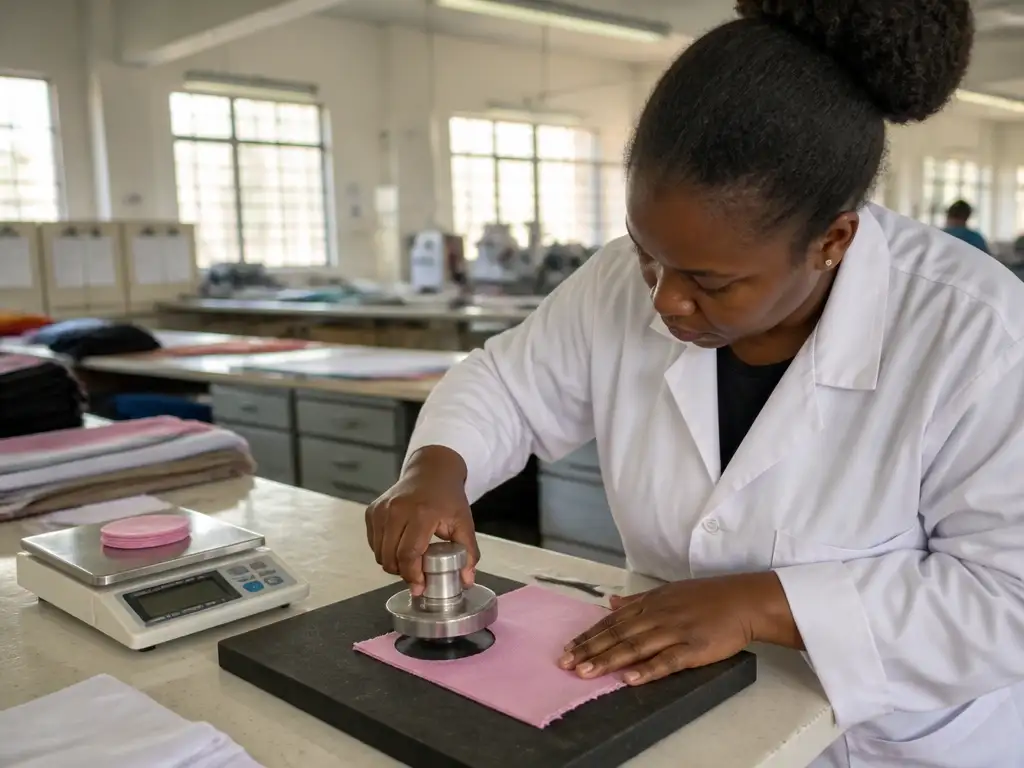
Fabric weight is one of the first numbers a factory asks for and one of the most misunderstood. Brands describe a T-shirt as “heavy” or a legging as “thick,” factories reply with a GSM figure, and the two sides do not always mean the same thing. When the number is wrong or unspecified, the result is a sample that feels flimsy, a hoodie that is too warm for its market or a costing that does not match the product the brand had in mind.
This guide explains what GSM means, how GSM fabric weight is measured, typical weight ranges for common garments, and why GSM alone does not tell you everything about quality. It also shows how to write fabric weight into a specification so your samples and bulk production match.
What Does GSM Mean?
GSM stands for grams per square meter. It is the mass of one square meter of fabric, and it is the standard way to express fabric weight in most of the world’s apparel supply chains. A 180 GSM jersey weighs 180 grams per square meter; a 320 GSM fleece weighs almost twice as much per square meter. In the United States, fabric weight is also expressed in ounces per square yard (oz/yd²), and some suppliers quote ounces per linear yard, which depends on fabric width and is not directly comparable.
GSM matters because it affects how a garment looks, feels and performs. Heavier fabrics generally feel more substantial, are less see-through, drape differently and hold their shape better, while lighter fabrics feel cooler and more fluid. GSM also drives cost: fabric is often a large share of a knit garment’s price, and heavier fabric uses more yarn. For buyers comparing quotes, a price difference between two factories may simply reflect a difference in fabric weight.
For a sense of what different weights mean in a finished garment, see our range of custom T-shirts, which spans lightweight jersey to heavier cotton constructions.
| GSM (g/m²) | Approx. oz/yd² | How it typically feels |
|---|---|---|
| 120 | 3.5 | Very light, fine jersey; may be slightly sheer in light colors |
| 150 | 4.4 | Light everyday tee or performance knit |
| 180 | 5.3 | Midweight tee, common for basics and promotional programs |
| 200 | 5.9 | Substantial tee or light pique |
| 240 | 7.1 | Heavy tee, pique polo or light French terry |
| 280 | 8.3 | French terry or light fleece for sweatshirts |
| 320 | 9.4 | Midweight fleece for hoodies |
| 400 | 11.8 | Heavy fleece for premium or cold-weather hoodies |
The conversion uses 1 oz/yd² ≈ 33.9 g/m². The “feel” column is indicative only, because fiber, yarn and knit structure change how a given weight feels.
How GSM Fabric Weight Is Measured
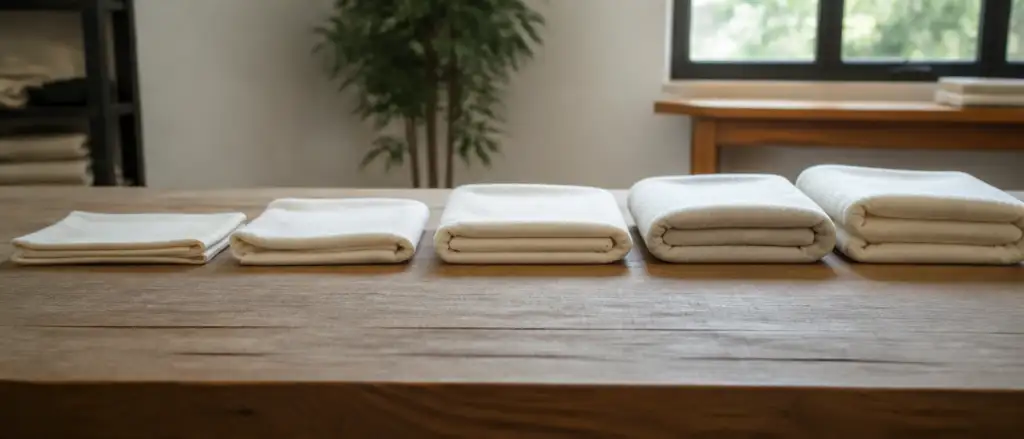
The most common method in garment factories is simple. A technician uses a circular sample cutter that removes a disc of fabric with a known area, typically 100 cm², weighs it on a precision balance and multiplies the result to get grams per square meter. A 100 cm² disc weighing 1.8 grams indicates 180 GSM. Several discs are cut across the fabric width and averaged, because weight can vary from edge to center.
Formal test methods give more structure. ASTM D3776/D3776M, the standard test methods for mass per unit area (weight) of fabric, sets out four approved options: a full piece or roll, a full-width sample, a small swatch and narrow fabrics. For woven fabrics, ISO 3801 covers the determination of mass per unit length and mass per unit area. When a brand and a mill disagree about weight, agreeing which method and conditioning to use avoids arguments over a few grams.
Conditioning matters because textiles absorb moisture from the air. Cotton in particular weighs more in humid conditions, so the same fabric can read differently in a humid warehouse than in a dry lab. Standard methods specify conditioning before weighing; factory spot checks should at least be done consistently, in the same place and the same way.
Typical GSM Ranges by Garment
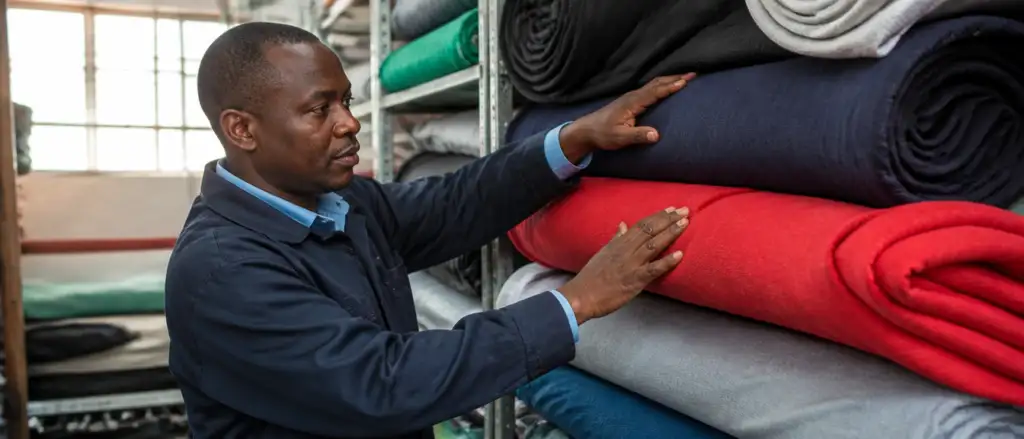
There is no single correct weight for any garment, but most products fall into recognizable ranges. The table below gives indicative figures for knit categories. Use them as a starting point for discussion with your factory, not as specifications.
| Garment | Common fabric | Indicative GSM range | Notes |
|---|---|---|---|
| Lightweight or fashion T-shirt | Single jersey | 120–160 | Soft drape; consider opacity in light colors |
| Standard or heavyweight T-shirt | Single jersey | 170–260 | Heavier weights give structure and a premium hand |
| Polo shirt | Pique | 180–260 | Pique texture adds bulk at a given weight |
| Sweatshirt or hoodie | French terry or fleece | 240–400 | Fleece is brushed on the inside for warmth |
| Leggings and activewear bottoms | Nylon or polyester with spandex | 200–320 | Higher weight improves opacity and compression |
| Base layer | Polyester, merino or blends | 120–220 | Lighter for active use, heavier for warmth |
| Swimwear | Nylon or polyester with spandex | 160–240 | Balance of stretch, coverage and recovery |
Within these ranges, the right choice depends on the end use, the climate of the market and the price point. A summer program for the southern US may sit at the lighter end; a premium streetwear hoodie may sit near the top. For sweatshirts, our hoodies and sweatshirts page shows how fabric choice changes the finished product.
Why GSM Alone Does Not Define Quality
A heavier fabric is not automatically a better fabric. Two jerseys can both weigh 180 GSM and perform very differently, because weight is only one result of many choices made at the mill. Fiber type and length affect softness and pilling. Yarn count and spinning method (for example ring-spun versus open-end yarns) affect smoothness and strength. Knit structure and machine gauge determine how tightly the fabric is constructed. Finishing processes such as compacting, brushing or enzyme washing change hand-feel and shrinkage.
For this reason, specify GSM together with composition, construction and performance requirements. A good fabric line in a tech pack reads something like “100% combed ring-spun cotton single jersey, 180 GSM after wash, with shrinkage and colorfastness requirements as specified.” That tells the mill what to make and tells the factory what to check.
It also helps to understand how weight changes through processing. Greige fabric changes weight after dyeing and finishing, and many knits gain weight after washing as they shrink and the loops close up. State whether your GSM target applies before or after washing, and confirm the value on the bulk fabric, not only on the development sample.
Writing Fabric Weight Into Your Specification
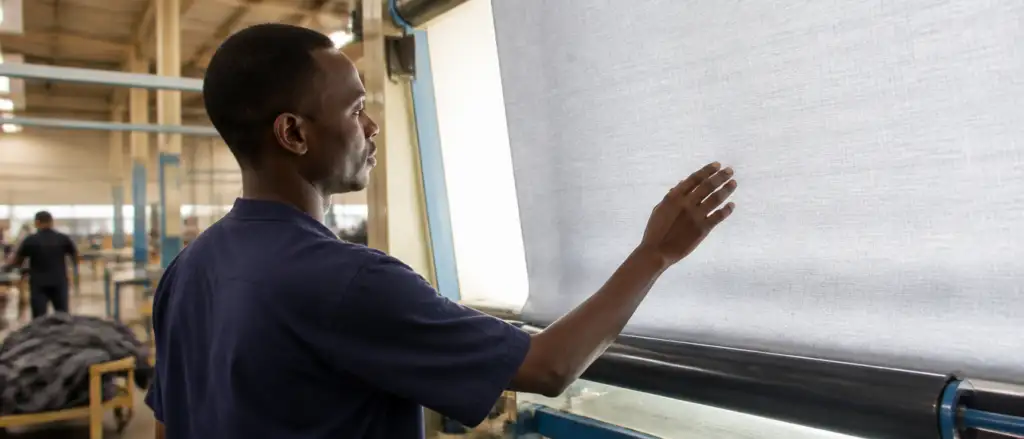
To keep samples and bulk consistent, write fabric weight into the specification with four pieces of information: the target GSM, whether it applies before or after wash, an agreed tolerance and the test method. Ask the factory to confirm weight on each bulk fabric lot during incoming inspection, alongside width, shade and defects. Our quality control page explains how inspection is organized at HANJEN’s Kenyan factory near Mombasa.
Fabric weight also interacts with decoration. Heavier, tightly knitted jerseys give screen prints and embroidery a stable base, while very light jerseys can pucker under dense embroidery or show the outline of a heavy print from the reverse side. If a style carries large prints or embroidered logos, review the decoration on a sample in the actual fabric weight before approving it, and consider backing or stitch adjustments for lighter fabrics.
When you compare quotes from different factories, ask each one to state the fabric weight, composition and construction in the same format. A quote for a 160 GSM open-end jersey and a quote for a 200 GSM ring-spun jersey are not comparable, even if both are described as a “cotton T-shirt.” Asking for fabric swatches with the quotation is a simple way to see what each price actually includes, and it prevents the cheapest number from winning by quietly specifying less fabric.
Remember that weight affects freight as well as fabric cost. A program of heavy fleece hoodies fills containers by volume and weight differently from lightweight tees, which matters when you plan landed cost for the 25–27 day ocean crossing from Mombasa to the US East Coast.
Frequently Asked Questions
What is a good GSM for a T-shirt?
Many everyday T-shirts sit roughly between 150 and 200 GSM, while heavyweight tees often go above 200. The right choice depends on the look, feel and price point you want, so compare physical samples at two or three weights before deciding.
How do I convert GSM to ounces?
Divide GSM by about 33.9 to get ounces per square yard. For example, 200 GSM is about 5.9 oz/yd². Be careful with suppliers who quote ounces per linear yard, which depends on fabric width.
Is higher GSM fabric always better quality?
No. Higher GSM means more mass per square meter, not necessarily better fiber, yarn or finishing. A well-made lighter fabric can outperform a poorly made heavier one in softness, pilling resistance and durability.
Why does my bulk fabric weigh differently from the sample?
Weight can vary between dye lots, with finishing and with moisture content. That is why a written tolerance, a defined test method and a statement of before-wash or after-wash weight are important, and why bulk fabric should be checked before cutting.
What GSM should a hoodie be?
Most hoodies use French terry or fleece somewhere between about 240 and 400 GSM. Lighter weights suit layering and warmer climates; heavier weights give a premium, structured feel for colder markets.
Conclusion: Treat GSM Fabric Weight as One Part of the Specification
GSM fabric weight is a simple, useful number, but it works best as part of a complete fabric specification that includes composition, construction, finishing, wash state, tolerance and test method. Brands that specify weight this way get more accurate quotes, fewer surprises at sampling and bulk fabric that matches the approved garment. Just as important, they can compare suppliers on a like-for-like basis and make deliberate trade-offs between feel, performance, freight and price.
If you are choosing fabric weights for T-shirts, polos, hoodies or activewear, HANJEN’s development team can help you compare options on real samples. Contact us to discuss your next program.