
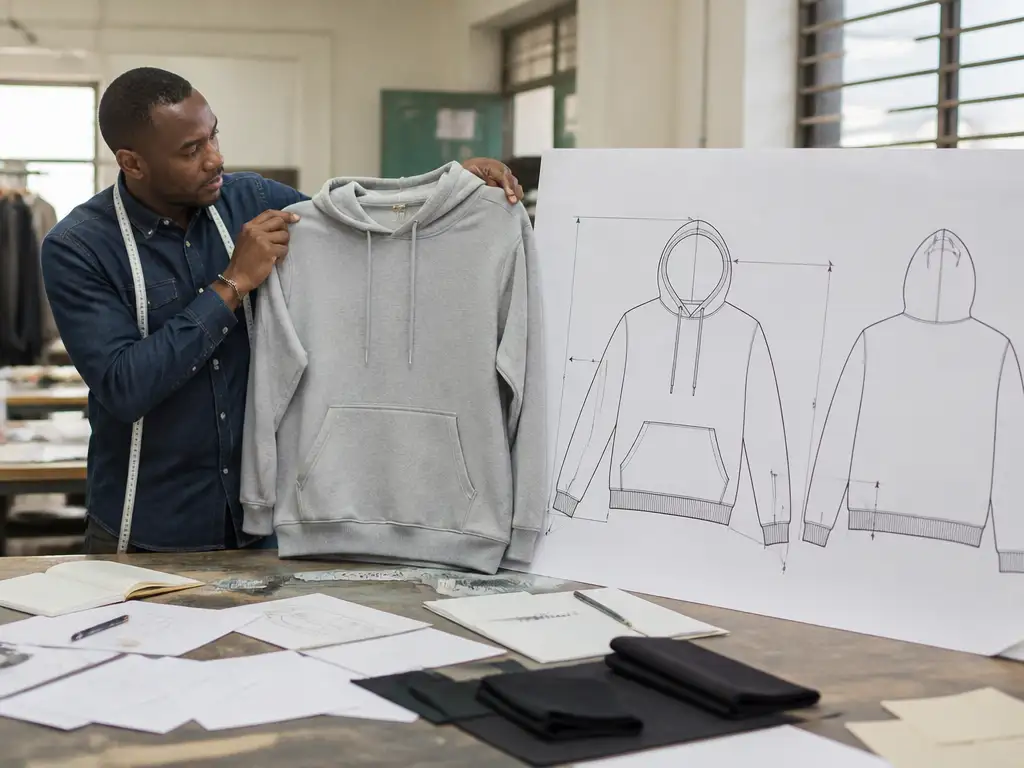
Ask a sourcing manager what causes most sampling delays and wrong first samples, and the answer is rarely the sewing. It is usually missing or contradictory information: a measurement chart without tolerances, a fabric described only as “soft cotton,” a print placement shown on a photo but not dimensioned. The document that prevents these problems is the tech pack, and understanding what is a tech pack, and what makes a good one, is one of the most useful skills an apparel brand can build.
This guide explains what a tech pack contains, why each section matters to the factory, how the document is used from first sample through bulk production, and the mistakes that most often lead to extra sample rounds. It is written from the factory side of the table, by a manufacturer that receives and works from tech packs every day.
What Is a Tech Pack, and Why Does It Matter?
A tech pack (short for technical package) is the set of documents that tells a manufacturer exactly how to build a garment. It typically combines technical drawings, a measurement specification, a bill of materials, construction details, artwork and placement for decoration, labeling and packing instructions. Think of it as the garment’s blueprint: a pattern maker, a fabric buyer, a sewing line supervisor and a quality inspector should all be able to find the answer to their questions in it.
A good tech pack does three jobs. It allows accurate costing, because the factory can price the exact fabric, trims, decoration and labor involved. It reduces sample rounds, because the first sample is built to stated requirements instead of the factory’s best guess. And it becomes the reference for quality control, because inspectors measure and check bulk garments against it. When brand and factory disagree about a defect, the tech pack and the approved sample are what settle the question.
The terms are sometimes used loosely. A spec sheet usually means the measurement chart alone, and a BOM is only the materials list; the tech pack is the complete package that brings them together with drawings, construction and labeling. When a factory asks for “the tech pack,” it wants all of these, plus any testing requirements your market or retail customers impose, such as shrinkage, colorfastness or seam strength targets. Listing those requirements up front lets the factory choose suitable fabrics and plan testing before bulk fabric is ordered, instead of discovering a problem after production.
If you are developing a new style and do not have a technical designer, our product development and sampling team can help convert sketches or reference garments into a working specification. Either way, the principles below apply.
The Core Sections of a Tech Pack
Every brand and factory has its own format, but most complete tech packs contain the same building blocks. The table below lists them and explains why the factory needs each one.
| Section | What it contains | Why the factory needs it |
|---|---|---|
| Cover page | Style number, season, category, size range, version date, contacts | Prevents confusion between styles and document versions |
| Technical flats | Front, back and detail drawings to scale, without shading | Shows seam lines, panels, pockets and trim positions |
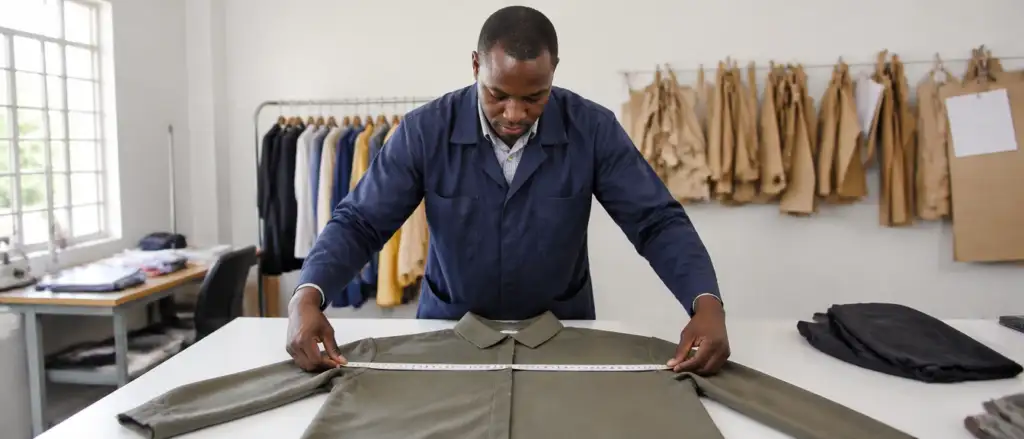
| Measurement spec | Points of measure, base size values, tolerances, grading | Used for patterns, sample checks and final inspection |
| Bill of materials | Fabric, thread, trims, labels, packaging, with references and colors | Drives sourcing, costing and material approvals |
| Construction details | Stitch and seam types, stitch density, seam allowances, finishes | Tells the sewing line how each operation is done |
| Artwork and placement | Print or embroidery files, sizes, colors, placement from fixed points | Ensures decoration is consistent across sizes |
| Labels and packing | Label content and position, folding, polybag, carton marks | Meets legal labeling and the buyer’s warehouse requirements |
Not every style needs the same depth. A basic T-shirt carried over from a previous season can reference an existing block, while a new jacket with zippers, pockets and taped seams needs far more detail. The rule is simple: anything that affects cost, fit, appearance or compliance should be written down, not left to interpretation.
Measurements, Tolerances and Grading
The measurement specification is the section factories rely on most and the one brands most often leave incomplete. Each point of measure should say exactly where and how it is taken: “chest width, 2.5 cm below armhole, measured flat edge to edge” is useful, “chest” is not. International standards such as ISO 8559-1, which defines anthropometric body measurements used in size designation, are a helpful reference when you build size charts and fit mannequins, but garment points of measure still need to be defined in your own document.
Add a tolerance to every measurement. Knit garments relax and recover, so a tolerance tells the inspector how much variation is acceptable before a garment fails. Tighter tolerances are appropriate for critical fit points such as waist and inseam; more generous ones may suit length on a relaxed hoodie. Finally, include the grade rules, meaning how each measurement changes from size to size, so the pattern maker can build a consistent size set rather than adjusting each size by eye.
When fit comments come back after a sample, record them against the specific points of measure and update the chart. A tech pack whose measurements no longer match the approved sample is a common source of bulk disputes.
Construction, Stitches and Materials
Construction details tell the factory how the garment is put together: which seams are overlocked, which are cover-stitched, where flatlock is used, how hems and necklines are finished and what stitch density is expected. Using standard terminology avoids ambiguity. ASTM D6193, the standard practice for stitches and seams, provides a common classification system that both brand and factory can refer to. Our article on stitch density explains why stitches per inch matter for durability and appearance.
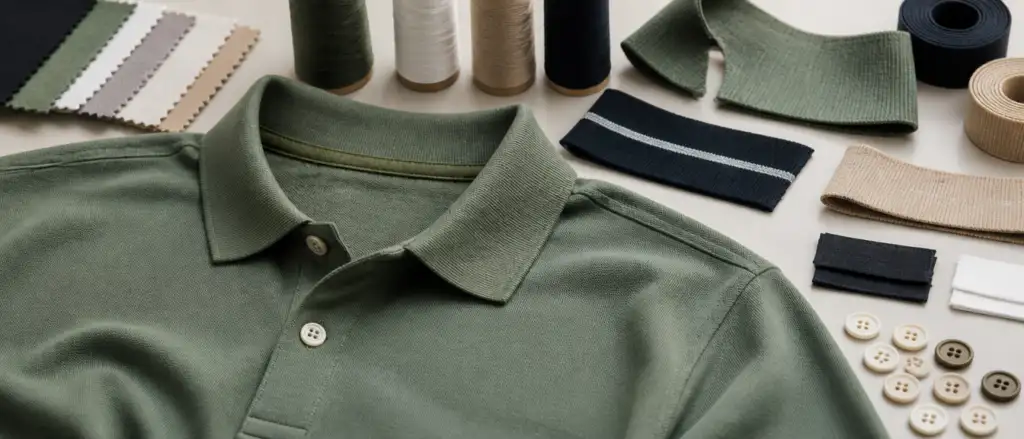
The bill of materials (BOM) should identify every component: main fabric by composition, construction and weight, rib and binding, thread type and color, zippers, buttons, elastic, interlining, labels, hangtags and packaging. Add supplier references or approved swatches where you have them, and state whether a component is nominated by the brand or sourced by the factory. Missing trims are one of the most common reasons a sample cannot be completed on schedule.
Label content must also be specified. For garments sold in the United States, the FTC’s textile labeling guide explains that labels generally need fiber content, country of origin and the identity of the responsible business, with care instructions required under a separate rule. Put the exact wording, size and position of each label in the tech pack so it is correct from the first sample.
How the Tech Pack Is Used From Sampling to Bulk
A tech pack is a living document during development. The first version supports costing and the proto sample. After fit and design comments, it is revised, and the factory builds the next sample to the new version. By the time the pre-production sample is approved, the tech pack should describe that sample exactly. From then on it is frozen for production, and any later change should be agreed in writing with its effect on cost and schedule.
In bulk production, the tech pack guides cutting, sewing, decoration, inline quality checks and final inspection. Inspectors compare garments against the measurement chart and the approved sample, and packing teams follow its folding, labeling and carton instructions. A specification that is clear enough for a new sewing operator to follow is a specification that produces consistent garments.
The most common tech pack problems, and their consequences, are predictable:
| Common mistake | What happens | How to fix it |
|---|---|---|
| No tolerances on measurements | Disagreement over whether bulk passes | Set a tolerance for every point of measure |
| Vague fabric description | Wrong hand-feel, weight or shrinkage | State composition, construction, weight and finish, with a swatch |
| Artwork without dimensions | Print or embroidery size and position vary | Dimension artwork and place it from fixed reference points |
| Several versions in circulation | Sample built to an outdated file | Version-date every revision and share one master file |
| Trims listed without references | Sampling stalls while trims are sourced | Specify supplier, size, color and finish for each trim |
Frequently Asked Questions
Who creates the tech pack, the brand or the factory?
Usually the brand, often with a technical designer. Many manufacturers with development teams can also build or complete a tech pack from sketches and reference garments, which is helpful for new brands. Whoever drafts it, both sides should review and agree the final version.
What software is used to make a tech pack?
Brands use everything from spreadsheets and illustration software to dedicated product lifecycle management (PLM) platforms. The format matters less than completeness and version control. A clear spreadsheet with good drawings is better than an elaborate template with missing measurements.
Can I get a sample made without a tech pack?
Often yes, from a reference garment and a description, but expect more sample rounds and less accurate costing. The factory has to make assumptions, and some of them will differ from what you intended.
How detailed should a tech pack be for a simple T-shirt?
Even a basic tee needs fabric composition and weight, a measurement chart with tolerances, neckline and hem construction, label content and placement, decoration artwork if any, and packing instructions. Simple garments leave fewer places for errors to hide, but they still need the essentials.
Does the tech pack change after production starts?
It should not change without agreement. Once the pre-production sample is approved, the tech pack is the production reference. Any change after that point should be documented, with its effect on cost and schedule confirmed by both sides.
Conclusion: A Better Tech Pack Means a Better First Sample
Knowing what is a tech pack is the starting point; using it well is what saves time and money. A complete, version-controlled specification with precise measurements, a full bill of materials, standard construction terms and dimensioned artwork gives your factory what it needs to cost accurately, sample quickly and produce consistently.
HANJEN develops T-shirts, polos, hoodies, activewear and other knit programs for brands in the US and Europe, and our development team works with tech packs at every level of completeness. Contact us to review your specification or start a new style.